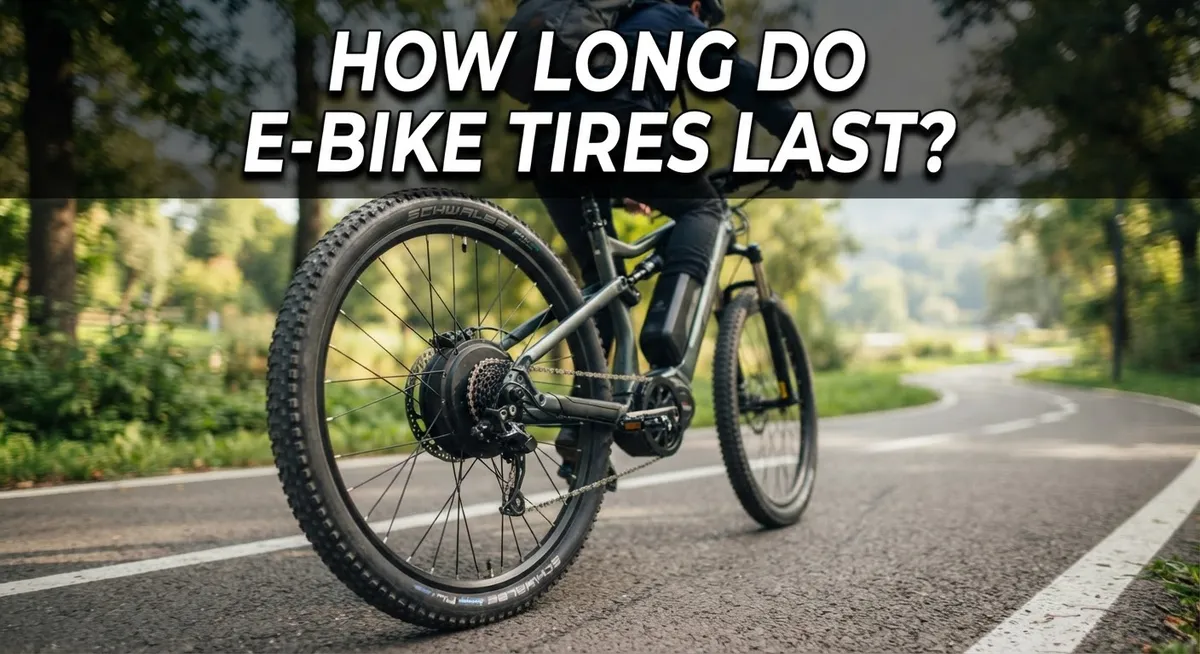
How Long Do E-Bike Tires Last? Lifespan, Signs of Wear, and Maintenance Tips
Ever wonder why your e-bike tires seem to wear out so fast? You are not alone. Many riders ask this question after just a few months of riding.
The truth is, e-bike tires don’t last forever. Your e-bike adds extra weight and power. This means tires face more stress than regular bike tires.
Tire life depends on many things. Terrain plays a big role. So does tire quality and how you ride.
Some tires last around 1,000 km on rough trails. Others can go beyond 5,000 km on smooth city roads. The difference is huge.
In this guide, we will break down everything you need to know. You will learn what affects tire lifespan. We will show you how to spot wear before it becomes a problem.
You will also discover simple maintenance tips. These tips help your tires last longer. Plus, we will cover common mistakes riders make.
By the end, you will know exactly when to replace your tires. You will also know how to make them last as long as possible. Let’s get started.
In a Nutshell
Here is a quick summary to keep in mind.
-
Mileage varies a lot. Most e-bike tires last between 1,000 km and 5,000+ km. The exact number depends on terrain and tire quality.
-
Terrain matters. City riding on concrete can stretch tire life to about 5,000 km. Off-road trails wear tires down much faster, sometimes in just 1,000 km.
-
Rear tires wear faster. The rear tire carries more weight and power. It will need replacement before the front tire does.
-
Quality makes a difference. Low-quality tires can wear out in as little as two weeks. Better tires last much longer and handle rough roads well.
-
Don’t just count miles. Always check tread depth and sidewalls for damage. Visual inspection tells you more than mileage alone.
-
Simple care extends life. Keep the right tire pressure, store your e-bike properly, and inspect tires often. These small habits prevent early tire failure and save you money over time.
What Determines E-Bike Tire Lifespan
Several factors control how long your e-bike tires last. Understanding these helps you plan replacements and avoid sudden breakdowns.
Terrain type plays a major role. Smooth city streets are gentler on rubber than rocky trails. Concrete and asphalt create less friction than dirt or gravel. Off-road surfaces grip tires harder and cause faster wear.
Rider weight affects tire lifespan too. Heavier riders put more pressure on the rubber. This speeds up wear compared to lighter riders on the same bike.
Tire quality makes a real difference. Premium tires resist damage better and last longer. Budget tires wear quickly because they use softer rubber compounds.
E-bike power and motor type matter as well. High-powered motors deliver more torque to the wheels. This extra force wears tires faster than low-power bikes. Hub motors create different wear patterns than mid-drive motors.
Tire pressure is critical. Under-inflated tires wear faster and generate excess heat. Over-inflated tires wear unevenly and feel harsh. Correct pressure extends tire life significantly.
Riding style impacts durability. Hard acceleration and frequent braking wear tires quicker. Smooth, steady riding reduces wear. Aggressive cornering also shortens tire life.
Storage conditions matter between rides. Extreme heat or cold degrades rubber over time. Direct sunlight causes cracking and brittleness. Proper storage in cool, dry places preserves tires longer.
Maintenance habits determine real-world lifespan. Regular inspections catch damage early. Cleaning tires removes debris that causes premature wear. Checking alignment prevents uneven wearing patterns.
All these factors work together. Two riders with identical e-bikes may see very different tire lifespans based on their conditions and habits.
Average Mileage: Front vs. Rear Tire Wear
The difference between front and rear tire wear is one of the most important things to understand about e-bike maintenance. Your rear tire wears out much faster than your front tire. This happens because the rear wheel supports most of your body weight plus the e-bike’s motor and battery.
On a typical e-bike, the rear tire can wear out in 1,000 to 3,000 km. Your front tire often lasts 2,000 to 5,000 km under the same conditions. The exact difference depends on your riding style, terrain, and how much you weigh.
City riding on smooth concrete is gentler on tires. You might see your rear tire last around 3,000 to 5,000 km in urban areas. Off-road trails and rough surfaces cut this number down significantly. Rear tires on rough terrain can wear out in just 1,000 to 2,000 km.
Check both tires regularly, but pay special attention to your rear tire. Look at the center tread wear pattern first. This shows you how fast your tire is breaking down. If the center looks flat or smooth, replacement time is near.
The weight you carry also matters. Heavier riders will see their rear tires wear faster. Motor power plays a role too. More powerful e-bikes put extra stress on the rear wheel during acceleration.
Don’t rely only on mileage estimates. Every rider’s situation is different. Inspect your rear tire every few weeks. Compare it to your front tire to see the wear difference. This habit helps you catch problems early and stay safe on the road.
How Terrain and Riding Style Affect Tire Longevity
Terrain and riding style are the two biggest factors that control how fast your e-bike tires wear. Understanding this connection helps you predict when replacement time arrives.
Rough terrain destroys tires quickly. Off-road trails, gravel paths, and rocky surfaces create constant friction and puncture risks. Your tires experience sharp impacts that smooth concrete never delivers. Expect tire life to drop significantly when you ride mostly on uneven ground. Muddy trails add extra wear because the soft surface grabs your tires and slows them down, forcing your motor to work harder.
Smooth city streets are gentler. Concrete and asphalt create predictable, even surfaces. Your tires roll smoothly without constant shock. This is why city riders often get double or triple the mileage compared to trail riders.
Your personal riding style matters just as much as the ground beneath you. Aggressive riders wear tires faster. If you accelerate hard, brake suddenly, or take sharp turns at speed, your tires experience more stress. The rubber gets hotter and wears unevenly. Smooth, steady acceleration and gentle braking extend tire life significantly.
Weight distribution also plays a role. Heavier riders create more pressure on the contact patch. Carrying cargo or passengers adds extra load that increases wear rates. A lighter rider on smooth terrain will see tires last much longer than a heavy rider on rough paths.
Wet conditions accelerate wear too. Moisture reduces grip, so your motor compensates with more power. Rain and mud increase friction between tire and ground. Riding in wet weather regularly shortens tire lifespan noticeably.
Track your actual usage patterns. This reveals your personal tire wear rate and helps you plan replacements before problems start.
How to Inspect Your E-Bike Tires for Wear
Checking your e-bike tires regularly keeps you safe and helps you catch problems early. Start by looking at the tread depth. Run your finger across the tire surface to feel how much rubber remains. Worn tread looks flat and smooth instead of textured. Most tires need replacement when the tread becomes too shallow to grip the road properly.
Next, examine both sidewalls carefully. Sidewalls are the curved sections on the tire’s sides. Look for cracks, cuts, or bulges in this area. Sidewall damage is serious because it weakens the tire’s structure. Even small cuts can lead to sudden failure while riding.
Check the center tread wear pattern too. This shows you how your weight distributes across the tire. Uneven wear in the middle suggests overinflation. Wear on the outer edges means underinflation. Both problems shorten tire life significantly.
Feel around the entire tire surface with your hands. Bumps, splits, or foreign objects like glass or thorns embedded in the rubber need attention. Remove small objects carefully if possible, or take your e-bike to a professional.
Inspect your tires at least once a month, or more often if you ride frequently. Don’t wait until you get a flat. Early detection prevents accidents and saves money by catching issues before they become dangerous.
Pressure checks matter too. Use a tire pressure gauge to confirm your tires match the recommended PSI printed on the tire sidewall. Proper pressure reduces wear and improves handling. Keep a simple notebook to track your inspection dates and findings. This helps you spot trends and predict when replacement becomes necessary.
Maintenance Practices That Extend Tire Life
Proper maintenance keeps your e-bike tires healthy and extends their useful life significantly. The most important step is maintaining correct tire pressure. Check your tire pressure every two weeks using a reliable gauge. Underinflated tires wear faster and create more friction. Overinflated tires wear unevenly and feel harsh to ride. Your tire sidewall shows the recommended pressure range.
Regular inspections catch problems early. Look at your tires at least monthly, more often if you ride daily. Run your hand around the entire tire surface to feel for cuts, cracks, or embedded objects. Remove any debris you find immediately. Small damage gets worse quickly and can cause flats.
Store your e-bike correctly between rides. Keep it in a cool, dry place away from direct sunlight. Extreme heat and UV exposure degrade rubber compounds. If you park outside, use a cover to protect your tires from weather damage.
Avoid common mistakes during repairs. Don’t overtighten bolts or screws when working on your bike. Excessive force damages the tire bead and rim connection. If you replace an inner tube yourself, deflate it completely before removal. Install the new tube gently without twisting or pinching it.
Clean your tires regularly. Dirt and grime trap moisture against the rubber. Use a soft brush and mild soap. Dry the tires completely afterward.
Rotate your tires if possible. Some riders move their front tire to the rear position when the front shows significant wear. This extends overall tire life across your fleet of replacement tires.
These simple practices add hundreds of kilometers to your tire lifespan and keep you riding safely.
Common Mistakes That Shorten Tire Lifespan
Many riders accidentally shorten their tire lifespan through simple mistakes during maintenance and daily use. Understanding these errors helps you protect your investment.
Overtightening bolts and screws is one of the most common problems. When you repair your e-bike, applying too much force can damage the tire bead and create weak points. Tighten fasteners firmly, but stop before they feel rock solid. Your tires will thank you with longer life.
Neglecting regular inspections is another major mistake. Many people assume their tires are fine until they get a flat. By then, damage has already started. Check your tires at least monthly, even if you ride casually. Look for small cracks, bulges, or embedded objects like glass or thorns.
Ignoring sidewall damage puts you at real risk. The sidewalls are thinner than the tread area, so they fail faster when damaged. Small cuts or abrasions can grow into serious problems. Replace tires showing sidewall damage rather than hoping they’ll hold up.
Running incorrect tire pressure wears tires unevenly and speeds up deterioration. Under-inflated tires create excessive friction and heat. Over-inflated tires wear the center tread faster. Check your pressure weekly using a reliable gauge.
Storing your e-bike poorly also matters. Keep your bike in a dry, cool place away from direct sunlight. UV rays and moisture degrade rubber compounds. Don’t store it in extreme heat or cold.
Riding through puddles and wet conditions constantly accelerates wear because moisture reduces grip. Your motor works harder to maintain traction, wearing tires faster.
These mistakes are easy to avoid once you know about them. Small changes in your maintenance routine add hundreds of kilometers to your tire lifespan.
When and How to Replace an E-Bike Tire
Replacing an e-bike tire involves a few straightforward steps. You can handle simple tasks yourself, or seek professional help for complex situations.
Start by deflating the tire completely. Use a pump with a release valve or press the valve stem to remove all air. This step makes removal much easier and safer for your hands.
Next, remove the tire from the rim. You’ll need tire levers to pry the bead away from the wheel. Work slowly around the entire wheel. Rushing this step can damage the rim or inner tube.
Once the old tire is off, inspect the rim carefully. Look for sharp edges, cracks, or debris. Clean the rim surface thoroughly before installing a new tire. Any dirt or damage can cause immediate flats.
For inner tube replacement, simply remove the old tube and insert a new one. Make sure the valve stem fits through the rim properly. Check that the tube sits evenly inside the tire before reinstalling.
When putting the new tire back on, start by seating one side of the bead onto the rim. Then work your way around, using tire levers only when necessary. The final section requires firm pressure but should slide on without excessive force.
Inflate gradually and check alignment. The tire should sit evenly on both sides of the rim with no bulges or gaps. Listen for any rubbing sounds as you spin the wheel.
If you encounter resistance during installation or notice sidewall damage, consider professional service. Complex issues like bead damage or rim problems require specialized tools and expertise. Most bike shops can handle replacements quickly and safely.
Troubleshooting Premature Tire Wear
Premature tire wear happens when your e-bike tires deteriorate faster than expected. Understanding the causes helps you keep your tires in good condition longer.
Incorrect tire pressure is a leading culprit. When your tires run too soft, the sidewalls flex excessively and wear down quickly. Overinflated tires, on the other hand, create a harder contact patch that wears the center tread faster. Check your tire pressure weekly to maintain the manufacturer’s recommended PSI range.
Riding style directly impacts tire longevity. Aggressive braking, sharp turns, and constant acceleration wear rubber faster than smooth, steady riding. If you frequently brake hard or corner aggressively, expect shorter tire life. Adjusting your riding habits can add hundreds of kilometers to your tires.
Heavy loads accelerate wear significantly. E-bikes carrying cargo, passengers, or extra weight experience faster tire degradation. The additional pressure compresses the tire more, increasing friction and heat buildup.
Road surface matters too. Rough asphalt, gravel, and rocky terrain cause faster wear than smooth concrete. Riding mostly on rough surfaces means planning for more frequent replacements.
Poor wheel alignment creates uneven wear patterns. If your wheels aren’t properly aligned with your frame, one side of the tire wears faster than the other. Have a professional check your wheel alignment if you notice one edge wearing noticeably more.
Moisture and temperature extremes also play a role. Constant exposure to wet conditions and temperature swings degrades rubber quality over time. Store your e-bike indoors when possible.
Regular inspections catch problems early. Check your tires weekly for uneven wear patterns, sidewall cracks, or embedded debris. Catching issues early prevents sudden failures and extends overall tire life.
Final Thoughts
Your e-bike tires can last anywhere between 1,000 and 5,000 kilometers. The exact number depends on your terrain, riding habits, and tire quality. There’s no single magic number that fits every rider.
City riders on smooth concrete often get the best mileage. Off-road adventurers see much shorter lifespans because rough terrain chews through rubber faster.
Quality matters more than you might think. A cheap tire might fail within two weeks of hard riding. A well-made tire can serve you faithfully for thousands of kilometers.
Don’t just count kilometers and assume your tires are fine. Regular visual checks tell you more than any odometer reading. Look at your tread depth. Check your sidewalls for cracks or bulges.
Your rear tire works harder than your front one. It carries more weight and handles most of the braking force. Expect it to wear out sooner and plan your replacements accordingly.
Simple habits make a real difference. Keep your tires properly inflated. Store your bike somewhere dry and shaded. Inspect your tires before every long ride.
These small steps add up over time. They help you avoid sudden blowouts and unexpected repair costs. They also keep your rides safer and smoother.
When it’s time to replace a tire, the process doesn’t have to feel overwhelming. You can handle simple tube replacements yourself at home. For trickier tire issues, a professional can step in and help.
At the end of the day, tire care isn’t complicated. Pay attention, inspect often, and act before small problems grow bigger. Your tires will reward you with a longer life and a smoother ride every single time you hop on your e-bike.
Frequently Asked Questions
How often should I inspect my e-bike tires?
Check your tires at least once a month, or before every long ride. Look at the tread depth and sidewalls for damage. Don’t wait until you feel a flat tire to inspect them. Regular checks catch problems early and keep you safe on the road.
What’s the difference between front and rear tire wear?
Your rear tire wears out faster because it carries more weight and handles braking forces. The front tire typically lasts longer. Plan to replace your rear tire first, often before the front one needs changing. This is normal and expected with e-bikes.
Can I extend my tire lifespan with proper pressure?
Yes. Keep your tires at the pressure listed on the sidewall. Underinflated tires flex too much and wear quickly. Overinflated tires become hard and may damage the rim. Check pressure monthly using a reliable gauge. Proper pressure is one of the easiest ways to add months to your tire life.
What signs mean my tires need replacement?
Replace tires when tread becomes shallow or worn smooth. Look for cracks, bulges, or cuts in the sidewalls. If you see the tire carcass showing through, replacement is overdue. Visible damage means the tire can fail suddenly. Don’t wait for a blowout to act.
Does terrain really affect how long tires last?
Absolutely. Smooth city concrete lets tires last around 5,000 kilometers. Off-road trails and rough surfaces reduce life to roughly 1,000 kilometers. Rocky terrain, gravel, and broken asphalt wear rubber much faster. Your riding environment matters as much as your riding habits.

Philips is the founder and lead writer at GearheadGarageFinds.com, a passionate automobile enthusiast who has spent years testing, comparing, and reviewing auto products and accessories to help fellow gearheads make smarter buying decisions. When he’s not under the hood or behind the keyboard, you’ll find him exploring the latest automotive innovations and hunting for the best garage finds on the market.