How Far Can an Electric Bike Go? A Complete Range Guide
Have you ever wondered how far your electric bike can really take you? Maybe you are planning a weekend trip. Or perhaps you just want to know if your daily commute will drain the battery.
The truth is, eBike range is not a fixed number. It changes based on several factors. Battery size, terrain, and even your tire pressure all play a role.
Most electric bikes travel between 20 and 75 miles on a single charge. Some high-end models can even go further. But getting the most out of your battery takes some know-how.
In this article, we will break down everything that affects your eBike’s range. You will learn how battery capacity works and why it matters so much.
We will also cover common mistakes that drain your battery faster than it should. Plus, you will discover simple tips to stretch every charge further.
By the end, you will understand exactly what to expect from your electric bike. You will also know how to maximize your riding distance on any trip.
In a Nutshell
Here is a quick summary to help you understand eBike range at a glance.
-
Average range falls between 20 and 75 miles per charge. Your actual number depends on your bike’s battery and how you ride it.
-
Battery capacity is the biggest factor. A bigger battery gives you more miles, roughly 25 watt hours per mile on average.
-
Terrain matters a lot. Hills and rough paths use more power than flat, smooth roads.
-
Assist level changes everything. Higher assist drains your battery faster, while lower assist stretches your range further.
-
Tire pressure affects efficiency. Soft tires create drag and force your motor to work harder.
-
Rider weight and pedaling effort also play a role. Pedaling more and relying less on the motor can add extra miles.
Keep these points in mind as you plan your rides. They will help you get the most distance out of every charge.
What Determines an Electric Bike’s Range
Your electric bike’s range depends on several interconnected factors. Understanding each one helps you plan realistic trips and avoid disappointment.
Battery capacity is the foundation of everything. A larger battery stores more energy, which means longer distances. Think of it like a gas tank: bigger tanks go farther. Most batteries range from 36 volts to 52 volts, with amp hours varying from 8 to 20+. A 36 volt 8 amp hour battery typically covers around 12 miles, while a 48 volt 15 amp hour battery might reach 40 to 50 miles.
Terrain makes a huge difference. Flat, smooth roads let your bike travel much farther than hilly or mountainous areas. Climbing hills requires significantly more motor power. Rough trails and sand also drain your battery faster because they create more resistance.
Your assist level choice directly impacts range. Lower assist levels (like eco mode) preserve battery power and extend your distance. Higher assist levels drain the battery quickly because the motor works harder. Using throttle mode exclusively drains energy faster than pedal assist.
Tire pressure often gets overlooked but matters more than people realize. Under inflated tires create extra friction and resistance. Properly inflated tires reduce rolling resistance and improve efficiency. Check your tire pressure regularly before longer rides.
Rider weight and pedaling effort also affect range. Heavier riders require more motor power to maintain speed. When you pedal actively alongside the motor, you extend your range because you are sharing the workload. Passive riders who barely pedal drain the battery faster.
Weather conditions play a smaller but real role. Cold temperatures reduce battery performance. Headwinds require more power to maintain speed.
These factors work together. A light rider on flat terrain using eco mode will travel much farther than a heavy rider climbing hills in full power mode.
Average eBike Range: What to Realistically Expect
Most electric bikes give you realistic range between 20 and 75 miles on a single charge. The exact distance depends on your specific bike model and how you use it.
Battery capacity is your starting point. A smaller battery (around 36 volts with 8 amp hours) typically delivers about 12 miles. Mid range batteries (48 volts with 10 to 15 amp hours) often provide 30 to 50 miles. Larger batteries can push beyond 75 miles on a single charge.
Here’s a practical way to estimate range. Most eBikes use about 25 watt hours per mile. If your battery holds 960 watt hours, you can expect roughly 39 miles of travel under average conditions.
Real world conditions change everything though. Hilly terrain cuts your range significantly because the motor works harder going uphill. Flat routes let you travel farther on the same battery.
Your assist level choice makes a huge difference. Using maximum assist drains the battery quickly. Using lower assist levels or pedaling more yourself extends your range considerably. Many riders find moderate assist offers the best balance between range and effort.
Tire pressure matters more than most people realize. Underinflated tires create extra resistance and waste battery power. Check your tire pressure regularly to maintain efficiency.
Your weight and how much you pedal also affect distance. Heavier riders drain batteries faster. If you pedal actively instead of relying only on the motor, your range improves.
Weather plays a smaller role. Cold temperatures reduce battery performance slightly. Headwinds require more motor power than calm conditions.
The key is understanding that range is not fixed. Your actual distance depends on combining all these factors. Plan trips based on your specific bike’s capacity and your riding style. Most riders find they travel farther than they initially expected once they learn their eBike’s real capabilities.
How Battery Capacity Translates to Miles
Battery capacity tells you how much energy your eBike can store. Think of it like a fuel tank. A larger tank holds more fuel and takes you farther.
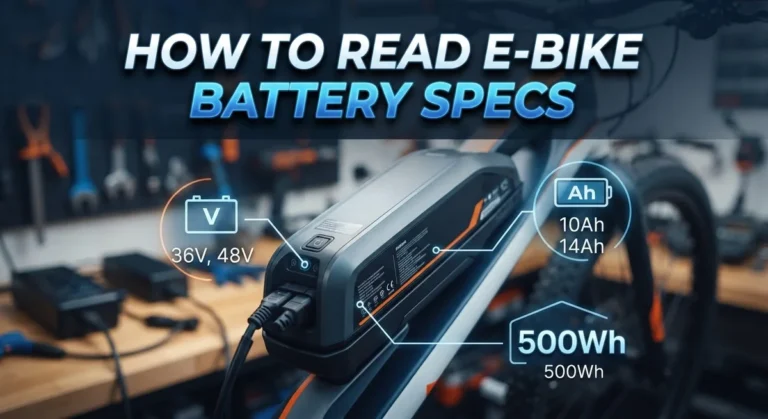
Electric bike batteries are measured in watt hours, or Wh. This number shows total energy available. A 500Wh battery holds more power than a 250Wh battery. The math is straightforward: bigger capacity equals longer range.
Here’s the practical conversion. Most eBikes use about 25 watt hours per mile. This varies based on conditions, but it’s a solid starting point. A 960Wh battery divided by 25 gives you roughly 39 miles of range.
Let’s break down common battery sizes you’ll encounter. A 36 volt 8 amp hour battery equals about 288Wh and delivers roughly 12 miles. A 48 volt 10 amp hour battery equals 480Wh and offers around 19 miles. A 48 volt 20 amp hour battery equals 960Wh and provides approximately 39 miles.
Battery voltage and amp hours work together. Voltage (measured in volts) and capacity (measured in amp hours) multiply to create watt hours. So a 48V system with higher amp hours will always beat a 36V system with lower amp hours.
Real world range differs from theoretical range. Your actual distance depends on how you use that battery capacity. Heavy riders drain batteries faster than light riders. Hilly terrain demands more power than flat roads. Pedaling while using assist extends range compared to throttle only riding.
The key takeaway: battery capacity is your foundation. It sets the upper limit of what’s possible. But actual range depends on how you ride, where you ride, and the conditions around you. Choose a battery size that matches your typical riding distance, then expect real world results to be somewhat lower than theoretical maximums.
Terrain, Weight, and Riding Style: Their Impact on Range
Terrain affects your eBike range more than you might think. Hills demand constant motor power, which drains your battery faster than flat ground. Climbing a steep grade can cut your range by 25 to 40 percent compared to riding on level surfaces.
Your weight matters too. A heavier rider requires more energy from the motor to accelerate and maintain speed. If you weigh 250 pounds instead of 150 pounds, expect your range to decrease noticeably. The good news is that pedaling harder reduces battery drain, so you have some control here.
Riding style makes a real difference. Aggressive acceleration and constant throttle use drain your battery quickly. Smooth, gradual speed changes preserve energy. Coasting whenever possible helps extend your distance.
Assist level selection is your most powerful tool. High assist mode gives you more help but uses battery faster. Lower assist levels require more pedaling but stretch your range significantly. Medium assist often hits the sweet spot between comfort and efficiency.
Wind conditions impact range too. Riding into strong headwinds forces your motor to work harder. Tailwinds reduce the load on your battery. Plan routes with wind direction in mind when possible.
Road surface texture affects efficiency as well. Smooth pavement requires less energy than gravel or sand. Wet surfaces create extra resistance that drains your battery faster than dry conditions.
Temperature influences battery performance. Cold weather reduces battery capacity and range. Your eBike will go fewer miles on a winter day than a summer day with the same battery charge.
Understanding these factors helps you plan realistic trips. Start by testing your eBike on different terrain types. Note how far you travel under various conditions. This personal data becomes more valuable than any general estimate because it reflects your specific weight, riding style, and local environment.
How to Estimate Your Own eBike’s Range
Start with your battery’s watt hour rating. This number appears in your eBike’s specifications and tells you the total energy available. Most eBikes consume approximately 25 watt hours per mile under average conditions.
Here’s the math: divide your battery’s watt hours by 25. A 960 watt hour battery divided by 25 equals about 39 miles of range. This gives you a baseline estimate before real world variables enter the picture.
Check your assist level settings. Higher assist levels drain your battery faster because the motor works harder. Test your eBike at different assist levels on flat ground to see how each one affects your range.
Measure your tire pressure with a gauge. Most eBike tires have a recommended PSI range printed on the sidewall. Properly inflated tires roll more smoothly and use less battery power. Check pressure weekly since tires naturally lose air over time.
Consider the terrain you’ll actually ride. Flat routes let you achieve close to your theoretical range. Hills demand more motor power and reduce distance significantly. Plan your route knowing that climbing reduces range by 20 to 40 percent depending on steepness.
Factor in your weight and pedaling contribution. Heavier riders and those who coast without pedaling drain batteries faster. Lighter riders who pedal actively extend their range noticeably.
Test your specific eBike in real conditions. Ride a known distance while monitoring battery percentage. This shows you actual consumption rates on your typical routes. Record data from different terrain types and assist levels.
Use these real world numbers for future trip planning. Your personal testing reveals more accurate range than manufacturer estimates. This practical approach prevents unexpected battery depletion during rides.
Keep a simple log of distance, battery drain, and conditions. This information becomes invaluable for trip planning and helps you understand your eBike’s true capabilities.
Proven Tips to Maximize Your Riding Distance
Your eBike’s range depends on how you use it. Small changes in your riding habits can add several miles to each charge. Here are practical strategies that actually work.
Optimize your assist level first. High assist drains your battery quickly. Use lower assist levels on flat terrain and save high assist for hills. Many riders find that medium assist gives them the best balance between speed and distance. Pedaling harder yourself reduces motor strain and extends your range significantly.
Keep your tires properly inflated. Check tire pressure weekly with a gauge. Underinflated tires create drag and force your motor to work harder. Properly inflated tires can add 5 to 10 percent more range to your trip. This is one of the easiest wins you can get.
Plan your route strategically. Flat routes use far less battery than hilly ones. If you must climb hills, tackle them when your battery is full. Descending hills lets you recharge slightly through regenerative braking on some models. Avoid unnecessary detours that add distance.
Ride at steady speeds. Constant acceleration drains battery faster than maintaining a steady pace. Smooth, predictable riding is more efficient than stop and go traffic patterns.
Reduce overall weight when possible. Leave unnecessary cargo at home. Every pound matters, especially on longer trips.
Warm up your battery before cold rides. Cold temperatures reduce battery efficiency. Bring your eBike indoors before winter trips and let it reach room temperature.
Avoid using throttle mode constantly. Throttle drains battery faster than pedal assist. Reserve throttle for moments when you truly need it.
Test these strategies on short rides first. Track your distance and battery drain under different conditions. You’ll quickly learn what works best for your specific eBike and riding style. This real world data becomes your best planning tool for future trips.
Common Mistakes That Drain Your Battery Faster
Your electric bike’s battery drains faster when you make certain common mistakes. Understanding these errors helps you ride longer on each charge.
Using throttle mode right away is one of the biggest culprits. Many riders grab the throttle immediately instead of pedaling. This burns through your battery quickly because the motor works alone without your leg power helping. Save throttle for emergencies or steep hills only.
Choosing the wrong assist level for your situation wastes energy fast. If you select high assist on flat terrain, you’re using more power than necessary. Match your assist level to the actual difficulty of your route. Use low assist on flat sections and save higher levels for climbs.
Neglecting tire pressure creates unnecessary drag on your wheels. Soft tires require more energy to roll forward. Check your tire pressure weekly with a gauge. Properly inflated tires reduce resistance and extend your range significantly.
Ignoring your riding style impacts battery life too. Constant acceleration drains power faster than steady speeds. Accelerate gradually and maintain a consistent pace whenever possible. Smooth riding preserves battery capacity.
Carrying unnecessary weight forces your motor to work harder. Every extra pound requires more energy to move. Leave items at home if you don’t truly need them. This simple step improves your range noticeably.
Riding in cold weather without preparation reduces battery efficiency. Cold temperatures slow chemical reactions inside your battery. If you ride in winter, store your battery indoors and warm it before heading out.
Planning routes with too many hills drains your battery faster than expected. Hilly terrain requires constant high assist usage. Scout your route beforehand and choose flatter alternatives when possible.
These mistakes compound together. Fix even a few of them, and you’ll notice your eBike travels much farther per charge.
Final Thoughts
An electric bike can take you farther than you might think. Most riders get between 20 and 75 miles on a single charge. Your actual distance depends on your battery size and how you ride.
Battery capacity remains the biggest factor in your bike’s total range. A bigger battery always means more potential miles. But smart riding habits matter just as much as battery size.
Think of your eBike’s range as a flexible number, not a fixed one. Two riders on the same bike can get very different results. Your choices directly shape how far you travel.
The good news is that you control most of these factors. Smart choices about assist levels, tire care, and route planning make a real difference. Small adjustments add up to bigger distances over time.
Don’t expect perfect numbers every single ride. Weather changes, terrain shifts, and your energy levels all play a role. Give yourself some flexibility when planning longer trips.
Testing your specific bike matters more than any general estimate. Every eBike behaves differently based on its design and your riding style. Real world experience teaches you more than any chart ever could.
Start paying attention to your patterns. Notice how hills affect your battery. Track how assist levels change your distance. This knowledge becomes incredibly useful for future rides.
Electric bikes offer real freedom for commuting, exercise, and exploring new areas. Understanding your range helps you plan better and ride with confidence. You won’t worry about getting stranded with a dead battery.
Range anxiety fades once you know your bike’s true capabilities. Spend time learning your eBike’s habits and limits. This simple step transforms how you plan every future ride.
Your electric bike can go quite far when you treat it right. Pay attention, make smart choices, and enjoy the extended range your bike offers.
Frequently Asked Questions
How far can I realistically ride on a single charge?
Most electric bikes travel between 20 and 75 miles per charge. High-end models with larger batteries can exceed 75 miles. Your actual distance depends on battery size, terrain, and how hard you pedal. A 36-volt 8-amp-hour battery typically gives you around 12 miles, while a 960-watt-hour battery offers roughly 39 miles.
Think of range as flexible rather than fixed. Real-world conditions change your distance every ride.
What’s the single biggest factor affecting my eBike’s range?
Your battery capacity matters most. Larger batteries store more energy and take you farther. The relationship is straightforward: bigger battery equals longer range.
Everything else (terrain, assist level, rider weight) influences how efficiently you use that stored energy. But without adequate battery capacity, no optimization trick will dramatically extend your range.
Does terrain really impact how far I can go?
Yes, significantly. Hills drain your battery much faster than flat roads. Your motor works harder climbing uphill, burning through charge quickly.
Flat, smooth routes let you travel farther on the same battery. Plan routes with fewer hills when you need maximum range.
How can I get more miles from my current battery?
Use lower assist levels when possible. Maintain proper tire pressure weekly. Ride at steady speeds rather than constantly accelerating. Reduce unnecessary weight in your cargo.
These adjustments improve efficiency without buying a new battery. Small changes add real miles to your trips.
Should I use throttle mode to save battery?
No, throttle actually drains your battery faster than pedal assist. Throttle mode works the motor harder without your pedaling help.
Switch to pedal assist and pedal along with the motor. This shared effort uses battery power more efficiently and extends your range.

Philips is the founder and lead writer at GearheadGarageFinds.com, a passionate automobile enthusiast who has spent years testing, comparing, and reviewing auto products and accessories to help fellow gearheads make smarter buying decisions. When he’s not under the hood or behind the keyboard, you’ll find him exploring the latest automotive innovations and hunting for the best garage finds on the market.