How to Read E-Bike Battery Specs: A Complete Guide
Shopping for an e-bike can feel confusing once you hit the battery specs. You see numbers like 36V, 48V, and 500Wh. But what do they actually mean for your ride?
Understanding these numbers matters. They tell you how far you can ride, how fast you can go, and how long your battery will last. Without this knowledge, you might pick a bike that does not fit your needs.
This guide breaks down everything you need to know. We will explain voltage, ampere hours, and watt hours in simple terms. You will learn how these specs connect to real world performance.
We also cover common mistakes riders make when comparing batteries. Many people confuse Ah with total energy capacity. Others ignore how voltage affects different bike systems.
By the end of this article, you will know how to compare batteries like a pro. You will understand what affects your riding range and how to spot a quality battery pack.
Let’s make battery specs simple and clear.
In a Nutshell
Here’s a quick summary to keep in mind:
-
Voltage (V) shows the power level of the system. Most e-bikes use 36V, 48V, or 52V batteries. Higher voltage often means stronger performance on hills.
-
Ampere hours (Ah) tell you how much energy the battery can store. This number helps you guess how far you can ride before recharging.
-
Watt hours (Wh) combine voltage and Ah into one total energy number. You get this by multiplying V × Ah. This is the best number for comparing batteries fairly.
-
A higher Wh rating usually means a longer riding range. Always check this number first when comparing two e-bikes.
-
The battery monitoring system tracks charge levels and protects the battery. It helps you know when to charge and how much power remains.
-
Don’t forget to check the charger specs too. A mismatched charger can slow charging or harm battery life over time.
Keep these points handy. They make reading battery labels much easier.
Understanding Voltage, Ah, and Wh: The Core Metrics
Voltage, Ah, and Wh are the three numbers you need to understand. Each one tells you something different about your e-bike battery.
Voltage (V) measures the electrical pressure in your system. Common e-bikes use 36V, 48V, or 52V batteries. Higher voltage means the motor can deliver more power faster. A 48V system gives you more punch than a 36V system. Think of voltage like water pressure in a hose.
Ampere hours (Ah) show how much energy your battery stores. A 10Ah battery holds more charge than a 5Ah battery. This number directly affects your riding range. More Ah means you travel farther before recharging. It’s like the size of your fuel tank.
Watt hours (Wh) combine voltage and Ah into one total energy number. You calculate this by multiplying V times Ah. A 48V battery with 10Ah equals 480Wh. This single number makes it easy to compare different batteries. Higher Wh ratings give you longer range.
Here’s why this matters. Two batteries might look similar, but their specs tell different stories. A 36V 15Ah battery (540Wh) and a 48V 10Ah battery (480Wh) have different power outputs. The 48V system accelerates faster. The 36V system with higher Ah goes slightly farther.
When you read specs, always check all three numbers. Don’t compare just Ah across different voltages. Real world range depends on terrain, rider weight, and assist level. Your battery monitoring system displays remaining charge as a percentage. Check your charger specs too to understand charging time and safety features.
How to Calculate Watt-Hours and Why It Matters
Calculating watt-hours is simple once you know the formula. Watt-hours (Wh) = Voltage (V) × Ampere-hours (Ah). This single number tells you the total energy your battery holds.
Let’s use a real example. A 48V battery with 15Ah capacity gives you 48 × 15 = 720Wh. This 720Wh rating is what matters most when comparing different e-bikes.
Why does this calculation matter? Watt-hours directly predict your riding range. A higher Wh number generally means you can ride farther before needing to recharge. Two bikes might have different voltage and Ah combinations, but the same Wh total means similar range potential.
Here’s another reason it matters. Watt-hours help you compare apples to apples. One bike might advertise 52V with 12Ah. Another offers 36V with 20Ah. Without calculating Wh, these specs look completely different. But 52 × 12 = 624Wh and 36 × 20 = 720Wh, so the second battery actually stores more energy.
Real-world range depends on more than just Wh though. Your weight, terrain, pedal assist level, and weather all affect how far you actually go. A 720Wh battery might give you 40 miles on flat ground but only 25 miles on hills.
Always write down the Wh number when you see battery specs. This makes comparison shopping much easier. Check the charger specs too, since faster chargers can get you back on the road quicker. Keep a simple chart of different models and their Wh ratings. This approach removes confusion and helps you pick the right battery for your needs.
Step-by-Step: Reading a Battery Spec Sheet
Start by locating the voltage rating on your battery spec sheet. You will see this listed as a number followed by the letter V. Common voltages include 36V, 48V, and 52V systems. Voltage tells you the electrical pressure your motor receives. Write this number down first.
Next, find the ampere-hours rating. This appears as a number with “Ah” after it. You might see ratings like 10Ah, 13Ah, or 17Ah. Ampere-hours show how much energy your battery can store. This number directly affects how far you can ride on a single charge.
Now calculate the total watt-hours using both numbers. Multiply the voltage by the ampere-hours. For example, a 48V battery with 13Ah equals 624 watt-hours (48 × 13 = 624). This final number matters most for comparing different batteries.
Look at the charger specifications next. Check the input voltage and output amperage. These details tell you how fast your battery will charge and what outlet you need. A higher amperage charger fills your battery faster.
Review the battery monitoring system information. This section explains how the display shows your charge level and remaining range. Some systems give precise percentages while others show simple bars.
Check for temperature operating ranges too. Batteries perform differently in cold and hot weather. Your spec sheet should list safe temperatures for charging and riding.
Finally, note the cycle life rating. This tells you how many charge cycles the battery can handle before capacity drops. A higher number means longer battery lifespan.
Keep all these numbers organized in one place. This makes comparing different battery options straightforward and simple.
How Battery Specs Translate to Real-World Riding Range
Your battery specs tell you a lot about how far you can actually ride. The key is understanding how those numbers translate into real miles or kilometers on the road.
Watt-hours (Wh) are your primary range indicator. A 500Wh battery will generally take you farther than a 400Wh battery. However, real-world range depends on many other factors beyond just the Wh rating.
Terrain makes a huge difference. Hilly routes drain your battery faster than flat paths. Headwinds also reduce your range significantly. Rider weight matters too. A heavier person uses more energy to reach the same speed as a lighter rider.
Your riding style affects range dramatically. Pedaling hard and using full motor power drains the battery quickly. Gentle pedaling with moderate motor assistance extends your range considerably.
Temperature impacts performance. Cold weather reduces battery efficiency. Hot weather can also affect how much energy your battery delivers. Always expect less range in extreme temperatures than in mild conditions.
Tire pressure and road surface play a role. Underinflated tires create more friction. Rough surfaces require more energy than smooth pavement.
The battery’s age matters as well. Older batteries lose capacity over time. A well-maintained battery performs better than a neglected one.
Real-world range is typically 20 to 40 percent lower than manufacturer estimates. Manufacturers test under ideal conditions. Your commute probably includes hills, wind, and varied terrain.
To estimate your actual range, take the manufacturer’s range claim and reduce it by 30 percent. This gives you a realistic expectation. Track your rides to learn your specific battery’s real-world performance. Every e-bike behaves differently based on your local conditions and riding habits.
Matching Voltage and Capacity to Your Riding Needs
Understanding your riding needs comes before choosing a battery. Different riders need different power levels. A commuter has different demands than a mountain biker.
Start by thinking about your typical rides. How far do you travel each day? Do you ride on flat ground or hills? Your answers shape which voltage and capacity work best.
Voltage affects how much power your motor can deliver. A 36V system provides basic assistance for casual riders. A 48V system offers more muscle for hills and headwinds. A 52V system gives maximum power but drains faster. Choose based on terrain, not just raw numbers.
Capacity (measured in Ah) determines how long you can ride. A smaller battery (around 400Wh) works for short trips under 20 miles. A medium battery (500 to 700Wh) handles daily commutes and weekend rides. A large battery (over 700Wh) supports long adventures and hilly terrain.
Consider your weight and cargo too. Heavier riders and loaded bags require more energy. This means you might need a higher voltage or larger capacity than a lighter rider.
Think about charging access during your day. If you can charge at work, a smaller battery suffices. If you’re stuck without power all day, choose larger capacity.
Match your battery to your lifestyle, not just the specs on paper. A 48V 500Wh battery suits most commuters perfectly. Casual riders might prefer 36V 400Wh systems. Serious cyclists often choose 52V 700Wh or larger.
Write down your typical ride distance and terrain. Compare this against the Wh numbers available. This simple step prevents buying too much battery or too little.
Tips for Comparing Battery Specs Across E-Bike Models
When you compare e-bike batteries across different models, you need to look at the same specs for each one. This keeps your comparison fair and accurate.
Start by checking the voltage rating on every battery you’re considering. Most e-bikes use 36V, 48V, or 52V systems. Write down the voltage for each model so you can see the differences clearly.
Next, find the ampere-hours (Ah) number for each battery. This tells you how much energy the battery stores. Don’t compare Ah numbers directly between different voltages though. A 48V 10Ah battery is not the same as a 36V 10Ah battery.
Instead, calculate the watt-hours (Wh) for every model. Multiply the voltage by the Ah capacity. This gives you the true energy amount in each battery. Use Wh numbers to compare across all models because they account for voltage differences automatically.
Look at the charger specifications too. Different batteries charge at different speeds. A faster charger might matter if you need quick turnarounds between rides.
Check the battery monitoring system each model offers. Some show you remaining range estimates. Others just display a simple charge percentage. Decide which information helps you most.
Review the temperature operating ranges listed in the specs. If you ride in cold winters or hot summers, this matters for battery performance and safety.
Finally, organize all these numbers in a simple spreadsheet or chart. Put voltage, Ah, Wh, charger speed, and monitoring features in columns. List each model in rows. This layout makes it easy to spot which battery best fits your needs at a glance.
Common Mistakes When Interpreting Battery Specs
Many people make simple but costly mistakes when reading e-bike battery specifications. Understanding these errors helps you make smarter choices and avoid disappointment.
Confusing Ah with total energy capacity is the biggest mistake. Ampere-hours (Ah) only tell you one part of the story. You need to multiply voltage by Ah to get watt-hours (Wh), which shows your actual energy storage. A 48V 10Ah battery stores more energy than a 36V 15Ah battery, even though the Ah number is smaller.
Ignoring voltage differences between systems causes real problems. Two batteries might have the same Wh rating, but different voltages mean different power delivery. A 36V system and a 52V system with identical watt-hours perform differently on hills and during acceleration. You cannot compare them fairly without considering voltage.
Overlooking real-world range reduction leads to frustration. Manufacturers often test batteries under perfect conditions. Your actual range will be 20 to 40 percent lower due to terrain, weather, riding style, and tire pressure. Do not expect the manufacturer’s maximum range in daily use.
Skipping the battery monitoring system details is another common error. Some batteries tell you charge percentage, while others only show full or empty. A good monitoring system helps you plan your trips better and prevents unexpected power loss.
Forgetting to check charger specifications creates charging problems. Different batteries need different chargers. Using the wrong charger damages your battery and shortens its lifespan.
Not accounting for battery age matters too. Older batteries lose capacity over time. A used e-bike with a 500Wh battery from five years ago may not perform like a new 500Wh battery today.
Maintenance and Storage Factors That Affect Battery Performance
Your e-bike battery works best when you care for it properly. Maintenance and storage directly impact how long your battery lasts and how well it performs. Temperature plays a huge role in battery health. Batteries work most efficiently between 50°F and 86°F. Extreme heat or cold reduces their lifespan and temporary power output.
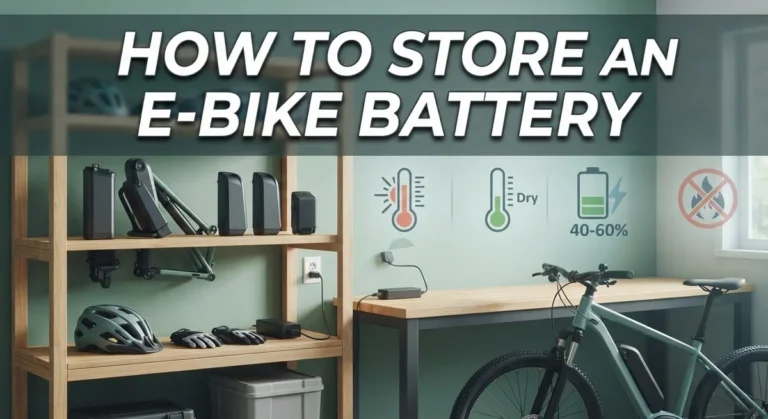
Store your battery in a cool, dry place when you’re not riding. Avoid leaving it in direct sunlight or unheated garages during winter. If you live in a cold climate, bring your battery indoors before charging. This simple step prevents damage to the internal cells.
Charge your battery regularly, but don’t let it sit empty for weeks. A battery stored at zero percent charge degrades faster than one kept at 40 to 60 percent. Check your battery monthly if it sits unused for extended periods. Top it up slightly to maintain that middle charge range.
Keep your battery clean and dry. Wipe down the connector ports with a soft cloth occasionally. Water and dirt can cause corrosion, which affects charging and power delivery. Never submerge your battery or expose it to heavy rain while riding.
Check your charger condition too. A faulty charger can overcharge your battery, causing swelling or reduced capacity. Most batteries have built in protection systems, but worn chargers still stress the cells.
Monitor your battery’s weight and performance over time. A battery that feels heavier or delivers less range may need professional inspection. Regular attention to these factors keeps your battery running strong for years.
Final Thoughts
Reading e-bike battery specs does not need to feel confusing. Once you know what each number means, you can make smart choices fast.
Voltage, ampere hours, and watt hours work together. They tell you how powerful and how long lasting a battery truly is.
Remember that watt hours give you the clearest picture. This single number lets you compare batteries fairly, even across different brands.
Do not get stuck on voltage alone. A higher voltage does not always mean better performance if the ampere hour rating is low.
Always check the charger specs too. A mismatched charger can slow down charging or even harm your battery over time.
Keep real world conditions in mind. Hills, cargo weight, and cold weather all reduce your actual range below the advertised number.
Your riding habits matter just as much as the spec sheet. A commuter and a trail rider need different things from a battery.
Take time to write down your needs before you shop. Think about your daily distance, your terrain, and how often you can charge.
Then match those needs to the specs you find. This simple habit saves you money and prevents buyer’s remorse.
Caring for your battery also extends its useful life. Good habits protect your investment long after you buy it.
Smart spec reading leads to smart buying. You avoid overpaying for power you do not need.
You also avoid underbuying and facing range anxiety on every ride. The right balance keeps your rides smooth and stress free.
In the end, understanding these numbers puts you in control. You choose a battery that fits your life, not just your budget.
That knowledge pays off every single time you ride.
Frequently Asked Questions
What do voltage and ampere hours mean on my e-bike battery?
Voltage (V) tells you the power level of your battery system. Most e-bikes use 36V, 48V, or 52V systems. Ampere hours (Ah) measure how much energy your battery stores. Think of voltage as water pressure and Ah as the size of your tank. Together, they determine your bike’s performance and range.
How do I calculate watt hours from the specs?
Watt hours (Wh) show the total energy your battery holds. The math is simple: multiply voltage by ampere hours. For example, a 48V battery with 10Ah equals 480Wh. Watt hours give you the clearest picture for comparing different e-bike batteries. Higher Wh numbers mean longer riding range.
Why do real world ranges differ from spec sheets?
Battery specs show maximum potential, but actual range depends on many factors. Your riding style, terrain, weather, and rider weight all affect distance. Climbing hills uses more energy than flat riding. Cold temperatures reduce range too. Expect 10 to 30 percent less range in real conditions than what specs suggest.
What voltage should I choose for commuting?
Most commuters do well with 48V systems. These offer good balance between power and efficiency for city riding. A 36V system works for lighter riders or flat terrain. Higher voltage like 52V helps if you carry cargo or face steep hills. Your commute distance matters more than voltage alone.
Does battery age affect how I read the specs?
Battery specs stay the same on paper, but real performance changes over time. A two year old battery may deliver 20 percent less range than when new. Check your battery’s health through the monitoring system if available. Proper charging and storage slow this decline significantly.

Philips is the founder and lead writer at GearheadGarageFinds.com, a passionate automobile enthusiast who has spent years testing, comparing, and reviewing auto products and accessories to help fellow gearheads make smarter buying decisions. When he’s not under the hood or behind the keyboard, you’ll find him exploring the latest automotive innovations and hunting for the best garage finds on the market.