How to Choose an Electric Bike: A Complete Buyer’s Guide
Buying an electric bike feels exciting. But with so many options, it can also feel confusing.
You might wonder about motor power. Or frame size. Or battery life.
This guide makes the choice simple. We break down every factor that matters before you buy.
Electric bikes work great for commuting, running errands, or hitting trails. The right one depends on how you plan to ride it daily.
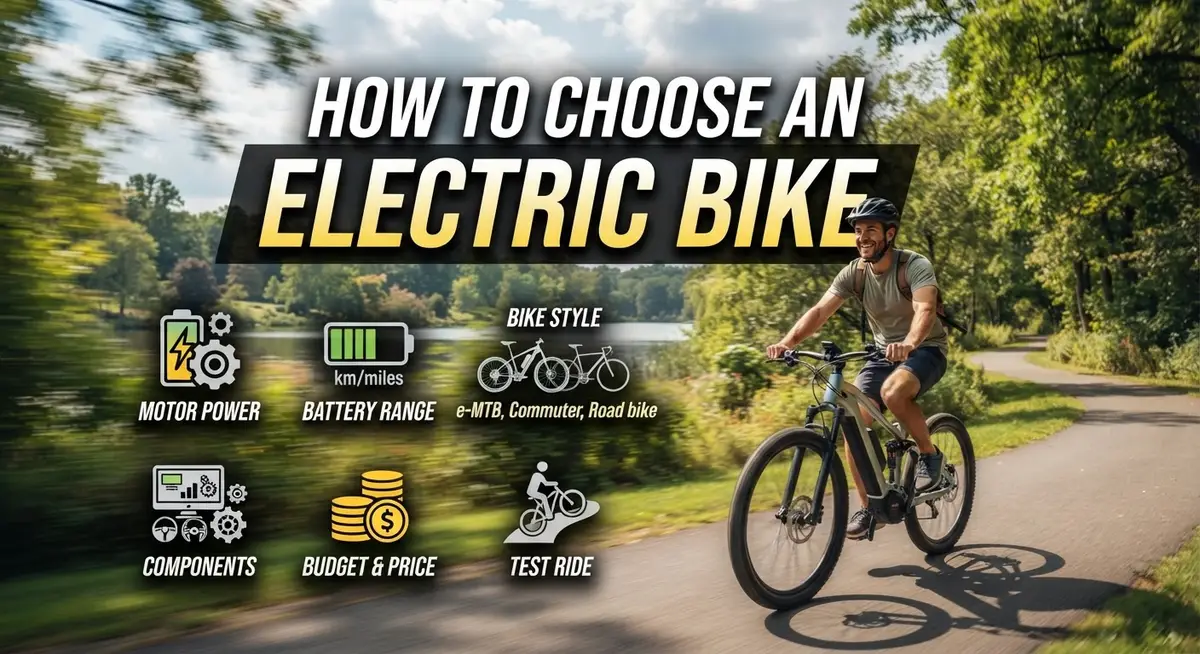
Motor power matters a lot. A commuter climbing hills needs more power than someone riding flat city streets. We explain how to match motor strength to your actual needs.
Frame fit also plays a huge role. A bike that fits your height and body type rides smoother and feels safer.
Battery performance deserves attention too. You want a battery that lasts your whole route without dying halfway.
In this article, we cover frame sizing, motor selection, battery specs, and safety features. We also touch on speed limits, e-bike classes, and common buying mistakes to avoid.
By the end, you will know exactly what to look for. Choosing your perfect electric bike becomes easy and stress free.
In a Nutshell
Here’s a quick summary to keep in mind while you shop:
-
Check your frame size first. Your height determines the right frame, so you stay comfortable on every ride.
-
Think about your daily routes. Look at distance, hills, and how often you plan to ride before picking a bike.
-
Match the motor to your needs. A bigger motor isn’t always better. Pick power that fits your actual trips.
-
Compare e-bike types and classes. Each class offers different speed limits and features, so know what suits your lifestyle.
-
Look closely at battery specs. Range, charging time, and lifespan all affect how often you need to recharge.
-
Don’t skip safety features. Lights, brakes, and reflectors keep you visible and protected on the road.
Avoid common mistakes like oversizing your motor or ignoring frame fit. These errors often lead to regret later.
Keep these points handy as you move through each section below. They will help you make a smart, confident choice.
Understanding E-Bike Types and Classes
E-bikes fall into several distinct types, each built for different riding situations. Understanding these categories helps you pick the right bike for your lifestyle.
Pedal assist bikes let you control how much motor help you get. You pedal, and the motor kicks in to give you extra power. This type feels natural and lets you exercise while riding. Many people prefer pedal assist because it keeps you active.
Throttle bikes work differently. You twist or press a button, and the motor moves you forward without pedaling. This option suits riders who want less physical effort or those with joint problems. Some areas limit throttle bikes, so check your local rules first.
Cargo e-bikes have sturdy frames and extra space for hauling goods. They work great for deliveries, groceries, or family trips. These bikes handle heavier loads than standard models.
Mountain e-bikes come with suspension and knobby tires for off-road trails. They give you power when climbing steep hills and let you explore rough terrain safely.
Road e-bikes feature lightweight frames and thin tires for fast street riding. They suit long distance commutes and smooth pavement routes.
E-bikes also divide into three legal classes in most places. Class 1 offers pedal assist only, with motors stopping at 20 mph. Class 2 includes throttle capability, also topping out at 20 mph. Class 3 provides pedal assist up to 28 mph, making it fastest for commuters.
Your daily needs determine which type and class work best. Someone commuting five miles on flat roads needs different specs than a person tackling mountain trails. Consider distance, terrain, weather, and how much pedaling you want to do. This thinking process narrows down your options quickly and leads to a better purchase decision.
Finding the Right Frame Size and Fit
Getting the right frame size and fit transforms your riding experience. A bike that fits you well feels natural to ride and reduces strain on your body.
Start by measuring your height and inseam length. Your inseam is the distance from your crotch to the floor when you stand barefoot. Most e-bike manufacturers provide sizing charts that match these measurements to frame sizes.
Frame size directly affects your comfort and control. When you stand over the frame with both feet flat on the ground, you should have one to two inches of clearance. This space prevents injury if you need to step off quickly.
Reach matters just as much as frame height. Reach is the distance from the seat to the handlebars. A reach that’s too short makes you feel cramped. A reach that’s too long strains your shoulders and back.
Test the seat height by sitting on the saddle with one pedal at its lowest point. Your leg should have a slight bend at the knee, roughly 25 to 35 degrees. This angle lets you pedal efficiently without overextending your legs.
Check handlebar height based on your riding style. Upright handlebars keep you in a comfortable, relaxed position for casual commuting. Drop bars lower your body for speed but require more flexibility.
Proper fit prevents injuries and boosts performance. Many bike shops offer fitting services where staff measure you and adjust components to match your body.
Consider trying different frame geometries before buying. Some e-bikes have relaxed, upright designs. Others have aggressive, forward-leaning positions. Your comfort preference matters more than what looks cool.
Don’t rush the fitting process. Spend time on different bikes to understand what feels right. A well-fitted e-bike makes every journey more enjoyable and keeps your body healthy for years of riding.
Assessing Your Daily Routes and Usage Needs
Your daily routes and usage patterns form the foundation of choosing the right e-bike. Start by writing down where you ride most often and how far you travel.
Distance matters greatly. If you commute 5 miles each way on flat terrain, you need different specs than someone riding 20 miles through hills. Check your typical route using a map app. Note the elevation changes and road surfaces you encounter regularly.
Frequency shapes your needs too. Daily commuters benefit from reliable batteries and durable components. Weekend riders can often manage with smaller motors and less expensive models. Think about how many days per week you actually ride.
Terrain type affects motor selection. Flat urban streets require less power than steep hills or rough trails. Sandy paths, gravel roads, and paved streets each demand different tire and motor combinations. Hilly areas need stronger motors to avoid draining batteries quickly.
Consider your weather conditions as well. Rain, snow, and extreme heat impact battery performance and component longevity. Riders in wet climates need better water resistance than those in dry areas.
Think about your riding style. Do you want to arrive fresh at work, or do you prefer pedaling hard for exercise? Pedal assist lets you control effort levels, while throttle bikes remove physical work entirely. Your fitness level and goals influence this choice.
Also assess cargo and passenger needs. Carrying groceries, kids, or tools requires sturdy frames and stronger motors. Lightweight commuters don’t need this capacity and benefit from nimbler bikes.
Weather and storage matter. Where will you park your e-bike? Covered storage protects electronics better than outdoor racks. Cold temperatures drain batteries faster, so winter riders need larger capacity packs.
Finally, track your actual usage for a week or two if possible. Real data beats guessing. You’ll spot patterns that help you select an e-bike matching your genuine lifestyle.
Matching Motor Power to Your Riding Style
Motor power directly impacts how your e-bike performs on your specific routes. You need to match the motor’s strength to the demands of your daily riding.
Understanding motor wattage helps you make the right choice. E-bike motors typically range from 250 watts to 750 watts, with some models going higher. A 250 watt motor works well for flat commutes and light assistance. A 500 watt motor handles hills and heavier riders more effectively. Motors above 750 watts provide maximum power for steep terrain and cargo hauling.
Your terrain determines what power level you actually need. Flat city streets require less motor assistance than hilly neighborhoods. If your commute includes one or two significant climbs, a 500 watt motor gives you comfortable assistance without oversizing. Steep mountains or frequent hills justify a more powerful motor.
Consider your body weight and fitness level when selecting motor power. Heavier riders benefit from stronger motors because they work harder against gravity and friction. If you want minimal physical effort, choose a more powerful motor. If you enjoy pedaling and want motor help only when needed, a smaller motor suffices.
Think about your riding frequency and distance. Daily commuters benefit from reliable, moderate power that doesn’t drain the battery quickly. Occasional weekend riders can use more power without worrying about battery longevity. Longer distances demand efficient motors that deliver steady assistance without overheating.
Weather conditions affect your motor choice too. Headwinds and wet roads make riding harder, so consider a slightly more powerful motor if you ride in challenging conditions regularly.
Don’t oversizeunnecessarily. A motor stronger than your needs drains your battery faster and adds weight you don’t use. Test ride different power levels on terrain similar to your actual routes. This hands on experience shows you exactly what motor strength feels right for your riding style and daily demands.
Understanding Battery Specifications and Longevity
Battery capacity tells you how far your e-bike can travel on a single charge. This measurement appears as watt-hours (Wh). A 500Wh battery stores more energy than a 250Wh battery, so it lasts longer between charges.
Your actual range depends on several factors beyond just capacity. Motor power, rider weight, terrain type, and how much you pedal all affect distance. A hilly route drains your battery faster than flat ground. Heavier riders use more energy than lighter riders on identical routes.
Battery chemistry matters for longevity. Most modern e-bikes use lithium-ion batteries. These hold their charge well and last through hundreds of charge cycles. A quality battery typically provides 3 to 5 years of reliable use with proper care.
Temperature impacts battery performance significantly. Cold weather reduces range by 20 to 40 percent. Heat can damage batteries if they overheat during charging or storage. Store your battery in a cool, dry place when not in use.
Charging habits directly influence how long your battery survives. Avoid letting it completely drain before recharging. Partial charges (20 to 80 percent) extend battery life compared to full charges. Charge your battery regularly, even during off-season storage.
Check the battery’s cycle rating before purchasing. This number shows how many full charges the battery can handle before capacity drops to 80 percent. Higher cycle ratings mean longer battery life. A 1000-cycle battery outlasts a 500-cycle battery significantly.
Battery replacement costs matter for your long-term budget. Ask about warranty coverage and replacement pricing. Some batteries cost several hundred dollars to replace, so durability becomes important.
Weight distribution affects how your e-bike handles. Batteries positioned low and centered improve balance and control. Frame-integrated batteries look sleeker than rack-mounted options.
Test the battery removal system before buying. Easy removal lets you charge indoors and prevents theft. Some batteries lock into the frame permanently.
Essential Safety Features to Look For
Safety features protect you during every ride. Your electric bike needs reliable stopping power, visibility systems, and structural integrity to keep you secure on roads and trails.
Braking systems are your first line of defense. Disc brakes outperform rim brakes on e-bikes because they handle the extra weight better. Hydraulic disc brakes offer superior stopping power in wet conditions. Mechanical disc brakes work well too and cost less to maintain. Test the brakes before buying to ensure they feel responsive and smooth.
Lighting matters more than most riders realize. Front lights help you see obstacles ahead. Rear lights make you visible to cars and other traffic behind you. Integrated lights powered by your battery work better than battery powered attachments. Look for lights bright enough to use during dusk and dawn commutes.
Reflectors and reflective materials increase your visibility significantly. Check if the frame, wheels, and pedals have reflective elements. Wearing reflective clothing adds another layer of protection on dark roads.
Stability and frame strength affect how safely your bike handles. Larger wheels provide better shock absorption and traction. A sturdy frame prevents wobbling under the motor’s power. Test ride the bike on different surfaces to feel how stable it feels.
Fenders reduce spray from wet roads and protect your drivetrain. A chain guard keeps your pants clean and prevents chain accidents. These features seem minor but improve your safety and comfort.
Check the tires carefully. Wider tires offer better grip and control. Puncture resistant tires reduce flats during commutes. Tread patterns should match your riding surfaces.
Bell or horn systems help you alert pedestrians and other cyclists. These simple additions prevent collisions in crowded areas.
Review the bike’s weight limit and suspension quality. Your safety depends on the bike handling your body weight properly. Quality suspension absorbs bumps and maintains control on rough terrain.
Common Mistakes to Avoid When Choosing an E-Bike
Ignoring frame fit is one of the biggest errors people make. A frame that doesn’t match your height or inseam causes discomfort and reduces control. Always measure your height and compare it to the manufacturer’s size chart before purchasing.
Many buyers focus only on motor power and forget about actual riding needs. You don’t need a 750-watt motor for casual commuting on flat terrain. Assess your daily routes first, then choose a motor that handles those specific conditions without excess capacity.
Overlooking battery specifications leads to disappointment. Don’t just look at amp hour ratings. Check the cycle rating, which tells you how many times you can charge the battery before it degrades significantly. A battery with 800 cycles lasts much longer than one rated for 300 cycles.
Skipping the test ride is a critical mistake. E-bikes vary greatly in how they feel and respond. Ride different models on similar terrain to understand weight distribution, handling, and comfort. What feels great for one person may feel awkward for another.
Neglecting maintenance requirements before buying costs money later. Some e-bikes need specialized tools or expensive parts. Research what maintenance your chosen model requires and whether local shops can service it.
Forgetting about class restrictions creates legal problems. Different regions have speed and power limits. Class 1 bikes assist only while pedaling. Class 2 bikes have throttles. Class 3 bikes go faster. Know your local laws before deciding.
Underestimating total weight impacts your ability to handle the bike. Heavier e-bikes are harder to maneuver, especially when the motor isn’t assisting. Test the weight on hills and tight turns.
Finally, many people ignore warranty coverage. Check what the manufacturer covers and for how long. Motor and battery warranties matter most since these are expensive components.
Final Thoughts
Choosing an electric bike feels like a big decision. But it does not need to be stressful.
Focus on your daily needs first. Think about your commute, your errands, and the terrain you ride on. This helps you narrow down motor power and battery size quickly.
Frame fit matters more than flashy features. A bike that fits your body will always feel better than one with extra gadgets. Test the geometry before you commit to a purchase.
Battery life and safety features work together to keep your rides smooth. Do not skip either one. A great motor means little if your battery dies early or your brakes feel weak.
Take time to compare different types and classes. Each one suits different riding styles and legal requirements. Knowing these differences protects you from future headaches.
Remember the common mistakes we covered. Oversizing your motor, ignoring fit, and skipping test rides are the biggest traps. Avoiding these simple errors saves you money and frustration later.
Your e-bike should match your lifestyle, not someone else’s idea of the perfect ride. Think about where you will ride most often. This single question guides most of your other decisions.
Do not rush this process. Visit shops, ask questions, and test different models when possible. A little patience now leads to years of enjoyable riding.
Every rider has different needs. Your perfect e-bike might look completely different from your neighbor’s choice. That is okay and expected.
Trust your instincts alongside the facts you have learned. If a bike feels right during a test ride, that feeling matters. Combine that feeling with smart research on specs and safety.
Choosing an e-bike is a personal journey. With the right knowledge, you can find a bike that fits your life perfectly. Enjoy the ride ahead.
Frequently Asked Questions
What motor power do I actually need for my commute?
Motor power ranges from 250W to 750W depending on your location and needs. A 250W motor works well for flat terrain and short city trips. If you face hills or longer distances, 500W to 750W gives you more help. Match the motor to your actual route, not just what sounds impressive.
Consider your daily commute distance and terrain type. A hilly 10 mile commute needs more power than a flat 3 mile trip. Test different power levels if possible before deciding.
How do I know what frame size fits me correctly?
Frame size depends on your height and inseam measurement. Stand over the frame with your feet flat on the ground. You should have 1 to 2 inches of clearance between your body and the top tube.
Proper fit prevents discomfort and reduces injury risk. Reach the handlebars comfortably without stretching too far. Your legs should have a slight bend at the knee when pedaling. Many shops offer fitting services to get this right.
What battery range should I look for?
Battery range varies based on motor power, rider weight, terrain, and assist level. Most e-bikes offer 20 to 80 miles per charge. Think about your longest typical ride and add 20 percent as a safety buffer.
If you commute 15 miles each way, a 40 to 50 mile range gives you flexibility. Urban riders need less range than trail riders. Check how long batteries take to recharge and whether you can charge at work.
Are there legal restrictions on e-bike use?
E-bike classes determine where and how you can ride legally. Class 1 bikes have pedal assist only up to 20 mph. Class 2 bikes include throttle assist and also max out at 20 mph. Class 3 bikes offer pedal assist up to 28 mph.
Check your local laws before purchasing. Some cities restrict where Class 3 bikes operate. Bike paths may have different rules than roads. Your state or country may offer tax credits for e-bike purchases, so research incentives in your area.

Philips is the founder and lead writer at GearheadGarageFinds.com, a passionate automobile enthusiast who has spent years testing, comparing, and reviewing auto products and accessories to help fellow gearheads make smarter buying decisions. When he’s not under the hood or behind the keyboard, you’ll find him exploring the latest automotive innovations and hunting for the best garage finds on the market.