How Fast Do Electric Bikes Go? Speed Guide & Key Factors
Have you ever wondered how fast an electric bike can really go? Many riders ask this question before buying their first eBike. The answer depends on several factors that we will break down for you.
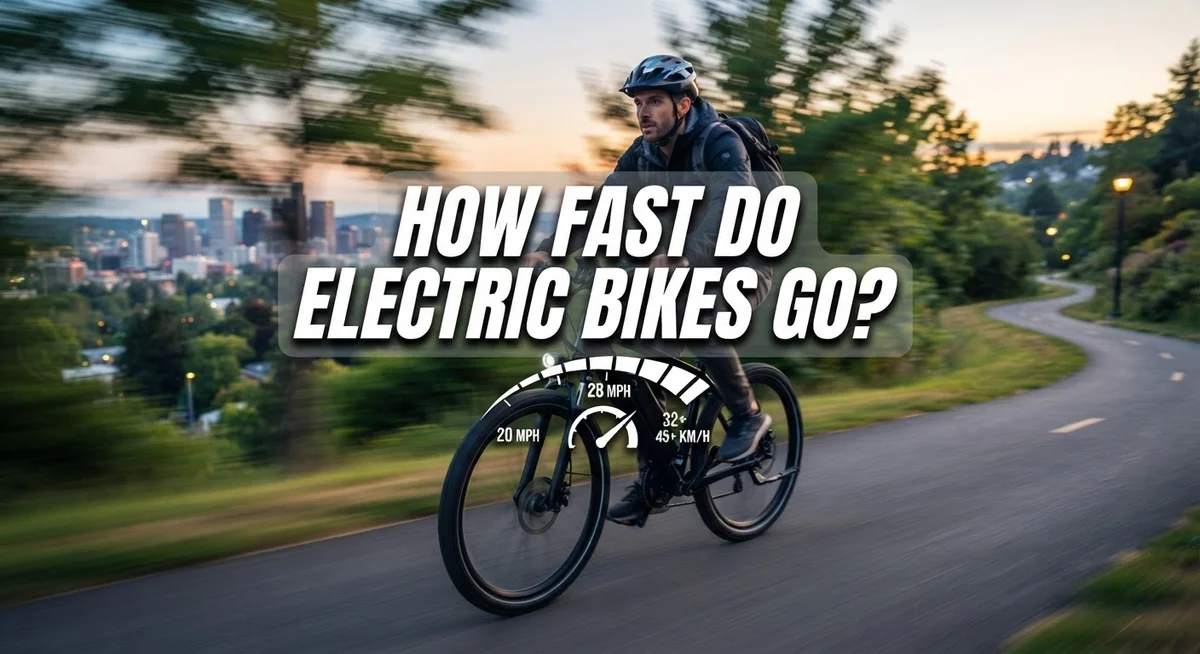
Electric bikes typically reach speeds between 20 mph and 28 mph. Commuter and comfort models often average around 20 mph. Performance eBikes with pedal assist can push closer to 28 mph.
Throttle only riding without pedaling usually caps around 20 mph too. Some models can hit 28 mph at their top speed. Your location also plays a big role here.
In Canada, the legal limit sits at 32 kph, which equals about 20 mph. Rules differ depending on where you ride your eBike.
Speed does not come from the motor alone. Terrain, pedal effort, and assist level all shape how fast you go. Riding downhill can even push speeds to 40 or 60 mph through gravity, not the motor.
This article will explain what affects eBike speed. You will learn about motor power, assist settings, and legal limits. We will also clear up common myths about eBike speed.
In a Nutshell
Here is a quick snapshot of electric bike speeds. Use this as your fast reference guide.
-
Commuter and comfort eBikes cruise at speeds close to 20 mph. These bikes suit everyday rides and short trips.
-
Performance eBikes push higher, reaching around 28 mph with pedal assist. Riders who want quick commutes often pick these models.
-
Motor power and assist level both shape your final speed. A higher assist setting on your display panel gives you more speed.
-
Rider effort matters too. Pedaling harder adds extra speed on top of motor assistance.
-
Terrain changes everything. Flat roads help you go faster, while hills slow you down unless you pedal more.
-
Downhill rides are a different story. Gravity can push speeds to 40 mph or even 60 mph, but this comes from the slope, not the motor.
Keep these points in mind. They help you set realistic speed expectations before your next ride.
Average Electric Bike Speeds by Type
Electric bikes come in different types, and each one performs differently on the road. Understanding these speed variations helps you pick the right model for your needs.
Commuter and comfort eBikes are built for everyday riding. These bikes prioritize safety and ease over raw speed. They typically reach about 20 mph on flat ground with moderate pedal assist. The motors on these bikes are usually smaller, around 250 to 500 watts. You get a smooth, steady ride that feels natural and controlled.
Performance eBikes are designed for riders who want more speed and power. These models can hit around 28 mph with pedal assist engaged. They use stronger motors, often 750 watts or higher. The extra power means faster acceleration and better hill climbing. You’ll feel the difference immediately when you compare them to comfort models.
Throttle only eBikes let you ride without pedaling at all. These bikes max out around 20 mph using throttle power alone. Some models reach 28 mph at their top speed, but this depends on motor strength and local regulations. Throttle riding uses more battery power than pedal assist.
Your speed also depends on the assist level you select. Most eBikes have a display panel where you control this setting. Lower assist levels give you speeds around 15 mph, while higher settings push you closer to the maximum. You control exactly how much motor help you want.
Weight and rider fitness matter too. A heavier rider or bike combination may not reach the top speed as quickly. A lighter setup accelerates faster and maintains speed more easily.
Terrain makes a huge difference in real world riding. Flat roads let you hit maximum speeds easily. Hills slow you down significantly, even with strong motors. Wind and road conditions also affect your actual speed on any given day.
Pedal Assist vs. Throttle-Only Speeds
Pedal assist and throttle only modes deliver different speed experiences on an electric bike. Understanding these differences helps you choose the right riding style for your needs.
Pedal assist mode requires you to pedal while the motor helps amplify your effort. This system reads your pedaling input through sensors and boosts your power automatically. Most pedal assist eBikes reach around 28 mph at top speed with this mode. The motor responds to how hard you pedal, so more effort means faster acceleration. You control your speed through the display panel by selecting different assist levels. Higher settings provide more motor power, pushing you closer to maximum speed.
Throttle only mode lets you ride without pedaling at all. You simply twist or press the throttle, and the motor engages immediately. This approach typically maxes out around 20 mph for most standard eBikes. Throttle riding feels more like a scooter or motorcycle experience. You get instant power without needing to put in physical effort.
The key difference comes down to efficiency and effort. Pedal assist uses less battery power because you’re contributing physical energy to the ride. Throttle only drains your battery faster since the motor does all the work alone. Pedal assist also helps you travel farther on a single charge.
Speed control matters too. With pedal assist, you modulate speed through pedaling intensity and assist level selection. Throttle mode gives you direct speed control through hand input alone. Some riders prefer throttle for casual cruising, while others choose pedal assist for longer commutes where battery life matters.
Your choice depends on your riding goals. Need maximum range? Pedal assist wins. Want effortless short trips? Throttle only works well. Many eBikes offer both options, letting you switch between modes based on the situation.
What Determines How Fast an Electric Bike Can Go
Several factors work together to determine how fast your electric bike can go. Understanding these elements helps you get the most from your ride.
Motor power is the foundation of eBike speed. Motors come in different wattages, typically ranging from 250 watts to 750 watts or higher depending on your region. A more powerful motor delivers more assistance, which means you can reach higher speeds more easily. The motor type also matters. Hub motors (built into the wheel) and mid-drive motors (near the pedals) perform differently in various conditions.
Pedal assist level gives you direct control over speed. Your display panel shows multiple assist settings, usually ranging from eco to turbo mode. Lower settings preserve battery and use less motor power. Higher settings activate more motor assistance, pushing you faster. You choose the level based on your needs and how long you want your battery to last.
Your pedaling effort combines with motor power to create final speed. The motor amplifies what you do, so harder pedaling means faster acceleration. If you pedal gently, you’ll move slower even with high assist. The motor responds to your input, making you an active part of the speed equation.
Terrain and conditions significantly impact real world speeds. Flat roads let you maintain higher speeds consistently. Hills slow you down because the motor works harder to push you uphill. Wind resistance, road surface, and weather all play roles too. Rough terrain requires more motor effort, reducing your top speed.
Rider weight and bike weight affect acceleration and hill climbing ability. Heavier riders and bikes need more motor power to reach the same speeds as lighter combinations. This doesn’t mean you can’t go fast, but the motor works harder to get there.
Legal Speed Limits for Electric Bikes by Region
Electric bike speed limits vary significantly depending on where you live. Understanding your local regulations helps you ride legally and safely.
In the United States, federal law classifies eBikes into three categories. Class 1 and Class 2 bikes have a 20 mph speed limit with motor assistance. Class 3 bikes can reach 28 mph with pedal assist. Most states follow these federal guidelines, though some states set their own rules.
Canada enforces a strict 32 kph limit, which converts to approximately 20 mph. This applies to all electric bikes sold and used in Canada. Riders who exceed this speed may face fines or legal consequences.
European countries often maintain a 25 kph speed cap, roughly 15.5 mph. This lower limit reflects stricter safety standards in many European nations. The United Kingdom allows 15.5 mph for motor assistance on public roads.
Australia sets a 200-watt motor power limit with a 25 kph speed restriction for electric bikes on bike paths. Different rules apply for electric scooters and other micro mobility devices.
Speed limits protect pedestrians and other road users. Exceeding your region’s legal limit can result in your eBike being reclassified as a motorcycle or moped. This reclassification often requires registration, insurance, and licensing.
Some areas offer different speed allowances for different riding zones. Protected bike paths might have lower limits than open roads. Always check local ordinances before purchasing an eBike.
Your display panel shows real time speed, making it easy to stay within legal boundaries. Many riders adjust their assist level to comply with local regulations. Knowing your region’s rules ensures you enjoy your eBike without legal troubles.
Contact your local transportation department if you’re unsure about specific speed regulations in your area. Rules continue to evolve as eBike popularity grows.
How Terrain and Downhill Riding Affect Speed
Terrain plays a major role in how fast your electric bike actually travels. Flat, smooth pavement lets your motor work efficiently and maintain steady speeds. Rough or unpaved surfaces slow you down because the tires lose traction and the motor works harder.
Hills present an interesting challenge. Going uphill, your speed drops significantly because the motor must fight gravity. Even high powered bikes slow to 5 to 10 mph on steep inclines. The assist level you choose makes a big difference here. Higher settings help you climb faster, but they drain your battery quicker.
Downhill riding is where things get exciting. Gravity takes over and pulls you forward without motor help. Your eBike can reach 40 to 60 mph or more going downhill, depending on the slope’s steepness and your bike’s weight. This speed comes from gravity alone, not from the motor pushing you.
Here’s an important point: don’t confuse motor assisted top speed with downhill gravity assisted speed. Your motor might max out at 28 mph, but a steep hill could push you to 50 mph. This difference matters for safety and braking.
Wind conditions also affect your real world speed. Strong headwinds slow you down noticeably. Tailwinds can boost your speed without extra motor effort. Wet or muddy surfaces grip differently than dry pavement, changing how quickly you can accelerate.
Understanding these terrain factors helps you predict realistic speeds. A 28 mph eBike on flat ground might only reach 12 mph climbing a hill. That same bike could hit 55 mph descending. Plan your routes knowing that terrain changes speed dramatically. Adjust your assist level based on what you encounter. This way you’ll maximize battery life and stay safe in different conditions.
Tips to Safely Maximize Your eBike’s Speed
Maximizing your eBike’s speed safely requires understanding how your bike responds to different conditions and settings. Start by familiarizing yourself with your display panel. This screen shows your current assist level, speed, and battery status. Most riders can increase speed by selecting a higher assist level, but this drains your battery faster.
Pedal with intention to unlock your bike’s full potential. Your pedaling effort combines with motor power to reach top speed. Casual pedaling keeps you at moderate speeds, while strong, consistent pedaling helps the motor push you closer to maximum velocity. The harder you work, the faster you go.
Check tire pressure regularly. Underinflated tires create more rolling resistance, which slows you down and wastes battery power. Properly inflated tires let your eBike move more efficiently at higher speeds. Your bike’s manual specifies the correct pressure range for your tire size.
Smooth acceleration matters for both safety and speed. Gradually increase your assist level rather than jumping straight to maximum. This approach helps you maintain control and react quickly to obstacles or other riders. Jerky speed changes can catch you off guard.
Keep your chain clean and well lubricated. A clean drivetrain transfers your pedaling power more effectively to the wheels, helping you reach higher speeds with less effort. A dirty chain creates friction that reduces efficiency.
Choose flat, smooth routes when you want to test your speed. Potholes, gravel, and rough surfaces slow you down significantly. Smooth pavement lets your eBike perform at its best.
Always wear a helmet and protective gear when riding at higher speeds. Faster speeds mean longer stopping distances and more impact force if you crash. Stay alert to pedestrians, traffic, and road conditions. Speed is only fun when you arrive safely.
Common Mistakes When Estimating Electric Bike Speed
Many riders make simple mistakes when thinking about electric bike speeds. These errors lead to disappointment or unrealistic expectations about performance.
The biggest mistake is confusing motor assisted speed with gravity assisted downhill speed. Your eBike’s motor might deliver 28 mph on flat ground with pedal assist. However, rolling downhill can push speeds to 40, 50, or even 60 mph without any motor help. Gravity does the work, not your battery. This distinction matters because downhill speeds depend on the slope angle, not your bike’s actual capability.
Another common error is expecting high speeds without pedaling. Many people think throttle only riding delivers the same speed as pedal assist. The truth is simpler. Throttle only typically maxes out around 20 mph on most bikes. Pedal assist goes faster because your leg power combines with motor power. You must contribute effort to reach those higher speeds advertised on product pages.
Riders often ignore their display panel settings. Your eBike has an assist level you can adjust. Level 1 gives you modest speed boost. Level 5 or maximum assist delivers full power. Many people stay on low settings without realizing they could access more speed by simply adjusting their display.
Weather and conditions get overlooked too. Strong headwinds slow you down significantly. Rain and wet pavement reduce traction and real world speed. Riders blame their bike when the environment is the actual culprit.
Battery level also affects performance. A depleted battery cannot deliver full motor power. Your speed will drop noticeably as the battery drains. Expecting consistent maximum speeds throughout your ride sets you up for frustration.
Finally, riders forget that motor type matters. Hub motors and mid drive motors behave differently. Mid drive motors feel more natural because they work with your pedaling. Understanding your specific motor type helps predict realistic speeds for your rides.
Final Thoughts
Electric bikes offer a fun and practical way to travel faster than a regular bicycle. Commuter models typically reach around 20 mph, while performance eBikes can hit 28 mph with pedal assist. Your actual speed depends on several things working together.
Motor power, assist level, and your own pedaling effort all play a role. Terrain and weather conditions matter too. No two rides will feel exactly the same.
It helps to remember that downhill speeds are different from motor assisted speeds. Gravity can push your bike well beyond 40 mph on steep descents. This is normal and expected.
Throttle only riding gives you speeds close to 20 mph without any pedaling. This is convenient, but pairing throttle with pedal assist often gives you better control and efficiency.
Legal speed limits exist for good reason. They keep riders, pedestrians, and other road users safe. Always check your local rules before riding at higher speeds.
Your eBike’s display panel is your best friend. Use it to monitor and adjust your speed based on current conditions. This small habit makes a big difference in safety.
Speed can be exciting, but safety should always come first. Wear protective gear, keep your bike well maintained, and choose routes that match your skill level.
Understanding what affects your eBike’s speed helps you set realistic expectations. It also helps you get the most out of every ride.
Whether you are commuting to work or enjoying a weekend trail, knowing your bike’s capabilities makes the experience better. Speed is just one part of the electric biking experience.
In the end, how fast your electric bike goes depends on you, your bike, and the road ahead. Ride smart, stay safe, and enjoy the ride at whatever speed feels right for you.
Frequently Asked Questions
How fast can an electric bike go without pedaling?
You can reach about 20 mph without pedaling by using the throttle. Some eBikes with stronger motors hit 28 mph on throttle alone. The exact speed depends on your motor power and battery charge level.
Throttle-only riding works well for short distances. Your battery drains faster this way compared to pedal assist mode.
What is the legal speed limit for electric bikes?
Most regions set the legal limit at 20 to 32 mph. Canada allows 32 kph, which equals about 20 mph. Laws vary by country and state, so check your local rules before riding.
Exceeding legal limits can result in fines or restrictions on where you can ride your eBike.
Why do electric bikes go faster downhill?
Downhill speeds reach 40 to 60+ mph because gravity assists your motor. This is not your motor working harder. Your bike simply accelerates due to the slope.
Motor speed and downhill speed are completely different. Many riders confuse these two concepts.
What affects how fast my eBike goes?
Four main factors control your speed. Motor power determines your bike’s potential. The assist level on your display panel lets you choose how much help you want.
Your own pedaling effort makes a big difference. Harder pedaling equals faster speeds. Terrain and weather also matter. Flat, smooth roads give you better speeds than rough trails or headwinds.
Can I make my electric bike go faster?
Yes, you can increase speed by raising your assist level on the display panel. Pedal with more force to gain extra speed. Keep your chain clean and maintain proper tire pressure for best performance.
Avoid expecting high speeds without pedaling effort. Your motor works best when you contribute power too.

Philips is the founder and lead writer at GearheadGarageFinds.com, a passionate automobile enthusiast who has spent years testing, comparing, and reviewing auto products and accessories to help fellow gearheads make smarter buying decisions. When he’s not under the hood or behind the keyboard, you’ll find him exploring the latest automotive innovations and hunting for the best garage finds on the market.