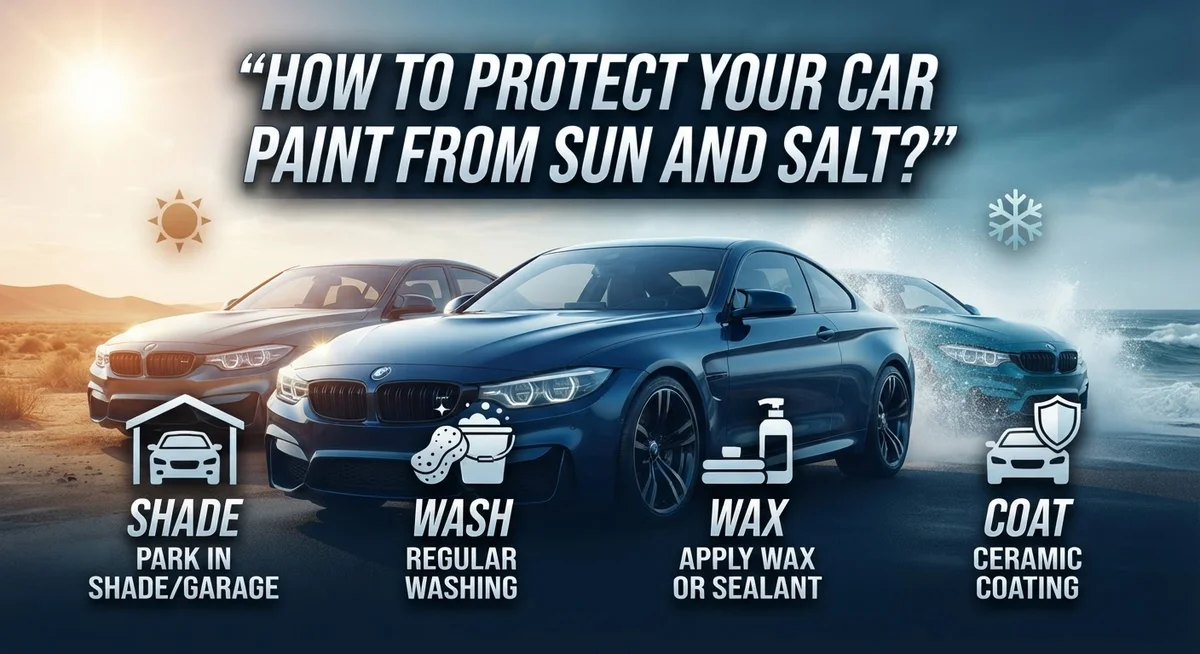
How to Protect Your Car Paint From Sun and Salt?
Your car faces two silent enemies every day. The sun’s UV rays slowly fade and break down your paint. Salt and grime create a corrosive film that eats away at the surface.
Over time, this damage adds up. Your once shiny paint job turns dull. Small scratches become bigger problems.
The good news? You can fight back with a simple plan. It all comes down to three key steps: washing, decontaminating, and protecting.
This article walks you through each step in detail. You will learn the right way to wash your car without causing more harm. We will show you how to remove stubborn salt and sand before they cause damage.
Finally, we will cover your options for long term protection. From classic wax to modern ceramic coatings, you will find a solution that fits your needs.
Whether you live near the coast or just want to survive a harsh winter, this guide has you covered. Protecting your paint is easier than you think. Let’s get started on keeping your car looking new for years to come.
In a Nutshell
Here is a quick summary to keep your car safe from sun and salt damage.
-
Wash your car often. Aim for a bi-weekly routine to remove dirt before it settles into your paint.
-
Skip the midday sun. Always wash your car in the shade. Hot surfaces make soap dry too fast and leave spots.
-
Decontaminate first. Salt and sand act like tiny knives on your paint. Remove them before you apply any protection.
-
Add a protective layer. Wax, sealant, or ceramic coating all work as a shield. Ceramic coating offers the strongest defense against UV rays and salt.
-
Dry with care. Use a soft microfiber towel. This simple step prevents tiny scratches from forming.
-
Park smart. Covered parking or a physical car cover blocks harmful UV rays directly.
Consistency is the real secret here. A few small habits, done regularly, protect your paint far better than one big effort. Follow these steps, and your car’s shine will last for years to come.
How Sun and Salt Damage Car Paint
UV rays and salt are two of the biggest threats to your car’s paint. Understanding how they work helps you protect your investment.
UV rays break down paint molecules. The sun’s ultraviolet light penetrates your clear coat and attacks the paint layers underneath. This process happens slowly over months and years. You’ll notice the color fades, becomes dull, or looks chalky. The paint may also crack or peel in severe cases. Dark colors show fading faster than light ones, but all colors suffer damage from sun exposure.
Salt creates a corrosive film on your paint. When salt from ocean spray, road de-icers, or winter treatments lands on your car, it doesn’t just sit there. Salt absorbs moisture from the air and creates a chemical reaction on your paint surface. This corrosive layer eats through your clear coat and reaches the base paint beneath. Once it reaches bare metal, rust forms quickly.
Sand and dirt particles make damage worse. These contaminants stick to salt and salt residue. When you wash your car without removing them first, you drag these particles across the paint. This scratches and scuffs the surface, creating tiny wounds where UV rays and salt can penetrate deeper.
The combination is especially dangerous. Sun heat opens your paint’s pores. Salt and contaminants then settle into these openings. Together, they work faster than either one alone. This is why cars in coastal areas or snowy climates fade and corrode so quickly.
The key takeaway is this: both threats work together to break down your paint’s protection. Your clear coat is your first line of defense. Once it fails, everything underneath becomes vulnerable. This is why a regular washing and protection routine stops damage before it starts.
Step 1: Washing Your Car the Right Way
Washing your car regularly is your first line of defense against sun and salt damage. The goal is to remove contaminants before they bond permanently to your paint.
Start by choosing the right time and place. Wash your car in the shade or during early morning or late afternoon hours. Direct sunlight heats your paint and causes water spots. Hot surfaces also dry products too quickly, leaving streaks and residue behind.
Use a two bucket system for the best results. Fill one bucket with soapy water and another with clean rinse water. This method prevents dirt from spreading across your paint. Dip your wash mitt in the soapy bucket, clean a section, then rinse the mitt in the clean water bucket before moving to the next area.
Pay special attention to areas where salt collects. Focus on your wheel wells, undercarriage, door jambs, and the bottom edges of your doors. Salt loves these hidden spots and causes rust if left unchecked. Use a separate brush or cloth for these areas to avoid spreading grit across your paint.
Rinse thoroughly with clean water. Make sure all soap residue disappears completely. Soap left on your paint creates a dull film and interferes with protective coatings you’ll apply later.
Dry your car immediately after rinsing. Use a soft microfiber towel to prevent water spots and micro scratches. Pat the surface gently rather than rubbing hard. Work from the top down so water drips away naturally.
Aim for a bi-weekly washing schedule, especially if you live near the coast or experience harsh winters. This frequency removes salt and contaminants before they cause permanent damage. In extreme conditions like beach environments or heavy salt exposure, wash every week instead.
Proper washing removes the first layer of threats. This foundation prepares your paint for the decontamination and protection steps that follow.
Step 2: Decontaminating Salt, Sand, and Residue
After washing your car, the next step is removing what soap and water alone cannot eliminate. Salt crystals, sand particles, and chemical residue bond firmly to your paint and require targeted decontamination.
Start by identifying problem areas. Salt concentrates in specific zones: wheel wells, door jambs, the undercarriage, and around trim pieces. Sand often embeds itself in these same spots. These areas need extra attention during decontamination.
Use a clay bar treatment to lift embedded contaminants. The clay works by gently pulling particles from your paint’s surface without scratching it. Glide the clay bar slowly across small sections at a time. Rinse each section with water as you finish. This process removes what your regular wash missed.
For stubborn salt deposits, a rinse with distilled water helps. Tap water contains minerals that can leave spots, so distilled water is gentler on your paint. Focus the distilled water rinse on areas where salt buildup is heaviest.
Check your wheel wells and undercarriage carefully. These zones trap salt and sand the most. A gentle spray can dislodge particles without forcing them deeper into crevices. Dry these areas with a soft cloth afterward.
Pay attention to door jambs and weatherstripping. Salt hides in these tight spaces and causes hidden corrosion. Wipe these areas thoroughly with a damp cloth, then dry completely.
The goal is simple: remove every trace of salt, sand, and chemical residue before they bond permanently to your paint. This decontamination step is not optional. It bridges the gap between basic washing and applying your protective coating.
Decontamination typically takes 30 to 45 minutes for a full vehicle. The effort pays off by preventing permanent damage. Once complete, your paint is ready for the next protective layer. This sequence creates the strongest defense against both sun and salt damage.
Step 3: Choosing and Applying a Protective Layer
After washing and decontaminating your car, you need a protective layer. This layer acts as a shield between your paint and the sun’s UV rays plus salt spray.
You have three main options to choose from. Wax is the most affordable choice. It sits on top of your paint and creates a water-beading surface. Wax typically lasts 2 to 3 months before you need to reapply it.
Sealants offer longer protection than wax. They bond more firmly to your clear coat and can last 4 to 6 months. Sealants provide better UV protection and resist salt spray more effectively than traditional wax.
Ceramic coatings deliver the strongest defense against both sun and salt damage. These coatings form a hard, protective shell that lasts 1 to 3 years. They resist UV fading better and repel salt water more effectively than wax or sealant.
To apply your chosen protection, start with a clean, dry surface. Make sure your car is parked in shade, not direct sunlight. Apply the product in small sections, following the manufacturer’s instructions carefully.
Work on one panel at a time. Use gentle, circular motions with a soft applicator pad or microfiber cloth. Avoid applying too much product at once. Less is actually more.
Let each section cure for the recommended time before buffing or rinsing. Most products need 15 to 30 minutes to set properly.
Timing matters here. Apply your protective layer on a cool day or in the evening. Hot surfaces can cause uneven application and poor bonding. Avoid washing your car for at least 48 hours after application to let the protection fully cure.
Reapplication schedules depend on your chosen product. Check the instructions and mark your calendar. Consistent reapplication keeps your paint safe year round.
Building a Regular Maintenance Routine
Your maintenance routine is the backbone of keeping your paint safe from sun and salt damage. Consistency matters more than any single product you use.
Start by marking your calendar for bi weekly washing sessions. This schedule removes salt and contaminants before they cause permanent damage. If you live near the coast or experience winter salt roads, consider washing every 10 days instead. The goal is prevention, not repair.
After washing, inspect your car under good lighting. Look for white residue, water spots, or discoloration. These signs tell you that salt or minerals are still present. Check areas you might miss: behind your wheels, along the roofline, and inside door jambs.
Decontamination should happen monthly or after heavy salt exposure. This step removes what regular washing cannot. Embedded particles sit on your paint and trap moisture underneath. Addressing them prevents long term damage.
Your protective coating needs reapplication on a schedule. Wax typically lasts 2 to 3 months before losing effectiveness. Sealants extend that window to 4 to 6 months. Ceramic coatings can last much longer, but you should still monitor coverage. Watch for water beading behavior. When water stops beading on your paint, your protection has faded.
Create a simple checklist. Note your washing dates, decontamination sessions, and protection reapplication. This record helps you stay on track and spot patterns.
Weather plays a role in your routine. After heavy rain, salt spray, or sandy storms, wash your car sooner. Don’t wait for your scheduled date. These events deposit fresh contaminants that need immediate attention.
Covered parking extends the time between washes. If you have access to a garage or carport, use it regularly. Even partial shade reduces UV exposure and salt accumulation. Your routine becomes easier when environmental stress is lower.
Extra Protection: Covered Parking and Car Covers
Covered parking is one of the most effective ways to shield your car from sun and salt damage. When you park under a roof or in a garage, you eliminate direct UV exposure that fades and oxidizes paint over time. Salt spray and moisture also cannot reach your vehicle as easily.
If you have access to covered parking, use it consistently. Even a carport makes a real difference compared to leaving your car in open sunlight all day. The investment in a monthly garage rental might seem high, but it saves your paint from premature aging and costly repainting later.
Car covers add an extra layer of protection when covered parking isn’t available. Physical barriers block UV rays and prevent salt spray from settling on your paint. Choose a cover made from breathable material to avoid trapping moisture underneath, which can cause rust and swirl marks.
When using a car cover, ensure your vehicle is clean and dry first. Dirt trapped under a cover acts like sandpaper and scratches your paint. Secure the cover properly so wind doesn’t damage it or your car. Remove the cover regularly to inspect your paint and allow air circulation.
Quality matters with car covers. Soft, non-abrasive linings protect your finish better than rough fabrics. Look for covers designed to fit your vehicle’s shape snugly. Loose covers flap in the wind and create friction damage.
Combine covered parking or car covers with your regular washing and decontamination routine for maximum results. Neither solution replaces the need for protective coatings like wax or sealants. Together, these strategies create a complete defense system against sun and salt damage.
Common Mistakes That Damage Paint Faster
Many car owners accidentally speed up paint damage without realizing it. Understanding these mistakes helps you avoid them and keep your finish looking fresh longer.
Washing in direct sunlight is one of the biggest errors. When you wash your car under hot sun, water droplets act like tiny magnifying glasses. They focus heat and UV rays onto your paint, causing spotting and potential damage. The soap also dries too fast, leaving streaks and residue behind. Always wash during early morning, late afternoon, or on cloudy days instead.
Neglecting salt and contaminant removal happens frequently, especially in coastal or winter areas. Regular water washing alone cannot remove salt crystals, sand particles, or chemical residue stuck to your paint. These contaminants sit on the surface and create a corrosive film. Salt eats through protective layers and reaches the base coat underneath. You must decontaminate monthly or after heavy exposure to prevent this damage.
Skipping reapplication of protective products is another common mistake. Many people apply wax or sealant once and forget about it. These layers break down over time from UV exposure and weather. Without reapplication, your paint loses its defense against sun fade and salt corrosion. Set reminders to refresh your protection every two to three months.
Using the wrong drying method also causes problems. Rough towels or chamois can scratch wet paint. Microfiber towels are gentler and safer for your finish.
Parking in the same spot daily concentrates UV damage on one side of your car. Rotate your parking position when possible to distribute sun exposure evenly.
These mistakes compound over time. One error might seem small, but combined with others, they significantly accelerate paint deterioration. Stay aware of these habits and adjust your routine accordingly.
Final Thoughts
Protecting your car paint from sun and salt does not need to be complicated. A simple routine of washing, decontaminating, and applying protection goes a long way. Each step builds on the last to keep your paint healthy.
Consistency matters more than perfection. You do not need to wash your car every single day. You just need to stick to a schedule that fits your climate and driving habits.
Think about your specific environment. Coastal areas need more frequent attention because salt exposure happens constantly. Areas with harsh winters face similar challenges from road salt and de-icing chemicals.
Ceramic coatings offer the strongest defense against both UV rays and salt damage. They create a durable barrier that lasts longer than traditional wax. However, wax and sealants still work well for many car owners on a budget.
Your choice depends on your goals, your climate, and how much time you want to spend on maintenance. There is no single right answer for everyone.
Remember that prevention costs less than repair. Fixing sun damaged or corroded paint takes far more time and money than maintaining it properly from the start.
Small efforts add up over time. A quick rinse after a beach trip or a monthly decontamination session can prevent long term damage. These habits protect your investment and keep your car looking great.
Pay attention to how your paint looks and feels. If you notice fading, rough spots, or dullness, it may be time to adjust your routine.
Your car reflects the care you put into it. A little effort now saves you from bigger problems later. Start with one step today, whether that means scheduling your next wash or checking your protective coating.
Sun and salt will always be part of driving in many regions. But with the right routine, your paint can stay protected for years to come.
Frequently Asked Questions
How often should I wash my car to prevent sun and salt damage?
Wash your car every two weeks as a general rule. If you live near the ocean or in a snowy climate, increase this to weekly. Salt and UV rays work together to break down your paint, so regular removal of these contaminants stops damage before it starts.
After beach trips or salt exposure, rinse your car as soon as possible. This removes salt residue that hardens and bonds to your paint over time.
What’s the difference between wax, sealant, and ceramic coating?
Wax offers basic protection and lasts 4 to 8 weeks. It’s easy to apply and affordable. Sealant lasts longer, typically 3 to 6 months, and provides stronger defense against UV rays and salt.
Ceramic coating offers the strongest protection. It bonds to your paint permanently and can last years. It resists both sun damage and salt corrosion better than wax or sealant.
Can I wash my car in the sun?
No. Washing in direct sunlight causes water spots and soap residue to bake onto your paint. This traps contaminants and reduces the effectiveness of your wash.
Wash your car in the shade or during early morning or late evening hours. This gives you time to dry the paint properly without UV rays interfering.
Why is decontamination important after salt exposure?
Salt creates a corrosive film on your paint that regular washing alone cannot remove. Decontamination uses clay bars or special treatments to lift embedded salt, sand, and chemical residue from your paint surface.
This step prevents long term etching and oxidation that leads to permanent damage.

Philips is the founder and lead writer at GearheadGarageFinds.com, a passionate automobile enthusiast who has spent years testing, comparing, and reviewing auto products and accessories to help fellow gearheads make smarter buying decisions. When he’s not under the hood or behind the keyboard, you’ll find him exploring the latest automotive innovations and hunting for the best garage finds on the market.