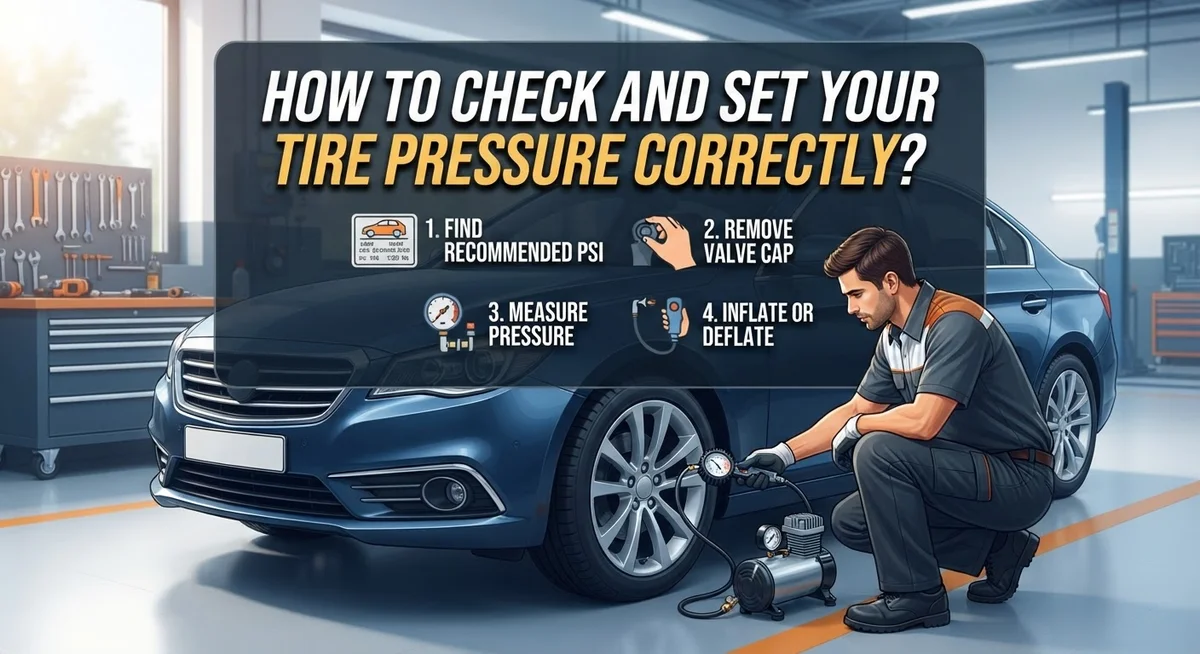
How to Check and Set Your Tire Pressure Correctly?
Your tires work hard every single day. They carry your car’s weight. They grip the road in rain or sun. But most drivers never check if their tires have the right air inside.
Correct tire pressure matters more than you think. It keeps you safe on the road. It also saves you money on fuel and tire wear.
Many people guess their tire pressure. Some check it only when a tire looks flat. Others use the wrong number completely. These mistakes can cost you in the long run.
This guide makes tire pressure simple. You will learn where to find your car’s correct PSI number. We will show you the right way to use a gauge. You will also discover the best time to check your tires.
We cover common mistakes drivers make too. You will know how to avoid them easily. By the end, checking your tire pressure will feel quick and easy.
Let’s help you keep your tires in great shape. Your car will thank you for it.
In a Nutshell
Here’s a quick summary to keep your tires happy and safe.
-
Find the right PSI on your driver’s side door jamb sticker. Never use the number on the tire sidewall. That number shows the maximum limit, not what your car actually needs.
-
Always check tires when cold. Drive less than a mile before checking. Hot tires give you false high readings that trick you into underinflating.
-
Use a good gauge every time. Press it firmly onto the valve stem. You should hear a small hiss and see a clear number pop up.
-
Add air slowly and evenly. Check the pressure often as you fill. This simple step helps you avoid overinflating your tires by mistake.
-
Check all four tires, not just one or two. Each tire can lose air at a different rate, so they all deserve equal attention.
-
Watch the temperature outside. Cold weather makes pressure drop fast. Checking more often in winter keeps you safe on the road.
-
Write down your numbers. Keeping a small record helps you spot slow leaks before they become bigger problems.
Why Correct Tire Pressure Matters
Your tires are one of the most important safety features on your vehicle. Proper tire pressure keeps you safe on the road and saves you money over time.
Fuel efficiency improves when tires have the right pressure. Under inflated tires create more rolling resistance, which means your engine works harder. This burns extra fuel and costs you more at the pump. Over inflated tires wear unevenly and reduce your vehicle’s grip on the road.
Safety is the biggest reason to maintain correct pressure. Tires with wrong pressure can cause poor handling, longer stopping distances, and blowouts. A blowout at highway speeds is dangerous for you and other drivers.
Tire lifespan extends significantly with proper pressure. Tires that sit at the correct PSI wear evenly across the tread. This means you get more miles before replacement becomes necessary. Under inflation causes the edges to wear faster, while over inflation wears the center quickly.
Your vehicle’s comfort also depends on tire pressure. Properly inflated tires absorb bumps and road imperfections better. You’ll notice smoother rides and less noise inside the cabin.
Temperature changes affect how your tires perform. Cold air makes pressure drop inside your tires. This is why winter months require more frequent checks. Hot weather can increase pressure, so seasonal monitoring matters.
Regular pressure checks catch slow leaks early. A small leak might not be obvious at first, but it gets worse over time. Catching it early prevents emergency situations on the road.
Correct tire pressure is preventive maintenance that protects your wallet and keeps your family safe. It takes just minutes to check all four tires, but the benefits last for thousands of miles.
Finding Your Vehicle’s Recommended PSI
Your vehicle’s recommended PSI is not a mystery. You’ll find this number in one specific location: the sticker on your driver’s side door jamb. Open your door and look at the edge where it closes. You’ll see a label with tire information printed on it.
This sticker shows the exact pressure your manufacturer recommends. It typically ranges between 28 and 35 PSI, though every vehicle differs. Write this number down and keep it handy.
Don’t confuse this with the number on your tire’s sidewall. That sidewall number is the maximum pressure your tire can safely hold. Using that number will overinflate your tires and cause problems. Your manufacturer’s recommendation is always lower and safer.
If you can’t find the sticker, check your owner’s manual. The manual contains the same PSI information. Some vehicles also list it inside the fuel door or in the glove compartment documentation.
Temperature affects your readings, so note the conditions. Cold weather drops pressure by about 1 PSI for every 10 degree drop in temperature. This is why winter months require more frequent checks.
Record the PSI for each tire separately. Front and rear tires sometimes need different pressures, though many vehicles use the same PSI for all four. Your sticker will clarify this.
Check your tires monthly at minimum. More frequent checks during seasonal temperature changes prevent problems before they start. Keeping a simple record helps you spot slow leaks developing over time.
Tools You Need to Check Tire Pressure
You need just a few basic tools to check your tire pressure accurately. The most important item is a tire pressure gauge. This small device measures the air pressure inside your tires in PSI (pounds per square inch).
There are three main gauge types available. Stick gauges are affordable and easy to use. Digital gauges give precise readings on a small screen. Dial gauges have a round face with a needle that points to the PSI number. Any of these options works well for home use.
Keep your gauge in your vehicle at all times. A gauge stored in your car is always ready when you need it. Check that your gauge works before each use by pressing it onto a valve stem.
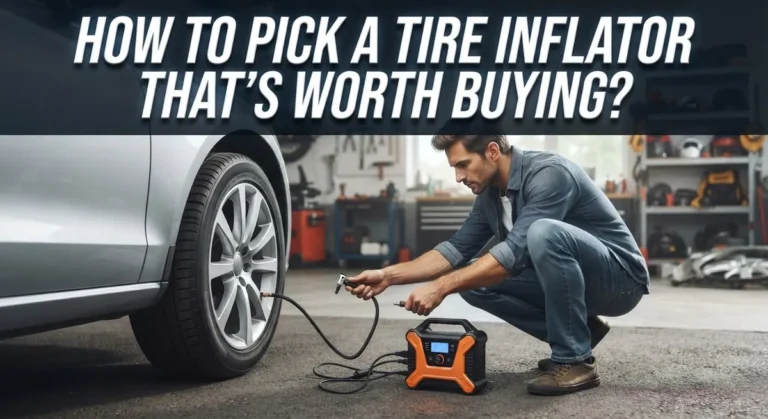
You’ll also need an air compressor to add air when pressure is low. Many gas stations have free air pumps available. Home compressors are another option if you want to fill tires at your house. Portable compressors plug into your vehicle’s power outlet for convenience.
A valve stem cap remover or small tool helps you take caps off your tire valves. Most people use their fingers, but a small tool makes this easier. Keep these caps safe so you can replace them after checking pressure.
Finally, grab a pen and paper to write down your PSI readings. Recording numbers for each tire helps you spot pressure changes over time. A small notebook stored with your gauge works perfectly.
These tools are affordable and last for years. Having them ready means you can check pressure anytime, anywhere. Proper tools make the job quick and accurate every single time.
Step-by-Step: How to Check Your Tire Pressure
Start by parking your vehicle on level ground. Make sure your tires are cold, meaning you haven’t driven for at least three hours or driven less than a mile at low speed. Hot tires give you false readings that are too high.
Remove the valve cap from the first tire by twisting it counterclockwise. Set it aside somewhere you won’t lose it. You’ll need to replace all caps when you finish.
Take your pressure gauge and press it firmly onto the valve stem. You should hear a slight hiss of air escaping. Hold the gauge straight and apply steady pressure until you get a solid connection. This seal is critical for an accurate reading.
Read the PSI number on your gauge. Different gauge types display pressure differently. Digital gauges show numbers on a screen. Stick gauges show a number on a sliding rod. Dial gauges have a needle pointing to the PSI value.
Write down the pressure for each tire. Compare each reading to your vehicle’s recommended PSI found on the driver’s side door jamb sticker. This number is what matters, not the sidewall pressure.
Repeat this process for all four tires, including your spare if your vehicle has one. Check the spare tire pressure at least twice yearly since people often forget about it.
Replace each valve cap by twisting it clockwise until snug. Don’t overtighten or you may strip the threads.
If any tire reads lower than recommended, you’ll need to add air. If any tire reads higher, you may need to release a small amount of air. Record your findings so you can track pressure changes over time and spot potential leaks early.
Step-by-Step: How to Adjust and Set Tire Pressure
Now that you know how to check your tire pressure, it’s time to learn how to adjust it correctly. This process takes just a few minutes and keeps your tires at their best.
Start by connecting your air compressor to the valve stem. Press the nozzle firmly onto the stem so air flows into the tire. You’ll hear a slight hiss as air enters. This is normal and expected.
Add air slowly and steadily. Don’t rush this step. Fast filling can cause the tire to overheat and give you a false high reading. Stop every few seconds and check your pressure with your gauge.
Press your gauge onto the valve stem after each short burst of air. Read the PSI number carefully. Compare it to your target pressure from the door jamb sticker. Keep adding air until you reach the exact number your manufacturer recommends.
Once your first tire reaches the correct PSI, move to the next one. Repeat the process for all four tires. Check your spare tire too if your vehicle has one.
Replace your valve caps by twisting them clockwise until they’re snug. Don’t overtighten them. These caps protect your valve stems from dirt and moisture.
Record the final PSI for each tire in a small notebook. Keep this record in your vehicle. It helps you spot slow leaks over time.
One final tip: avoid adjusting tire pressure when tires are hot. Heat from driving makes air expand inside the tire. This gives you a higher reading than reality. Always check and adjust when tires are cold for accurate results.
Common Mistakes to Avoid When Checking Pressure
Many people make simple errors when checking tire pressure. These mistakes lead to incorrect readings and unsafe driving conditions.
Checking hot tires is the biggest mistake. When you drive, friction heats your tires. Hot air inside the tire expands and creates higher pressure readings. This false reading makes you think your tires have enough air when they actually don’t. Always wait at least three hours after driving before checking pressure. Better yet, check your tires first thing in the morning when they’re completely cold.
Another common error involves using the wrong pressure number. The sidewall of your tire shows a maximum PSI rating. Many drivers confuse this with the correct operating pressure. That sidewall number protects the tire structure, not your safety. Your manufacturer’s recommended pressure is always lower and appears on the driver’s side door jamb sticker.
Poor gauge contact causes inaccurate readings. If you don’t press your gauge firmly onto the valve stem, air escapes around the sides. This gives you a lower reading than the actual pressure. Press straight and hard until you hear air stop hissing.
Overinflating tires is also risky. Some drivers add too much air thinking it improves fuel economy. Overinflated tires wear faster in the center and reduce traction on wet roads.
Finally, many people forget to check their spare tire. Your spare needs proper pressure too, especially if you need it in an emergency.
Avoid these mistakes by checking cold tires, using the correct pressure number, creating a firm seal with your gauge, and not overinflating. These simple steps keep you safe and extend your tire life.
How Temperature and Seasons Affect Tire Pressure
Temperature plays a huge role in how your tire pressure changes throughout the year. When it gets cold outside, the air inside your tires contracts. This means your PSI drops even though you haven’t lost any air.
For every 10 degrees Fahrenheit that temperature falls, your tire pressure decreases by about 1 PSI. During winter months, you might notice your tire pressure warning light comes on more often. This is completely normal and happens to most drivers.
Summer heat works the opposite way. When temperatures rise, the air in your tires expands. Your PSI goes up naturally without you adding any air. This is why checking pressure in summer can give you higher readings than in winter.
The best time to check your tire pressure is during fall and spring when temperatures are moderate. This gives you a more accurate baseline. However, you should still check your tires monthly, even in stable weather.
Seasonal changes mean you’ll need to adjust your tires more frequently. In winter, check your pressure every two weeks instead of monthly. Cold weather causes faster pressure drops than you might expect.
Always check your tires when they’re cold, ideally in the morning before driving. This prevents temperature from affecting your readings. If you must check after driving, wait at least three hours for tires to cool down.
Keep track of your PSI readings throughout the seasons. You’ll start noticing patterns in how your specific vehicle responds to temperature changes. This information helps you stay ahead of pressure problems before they affect your safety or fuel efficiency.
Maintaining a Regular Tire Pressure Routine
A regular tire pressure routine keeps your vehicle safe and efficient. The key is checking your tires consistently on a schedule that works for your driving habits.
Start by choosing a specific day each month to check all four tires. Many people pick the first Saturday or Sunday of each month. This routine helps you catch pressure problems before they become serious. Write the date and PSI readings in a small notebook so you can track changes over time.
Make checking your spare tire part of your routine too. Your spare needs proper pressure just like your regular tires. A flat spare won’t help you during an emergency on the road.
Keep your pressure gauge in your vehicle at all times. Store it in your glove compartment or door pocket. Having it nearby makes it easier to check pressure whenever you need to. A quality gauge stays accurate for years and becomes a reliable tool.
Consider checking your tires more often during extreme seasons. Winter cold and summer heat both affect pressure levels. If you live in an area with big temperature swings, check every two weeks during those seasons instead of monthly.
Before long trips, always verify your tire pressure. Consistent pressure means better fuel economy and safer handling on highways. Your tires work harder during extended driving, so starting with correct pressure matters.
Set phone reminders if you tend to forget routine maintenance. Most phones allow you to create recurring alerts. A simple monthly reminder takes the guesswork out of staying on schedule.
This habit takes just five minutes but protects your tires, saves money on fuel, and keeps you safer on every drive.
Final Thoughts
Checking your tire pressure takes just a few minutes. Yet this simple habit protects your safety and your wallet.
Correct tire pressure improves your fuel economy. It also extends the life of your tires and keeps your ride smooth.
Remember the key facts. Your correct PSI is on the driver’s door jamb sticker, not the tire sidewall. Always check tires when they’re cold for accurate readings.
Small changes make a big difference. Set a monthly reminder and check your pressure before long drives. This routine catches problems early.
Don’t wait for a warning light to act. By then, your tires may already have low pressure. Regular checks help you spot slow leaks before they become flat tires.
Make this task part of your routine. Keep a gauge in your car and check pressure with your other monthly errands. It becomes second nature after a few tries.
Think about the cost of neglect. Underinflated tires wear out faster and hurt your gas mileage. Overinflated tires reduce grip and comfort.
A few minutes of effort saves you money and stress. Proper tire care also keeps your family safer on the road.
Weather changes affect your tires too. Check more often during temperature swings in fall and winter.
Simple tools make this job easy. A good gauge, a bit of patience, and knowledge of your correct PSI go a long way.
Your car deserves this small investment. Healthy tires mean better handling and grip during braking.
Take charge of your tire health today. Grab your gauge, check each tire, and drive with confidence.
Correct tire pressure is a small task with a big payoff. Make it a habit, and your car will thank you.
Frequently Asked Questions
What is the difference between tire sidewall PSI and the recommended pressure?
The sidewall shows the maximum pressure your tire can safely hold. This number is not what you should use for daily driving. Your manufacturer’s recommended pressure is lower and appears on a sticker inside your driver’s side door jamb or in your owner’s manual.
Using sidewall pressure overinflates your tires. Overinflated tires wear faster in the center and reduce ride comfort. Always follow the manufacturer’s recommendation instead.
Why should I check tire pressure when tires are cold?
Driving heats up your tires and increases air pressure inside them. A hot tire reading gives you a false high number that doesn’t reflect your actual pressure.
Cold tires mean you haven’t driven for at least three hours. Early morning before driving is ideal. This gives you an accurate measurement for proper adjustments.
How do I get a good seal between my gauge and the valve stem?
Press the gauge firmly and straight onto the valve stem. You should hear a small air escape sound. A poor seal lets air leak out and gives an inaccurate reading.
If you hear hissing, reposition the gauge and try again. Practice makes this easier. Keep steady pressure on the gauge until you get your reading.
What should I do if my tire pressure keeps dropping?
Check all four tires first to see if one specific tire loses pressure faster. A slow leak often means a puncture or a faulty valve stem. You may need to have that tire inspected by a professional.
Record your tire pressures weekly for two weeks. This helps you spot which tire is the problem. Don’t ignore a consistent pressure drop.
How often should I check my tire pressure?
Check your tires monthly as a basic routine. During extreme seasons like winter or summer, check every two weeks. Before long road trips, always verify pressure beforehand.
Temperature swings affect pressure significantly. Cold weather drops pressure more noticeably than warm weather.

Philips is the founder and lead writer at GearheadGarageFinds.com, a passionate automobile enthusiast who has spent years testing, comparing, and reviewing auto products and accessories to help fellow gearheads make smarter buying decisions. When he’s not under the hood or behind the keyboard, you’ll find him exploring the latest automotive innovations and hunting for the best garage finds on the market.