How to Start an Electric Bike Without a Key: Complete Guide
Lost your e-bike key right before a ride? You are not alone. This happens to many riders, and it can feel frustrating.
The good news is that you still have options. Many e-bikes separate the key function into two jobs. One controls the ignition. The other locks the battery in place.
Understanding this difference is the first step. Some bikes only need the key to release the battery. Others use it purely for ignition. Knowing which one applies to your bike changes everything.
This guide walks you through practical ways to start your e-bike without the original key. We will cover how to identify your lock type. You will learn safe methods to access your battery compartment.
We also explain how rekeying works. This lets multiple batteries work with a single key. It is a handy trick for e-bike owners with spare batteries.
Keep in mind that every model is different. What works on one e-bike may not apply to another. By the end of this article, you will know exactly where to start looking for a solution.
In a Nutshell
Here’s a quick summary before you dive into the details.
-
Check your key’s job first. Some keys control ignition. Others control battery release. Your bike may use one or both.
-
Battery locks often need partial disassembly. This lets you access the battery without the original key.
-
Rekeying is possible. You can set multiple batteries to work with a single key. This saves you from juggling several keys.
-
Some e-trikes skip key startup entirely. Check your manual to see if your model falls into this group.
-
Lock picking is a last resort. Try this only after you understand how your lock mechanism works.
-
Battery replacement can solve the problem too. Sometimes a new battery is simpler than fixing a stubborn lock.
Every solution depends on your specific model. Always confirm details with your manufacturer’s documentation before attempting any fix. This keeps your e-bike safe and avoids unnecessary damage.
Understanding E-Bike Key Systems: Ignition vs Battery Lock
E-bike key systems fall into two main categories, and understanding which one you have is essential. The first type controls the ignition system. This key activates the motor and electrical components, similar to a car key. If you lose this key, your bike won’t power on, but the battery itself remains accessible.
The second type controls the battery lock. This key secures the battery to the frame or holds it in place. Losing this key means you cannot remove or install the battery, even though the ignition might work without it.
Many riders mistakenly assume all e-bikes operate the same way. This leads to frustration when standard solutions don’t work. Your specific model might use one system, both systems, or neither.
Check your owner’s manual to identify which type your e-bike uses. The manual will clearly state whether the key manages ignition, battery release, or both functions. If you cannot find the manual, contact the manufacturer directly with your model number.
Battery locks typically require partial disassembly for keyless access. You may need to remove the battery housing or frame cover to reach the locking mechanism. This approach works without the original key but demands careful handling to avoid damaging components.
Some e-trikes and specialty models skip key activation entirely. They start with a button press or keypad entry instead. This is increasingly common on newer designs.
Understanding your system prevents wasted effort and potential damage. Spend a few minutes identifying your key type before attempting any workarounds. This knowledge guides every next step in your process and saves you significant time and frustration.
How to Determine What Your Key Actually Controls
Your e-bike key does one of two specific jobs. Figuring out which job yours does is your first move.
The first type controls ignition. This key starts your motor and powers your display screen. When you turn it, electricity flows to your bike’s electrical system. Without this key, your motor stays off even if your battery has power.
The second type controls the battery lock. This key releases your battery from its mounting bracket. The battery itself may not need a key to function. You simply remove the battery and install it elsewhere.
Here is how to tell the difference. Look at where your key goes. Does it fit into a slot near your handlebars or pedals? That is likely your ignition key. Does it fit into a small lock on your battery pack or frame? That is your battery release key.
Check your owner’s manual for your specific model. The manual tells you exactly what your key controls. This saves you from guessing and making mistakes.
Some e-bikes have both types of keys. Others have just one. A few models skip keys entirely and use push button starts instead.
Understanding this distinction matters because your solution depends on it. If your ignition key is lost, you may need to bypass the ignition system. If your battery key is lost, you may need to disassemble the lock mechanism.
Test your key in both locations before you proceed with any removal methods. This simple check prevents unnecessary damage to your e-bike. It also helps you choose the right solution for your specific situation.
Step-by-Step: Accessing Your Battery Without a Key
When you need to access your e-bike battery without a key, the first step is identifying exactly what your lock mechanism does. Some systems secure the battery to the frame, while others control the ignition separately. Your owner’s manual will show you which type you have.
Start by examining your battery mount. Most e-bikes use a bracket system that holds the battery in place. Look for a small keyhole near where the battery connects to the frame. This tells you if a key physically locks the battery down.
Next, check whether your e-bike has a removable battery at all. Some models feature built-in, non-removable batteries. If yours is removable, you’ll see a release mechanism or bracket holding it in position.
Locate the lock assembly carefully. The battery lock usually sits on the side or bottom of the mount. Take photos of how it connects before you attempt anything. This helps you reassemble it correctly later.
Look for any screws or bolts securing the lock housing to the frame. You may need basic tools like a screwdriver to remove the lock bracket entirely. Some brackets come off without tools by releasing a simple clip mechanism.
Document the lock type before proceeding. Is it a pin tumbler lock? Does it use a sliding bolt? Different mechanisms require different approaches.
Check if your battery has multiple mounting points. Some systems use quick-release mechanisms alongside keyed locks. You might access your battery by releasing one component without touching the keyed portion.
Understanding your specific lock assembly prevents damage to your e-bike. Take time to study how everything fits together before attempting removal or manipulation of any parts.
Step-by-Step: Starting the Motor Without Key Ignition
Once you understand your e-bike’s key system, starting the motor without a key becomes straightforward. The process depends on whether your key controls ignition or battery release.
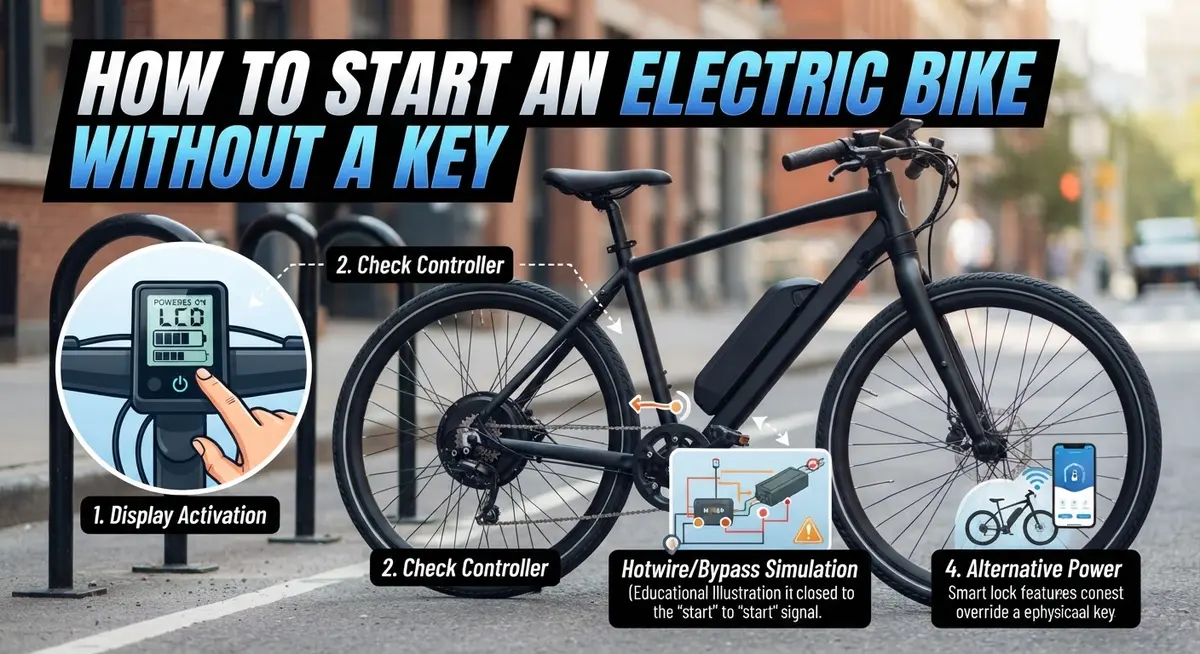
For ignition control systems, your key powers the motor and display. If you’ve lost this key, you’ll need to bypass the ignition switch. Start by locating your ignition switch on the handlebars or frame. Most switches have two or three wires connected to them. Document which wires connect where before disconnecting anything.
Next, carefully disconnect the wires from the ignition switch. You’ll typically find a power wire, a ground wire, and a signal wire. Gently strip about half an inch of insulation from the power and signal wires. Touch these bare ends together briefly to test if your motor responds. If it does, you’ve found the correct wires.
For battery lock systems, you’ll access the battery directly. Locate the lock mechanism on your battery mount. Most locks use a pin tumbler design similar to a padlock. Examine the lock housing for any visible screws holding it to the bracket.
Remove these screws carefully and set them aside in a safe place. Once the lock housing is free, you can lift it away from the battery. Some locks slide out horizontally, while others lift straight up. Work slowly to avoid damaging the battery mounting bracket.
After removing the lock, your battery should release from its mount easily. You can now power your e-bike normally without the key. Check your manufacturer documentation for your specific model, as designs vary considerably. This approach prevents damage to your frame or electrical system while restoring access to your ride.
Rekeying Multiple Batteries to a Single Key
Rekeying multiple batteries to work with a single key is possible on most e-bike models. This process lets you use one key instead of managing several different ones. The approach depends on your specific lock type and battery system.
First, identify what kind of lock mechanism your batteries use. Most e-bikes have pin tumbler locks or sliding bolt systems. Check your owner’s manual to understand your exact setup. Take photos of each lock before you start working.
The rekeying process requires opening each lock carefully. You’ll need to access the internal pin configuration inside the lock cylinder. This typically involves removing screws from the lock housing and gently pulling out the cylinder. Work slowly to avoid damaging the mechanism.
Next, examine the pins inside each lock. Standard pin tumbler locks have five or six pins arranged in specific patterns. Your goal is to arrange all pins identically across every battery lock. This makes them respond to the same key cuts.
Rearrange the pins to match your chosen master key. You can select any existing key as your standard or work with a blank key. Make sure each lock’s pin arrangement matches perfectly. Test frequently as you work to confirm alignment.
After rekeying, test each battery with your single key. Insert the key smoothly and check that it turns without resistance. If any lock feels stiff, the pins may need slight adjustment.
Consider having a professional locksmith handle this if you feel uncertain. They can rekey multiple locks quickly and guarantee proper alignment. This prevents damage to your battery system and ensures reliable operation going forward.
Models and E-Trikes That Support Keyless Startup
E-bikes and e-trikes come in many varieties. Some models support keyless startup, while others require a key for every ride. Understanding your specific model is essential before attempting any access method.
Most modern e-bikes use one of two systems. The first type has an ignition key that powers the motor and display. The second type uses a battery lock that physically secures the power source. A few advanced models combine both systems for extra security.
E-trikes often differ from standard e-bikes in their startup approach. Many three wheeled models don’t require key activation at all. Instead, they rely on a battery connection system that activates when the battery is properly seated. This design makes them more convenient for frequent users.
Some manufacturers build e-bikes with push button ignition instead of traditional keys. These models activate the motor through a control panel code or wireless remote. You can start these bikes without inserting any physical key.
Battery mounted systems vary significantly across brands. Certain models have quick release batteries that need no key at all. Others use spring loaded catches that open with a simple lever. Premium models incorporate electronic locks controlled by digital codes.
Identifying your e-bike type matters greatly. Check your owner’s manual first to see what startup method your model uses. Look at your battery mount and ignition area carefully. Take photos of the lock mechanism for reference.
Some e-trikes feature removable batteries with standard keyed locks. Others have integrated battery systems that never detach. A few high end models offer both options depending on your preference.
Contact your manufacturer directly if you’re unsure about your model’s capabilities. They can confirm whether your specific e-bike or e-trike supports keyless operation.
Common Mistakes to Avoid When Bypassing E-Bike Locks
When bypassing your e-bike lock without a key, several common mistakes can damage your bike or waste your time. Understanding these errors helps you work safely and efficiently.
The first mistake is assuming all e-bikes work the same way. Your neighbor’s e-bike lock mechanism might differ completely from yours. Always check your specific model’s documentation before attempting anything. What works on one brand could fail or cause damage on another.
Many people try removing locks without understanding how they function first. You might force a component that simply slides out with gentle pressure. Take time to examine the lock carefully. Look for screws, bolts, or release mechanisms before applying force.
Another frequent error is confusing ignition controls with battery locks. Some keys only release the battery. Other keys only power the motor. If your key is missing, you need to know which system you’re working with. This distinction changes your entire approach.
People often damage wiring by pulling too hard on connected cables. If you must access internal components, disconnect wires gently and note where each one goes. Take photos before removing anything. This prevents reconnection mistakes later.
Rekeying batteries without proper knowledge causes alignment problems inside the lock mechanism. If you’re not confident, a professional locksmith can handle this safely. Attempting rekeying yourself might jam the pins permanently.
Finally, many people skip the battery replacement option entirely. Sometimes buying a replacement battery with a working key costs less than repair attempts. Compare your options before starting any removal process.
These mistakes are avoidable with patience and careful planning. Take your time, research your specific model, and proceed step by step.
Troubleshooting Keyless Startup Issues
When your e-bike won’t start without a key, the problem usually falls into one of two categories. Either your ignition system isn’t responding, or your battery lock won’t release. Understanding which issue you face makes finding a solution much faster.
Start by checking if your display screen lights up when you press the power button. If nothing happens at all, your battery might not be connected properly. Look at where the battery connects to the frame. Make sure it clicks firmly into place. A loose battery connection stops everything from working.
Next, try turning the key slowly in the ignition. Listen for clicking sounds. If you hear nothing, the key mechanism might be stuck or damaged. Gently wiggle the key while turning it. Sometimes dirt or debris blocks the lock from working smoothly.
If your key turns but the motor won’t engage, your ignition switch may have failed. This is different from a battery lock problem. Your display might work fine, but the motor stays silent. This typically requires professional repair since it involves electrical components.
Test your battery on a different e-bike if possible. This tells you whether your battery works or if the lock is the real problem. If the battery functions elsewhere, your bike’s ignition system needs attention.
For battery locks specifically, check if the key fits all the way in. Sometimes keys wear down over time and don’t reach the internal pins completely. Partial insertion prevents the lock from opening.
Before attempting any removal or bypass methods, always consult your manufacturer’s manual. Your specific model might have unique startup requirements. Different brands design their systems very differently. Understanding your exact setup prevents damage and saves you time troubleshooting.
Final Thoughts
Starting an electric bike without a key is possible. It just takes patience and the right knowledge. Every e-bike model works a bit differently, so understanding your specific system matters.
Remember the basics. Your key either controls the ignition or the battery lock. Knowing which one applies to your bike saves you time and frustration.
Always try the simple solutions first. Check your display screen. Test your power button. These quick checks often solve the problem without any disassembly.
If you need to access your battery without a key, move slowly. Partial disassembly requires care. Rushing this step can damage wiring or the lock mechanism itself.
Rekeying multiple batteries to one key is a smart option. It simplifies your daily routine. Just make sure you understand the lock mechanism before attempting this task.
Lock picking should stay as your last resort. Try every other method first. This approach protects your bike from unnecessary damage.
Battery replacement is often easier than fighting with a stuck lock. Sometimes starting fresh costs less time and stress than forcing a solution.
Not all e-bikes need a key at all. Some models use push buttons. Others have quick release batteries. Your bike might already have a keyless option built in.
Take your time with every step. Rushing leads to mistakes that cost more money later. A careful approach protects both your bike and your wallet.
When in doubt, check your manufacturer’s documentation. This resource answers most questions about your specific model.
With the right knowledge, getting your electric bike running without a key becomes manageable. Stay patient and methodical throughout the process.
Frequently Asked Questions
What’s the difference between an ignition key and a battery lock key?
An ignition key starts your motor and powers the display screen. A battery lock key releases the battery pack from the frame. Some e-bikes use one key for both functions, while others use separate keys. Check your manual to see which type you have. This matters because your solution depends on which lock you need to bypass.
Can I use one key for multiple batteries?
Yes, you can rekey multiple batteries to work with a single key. This process involves adjusting the lock mechanism on each battery pack. You’ll need to understand your specific lock type first. Contact your manufacturer for rekeying instructions. This option saves time if you own several batteries for your e-bike.
Do all electric bikes require a key to start?
No, not all e-bikes need a key. Some models use button activation only. Others have keyless ignition systems. Check your manual or look at your bike’s control panel. If your bike has a keyhole, it requires a key. If it only has buttons, you may not need one at all.
Is lock picking safe for my e-bike?
Lock picking should be your last resort option. Improper techniques can damage internal wiring and the lock mechanism itself. You risk creating electrical problems that cost more to fix. Always try simpler solutions first like checking your manual or contacting the manufacturer. Professional locksmiths can help if you’re stuck.
What should I do if my key is lost?
Contact your e-bike manufacturer first. They can provide a replacement key or rekeying service. Battery replacement is another option if the key controls battery access only. Check your warranty to see if lost keys are covered. Keep your original documentation safe to prove ownership.

Philips is the founder and lead writer at GearheadGarageFinds.com, a passionate automobile enthusiast who has spent years testing, comparing, and reviewing auto products and accessories to help fellow gearheads make smarter buying decisions. When he’s not under the hood or behind the keyboard, you’ll find him exploring the latest automotive innovations and hunting for the best garage finds on the market.