How to Verify a UL-Certified E-Bike: A Complete Safety Checklist
E-bikes are fun. But a poorly made battery can turn fun into a fire hazard fast.
That is why UL certification matters so much. It tells you the bike went through real safety testing, not just marketing talk.
Many riders think any “UL tested” label means their e-bike is safe. That is not always true. Some brands use tricky words to sound certified when they are not.
This guide helps you verify a real UL-certified e-bike before you buy one. You will learn what UL 2849 and UL 2271 actually mean. These two standards check the full electrical system and the battery separately.
We will also show you where to find UL marks on your bike, battery, and charger. You will learn how to spot fake claims like “UL compliant” that sound official but mean nothing.
By the end, you will know exactly how to confirm your e-bike is truly certified. You will also learn simple maintenance tips that keep it safe long after purchase.
Let us start by breaking down what UL certification really means for e-bikes.
In a Nutshell
Here is a quick summary to help you check e-bike certification fast.
-
Look for two key standards. A real UL-certified e-bike meets UL 2849 for the full electrical system. The battery also needs UL 2271 for safety testing.
-
Check the physical labels. Find the UL mark on the battery, charger, and bike frame. These marks should match the official listing.
-
Avoid fake wording. Terms like “UL tested” or “UL compliant” are not real certifications. Only full UL certification counts.
-
Watch for partial testing. Some brands only certify the battery. This does not mean the whole bike is safe.
-
Ask for proof. Request testing reports from your retailer. Do not trust claims without documents.
-
Skip deals that seem too easy. Cheap bikes with vague safety claims often skip proper testing. Price should never replace verification.
Follow these points, and you will know how to spot a truly certified e-bike. This keeps you safe and avoids common buying mistakes.
Understanding UL Certification Standards for E-Bikes
UL certification for e-bikes involves two main standards that work together to keep you safe. Understanding these standards helps you spot real certifications from fake ones.
UL 2849 is the primary standard you need to know. This standard tests the complete e-bike electrical system as one unit. It covers the motor, battery, charger, and how they all work together. When a bike meets UL 2849, every electrical component has been tested under real world conditions. The battery gets checked for overcharge protection. The motor gets tested for proper power output. The charger gets verified to stop charging safely when full.
UL 2271 focuses specifically on battery safety and stability. This standard tests how the battery performs under stress. It checks what happens if the battery gets too hot, too cold, or takes physical damage. It verifies the battery will not catch fire or leak dangerous chemicals. Many manufacturers test batteries to this standard as a separate component.
Here is the key difference: A real UL certified e-bike has both standards applied to the complete system, not just individual parts. Some brands only certify the battery to UL 2271 and skip the full system test. That is incomplete certification.
When you see a UL mark on an e-bike, it should reference one or both of these standards by name. Look for the actual UL logo, not just the words “UL tested” or “UL compliant.” Those phrases are marketing language, not official certifications.
The standards exist because e-bikes contain lithium batteries and powerful motors. These components can create safety risks if not properly tested. UL certification means independent testing happened. It means the bike passed strict safety requirements. That is why checking for these specific standards matters before you buy.
Why UL Certification Matters for E-Bike Safety
UL certification matters for e-bike safety because it means independent testing has verified your bike won’t catch fire, overheat, or fail unexpectedly. E-bikes contain lithium batteries and electric motors that generate heat and power. Without proper testing, these components can malfunction in dangerous ways.
UL 2849 is the standard that tests your entire e-bike system. This includes the motor, battery, charger, and wiring working together. Testers push the system to extreme conditions to see if it stays safe. They check if the battery overcharges without exploding. They verify the motor doesn’t overheat during long rides. They confirm the charger stops properly when the battery is full.
UL 2271 focuses specifically on battery safety. This standard tests how the battery performs under real world stress. Testers expose batteries to heat, cold, vibration, and impact. They check if the battery catches fire or leaks acid. They verify the battery management system works correctly in all conditions.
Why does this matter to you? An uncertified e-bike might work fine for a few months. Then the battery could suddenly fail, overheat, or catch fire while you ride or while charging at home. A certified e-bike has passed rigorous tests that prove it won’t do these things.
Many riders assume any safety label means their bike is certified. This is a dangerous mistake. Fake certifications use confusing language like “UL tested” or “UL compliant.” These terms sound official but mean nothing. Real UL certification uses the exact standard numbers: UL 2849 or UL 2271.
When you buy a UL certified e-bike, you get peace of mind. You know the battery won’t explode. You know the motor won’t fail suddenly. You know someone independent has verified the entire system is safe. This protection is worth the investment in your safety and your home’s safety.
Step-by-Step Guide to Checking UL Marks and Labels
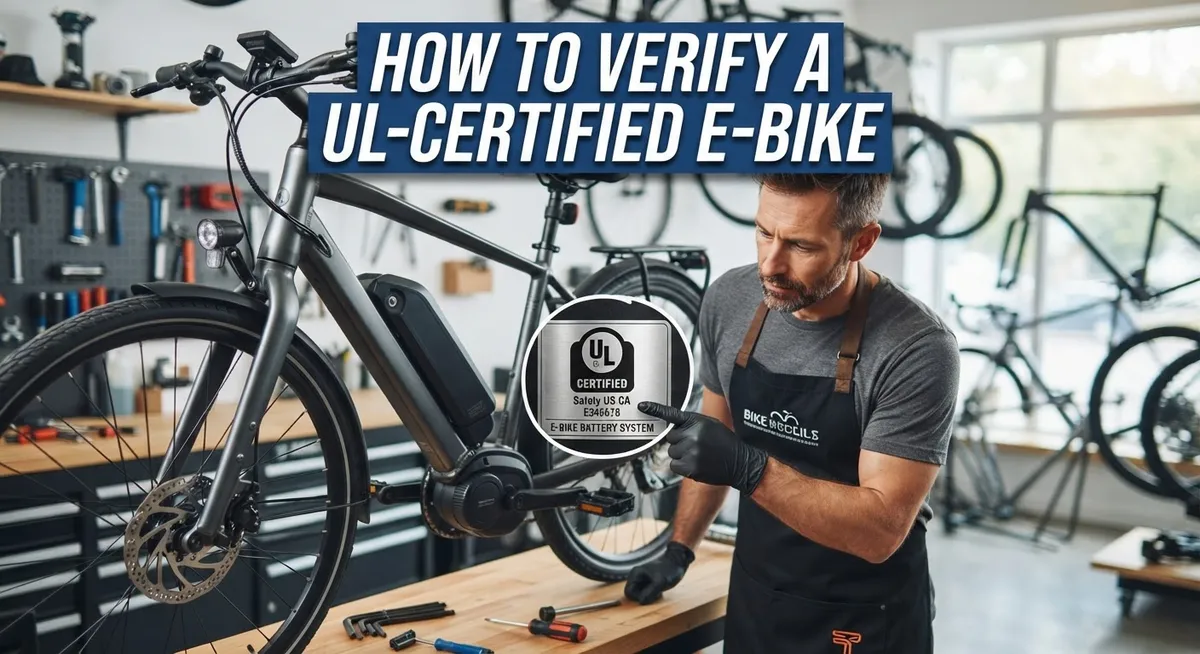
Start by examining the battery pack first. Look for a small UL mark, which appears as a circle with “UL” inside it. This mark should be printed directly on the battery casing or attached via a label. Next to the UL symbol, you will see a number. The number should read either 2849, 2271, or both. Write down what you find.
Move to the charger next. Flip it over or check all sides carefully. The charger must also display the UL mark with the same standard numbers. If the charger lacks any UL marking, this is a red flag. The battery and charger work together as a system, so both need certification.
Check the bike frame itself. Look near the headtube, down tube, or seat tube for labels. Some manufacturers place certification stickers in these areas. The label should state “UL” followed by the standard number. Take a photo of this label with your phone for your records.
Read any paperwork that came with the bike. The user manual or safety guide should mention UL certification by name. Look for phrases like “certified to UL 2849” or “meets UL 2271 standards.” Vague language such as “safety tested” or “quality assured” does not count as real certification.
Ask the retailer or seller directly. Request the UL testing report or certificate of compliance. A legitimate seller will have this documentation available. They can email it to you or show you a digital copy. If they refuse or cannot provide proof, walk away.
Compare what you found across all three areas: battery, charger, and frame. All three should reference the same UL standards. Consistency across components shows genuine certification. Mismatches or missing marks mean the e-bike is not fully certified to safety standards.
How to Verify Manufacturer Claims and Documentation
When you buy an e-bike, the manufacturer makes claims about safety and performance. You need to verify these claims are real, not marketing hype. Start by looking at what the manufacturer actually states on their website and product materials.
Real UL certification always mentions the specific standard number. Look for “UL 2849” or “UL 2271” in their documentation. If they only say “UL tested” or “UL compliant,” this is a red flag. These phrases are not official UL terminology and often indicate incomplete or fake certification.
Request the official testing report from the manufacturer or retailer. A legitimate company will provide this document without hesitation. The report shows exactly what was tested and the results. If the seller refuses or cannot produce it, the certification is likely not genuine.
Check the manufacturer’s marketing materials carefully. Some companies claim full system certification when they only tested the battery. This is a common deception. The complete e-bike system must pass UL 2849 testing, not just individual components.
Look at the product listing on the manufacturer’s official website. The UL mark should appear alongside clear descriptions of what was tested. Vague language or missing details suggest incomplete verification.
Contact the manufacturer directly with specific questions. Ask which standards were applied to the complete system. Ask for proof of third party testing, not internal testing. Legitimate manufacturers respond quickly with documentation.
Cross reference the UL mark with the manufacturer’s claims. Everything should match. If the mark says one standard but the marketing mentions another, something is wrong.
Documentation is your best protection. Never rely on the retailer’s word alone. Always request written proof of certification. This simple step prevents you from buying an uncertified e-bike that looks legitimate but isn’t.
Spotting Fake or Misleading Certification Language
Fake certification language is everywhere in e-bike marketing. Sellers use misleading words to make uncertified bikes sound safe. You need to spot these red flags before you buy.
The biggest trick is using words like “UL tested” or “UL compliant.” These terms sound official but they’re not. UL certification requires the complete system to pass rigorous testing. “Tested” or “compliant” are vague words that don’t mean the bike actually passed UL 2849 or UL 2271.
Watch for partial claims too. A seller might say “UL certified battery” but skip mentioning the motor, charger, or wiring. Real certification covers the entire e-bike system working together. A safe battery doesn’t matter if the charger is dangerous or the motor wiring is faulty.
Some retailers claim they’ve “verified” the certification themselves. This is not the same as official UL testing. A retailer’s verification is just their opinion. Only independent UL labs can actually certify products.
Price focused marketing is another warning sign. When sellers emphasize how cheap their e-bikes are while claiming safety certifications, be skeptical. Proper testing costs money. If the price seems too good to be true, the certification probably is too.
Read the exact language carefully. Legitimate manufacturers write “UL 2849 certified” or “meets UL 2271 standards.” They include the specific standard number. Vague phrases like “safety tested” or “meets industry standards” don’t tell you anything real.
Ask the retailer to show you the actual testing report. A legitimate seller should have this document ready. If they can’t provide it or get defensive, that’s your answer.
Document everything you find. Take photos of labels, save screenshots of marketing claims, and keep emails from sellers. This protects you if problems happen later.
Common Mistakes to Avoid During Verification
When you verify a UL certified e-bike, several common mistakes can lead you astray. Understanding what to avoid saves you time and keeps you safe.
Don’t assume the retailer has already verified everything for you. Many retailers claim they’ve checked the certification themselves. This doesn’t replace your own verification. You need to personally confirm the UL marks on the battery, charger, and product listing. Retailers make honest mistakes too.
Overlooking component level testing is a major error. Some sellers highlight that individual parts passed safety tests. This isn’t the same as full system certification. UL 2849 tests the complete e-bike system together. Battery only certification (UL 2271) doesn’t cover the entire drivetrain or charger combination.
Don’t ignore maintenance requirements during your verification process. A properly certified e-bike still needs regular care. Low tire pressure, loose connections, and worn brake pads affect safety performance. Certification only guarantees the bike met standards when it left the factory.
Avoid focusing only on price when making your purchase decision. Extremely cheap e-bikes sometimes skip proper testing. This doesn’t mean expensive always equals certified, but suspiciously low prices warrant extra scrutiny.
Don’t mix up terminology in manufacturer claims. “UL tested” and “UL compliant” sound official but aren’t real certifications. The correct language includes specific standard numbers like UL 2849 or UL 2271.
Stop trusting verbal assurances from sellers. Always request written proof. Ask for the official testing report, not just a promise that one exists. Get confirmation in writing through email so you have documentation.
Finally, don’t skip the cross reference step. Match what you see on physical labels against what appears in marketing materials and official product listings. Inconsistencies signal problems.
Maintaining Safety Standards After Purchase
After you buy your e-bike, safety doesn’t stop. You need to keep those safety standards in place through proper care and attention.
Start with regular inspections of your battery and charger. Look for visible damage, cracks, or swelling on the battery case. Check the charger cable for cuts or exposed wires. These components hold UL certification, so any physical damage means they no longer meet those standards. Replace damaged parts immediately.
Tire pressure affects how your certified e-bike performs. Under-inflated tires create extra stress on the motor and battery. This stress can reduce the effectiveness of the safety systems that UL testing verified. Check your tire pressure weekly and maintain the manufacturer’s recommended PSI.
Keep your e-bike clean and dry. Water exposure damages electrical connections and weakens the battery’s protective seals. After riding in rain, dry your bike thoroughly. Store it in a dry location, not in damp garages or basements.
Monitor your battery’s charging habits. Always use the charger that came with your bike or one certified for your specific model. Mixing chargers voids the UL certification because the system was tested as a complete unit. Charge your battery in a safe location away from flammable materials.
Document your maintenance activities. Keep records of inspections, repairs, and parts replacements. This documentation proves you maintained the safety standards the UL certification represents.
Watch for unusual behavior. If your e-bike makes strange noises, the motor feels weak, or the battery drains quickly, get it checked by a qualified technician. These signs suggest something failed within the certified system.
Your role matters for ongoing safety. UL certification verifies the product when new, but your maintenance keeps it safe over time. Regular care protects both your investment and your wellbeing on every ride.
Final Thoughts
Verifying a UL certified e-bike protects you and your investment. It takes a little time, but the payoff is real safety. You now know what to check and what to avoid.
Remember that UL 2849 covers the whole e-bike system. This includes the battery, charger, and electrical drivetrain working together. A single certified part does not mean the whole bike is safe.
Always look beyond the marketing language. Real certification shows up as a physical mark on the product and in official documentation. If a retailer cannot show proof, treat that as a red flag.
Buying a certified e-bike is just the first step. Your daily habits keep that certification meaningful over time. Simple actions like checking tire pressure and watching your battery protect the safety built into the bike.
Think of certification and maintenance as two parts of the same job. One happens before you buy. The other happens every time you ride.
Take your time during the buying process. Ask questions. Request documents. Compare labels on the bike with what the seller claims. A few extra minutes now can prevent serious problems later.
E-bikes keep growing in popularity, and so do shortcuts in manufacturing. Some sellers will always try to skip proper testing to save money. Your job is to spot these gaps before you hand over your cash.
Trust comes from verified facts, not promises. A seller’s word is not proof. A sticker without context is not proof either. Real proof means matching labels, documents, and standards together.
Stay alert, stay informed, and keep checking even after your purchase. Safety is not a one time check. It is a habit you build into every ride.
Frequently Asked Questions
What does UL 2849 actually test on an e-bike?
UL 2849 tests the complete e-bike system as one unit. This includes the electrical drivetrain, battery, and charger working together. The standard doesn’t just check individual parts. It verifies that all components function safely when combined. This is why full system certification matters more than partial testing.
How can I spot a fake UL certification claim?
Watch for misleading language like “UL tested” or “UL compliant.” These phrases are not official certifications. Real UL certification appears as a physical mark on the battery, charger, and product listing. Check the manufacturer’s documentation for specific references to UL 2849 or UL 2271. If you can’t find these exact standard numbers, the claim is likely incomplete or false.
Should I verify the battery separately from the whole bike?
No. While UL 2271 tests battery safety specifically, you need full system certification under UL 2849. Some sellers highlight that individual components passed testing. This creates confusion. A certified battery alone doesn’t mean your entire e-bike is safe. Always confirm the whole system passed UL 2849 testing together.
Where should I look for the actual UL mark?
The UL mark appears on three key areas: the battery itself, the charger unit, and official product documentation. Check for a physical label or stamp. Request testing reports from the retailer if you’re unsure. Legitimate sellers provide this information readily. If a retailer can’t show you proof, that’s a red flag.
What’s the difference between battery only and full system certification?
Battery only certification means just one component passed testing. Full system certification means the battery, charger, and drivetrain all work safely together. Full system certification protects you better because it catches problems that happen when parts interact. Always choose full system certification.

Philips is the founder and lead writer at GearheadGarageFinds.com, a passionate automobile enthusiast who has spent years testing, comparing, and reviewing auto products and accessories to help fellow gearheads make smarter buying decisions. When he’s not under the hood or behind the keyboard, you’ll find him exploring the latest automotive innovations and hunting for the best garage finds on the market.