How to Clean and Maintain TPE Floor Liners: A Complete Care Guide
Your car floor mats work hard every single day. They trap dirt, mud, and spills before these messes reach your carpet. TPE floor liners handle this job well, but they still need proper care.
Regular cleaning keeps your liners looking fresh. It also helps them last much longer. Skip the maintenance, and dirt builds up fast.
Many drivers make simple mistakes when cleaning these liners. They grab harsh chemicals or toss mats in the washing machine. These choices can damage the material over time.
This guide covers everything you need to know. You will learn the best cleaning methods for TPE floor liners. We break down each step, from removing mats to drying them properly.
You will also discover which products to avoid. Some soaps and cleaners can harm TPE material. We share tips on water temperature, brush types, and drying techniques too.
By the end, you will know exactly how to clean and maintain your floor liners. Your mats will stay in great shape for years. Let’s get started with the basics.
In a Nutshell
Here’s a quick recap to keep your TPE floor liners in top shape.
-
Take mats out of your car first. Shake off loose dirt before you do anything else. This simple step saves you time later.
-
Vacuum and pre-rinse the liners with plain water. This loosens stubborn grime and makes scrubbing easier.
-
Use mild soap only. Grab a medium-bristle brush and scrub gently. Avoid dish soap or degreasers—they can damage the material over time.
-
Rinse with cold water until all soap is gone. Cold water works best and protects the TPE surface.
-
Air-dry your mats upright in a shaded spot. It usually takes about 20 minutes. If you use a machine, always pick the lowest heat setting.
-
Skip bleach, harsh chemicals, and tire shine products. These mistakes can dry out or damage your liners fast. Hand washing is always the safer choice over machine washing.
Follow these steps regularly, and your floor liners will stay clean and last much longer.
What Are TPE Floor Liners and Why Proper Care Matters
TPE floor liners are protective mats made from thermoplastic elastomer, a durable rubber-like material. They sit on your vehicle’s floor and catch dirt, spills, and moisture before they damage your car’s interior. These liners work hard every day, absorbing everything from mud to salt to coffee spills.
Proper care matters because TPE material needs specific handling. Unlike rubber or plastic, TPE can dry out or become brittle if you use the wrong cleaning products. When you maintain your liners correctly, they stay flexible, look good, and protect your car’s original carpet for years.
Neglecting maintenance leads to real problems. Dirt builds up in the grooves and cracks. Moisture sits underneath and causes odors. Stains become permanent if left too long. Worse, harsh chemicals can crack or discolor your liners, forcing you to replace them sooner than necessary.
The good news is that TPE liners are easy to care for once you know the right approach. Simple cleaning with mild soap and water keeps them fresh. Regular maintenance takes just fifteen to twenty minutes. You avoid expensive replacements and keep your car’s interior protected.
Understanding TPE material helps you make better decisions. This material is softer than rigid plastic but tougher than standard rubber. It flexes with temperature changes and resists cracking. However, it responds poorly to harsh chemicals and extreme heat. This is why following the correct cleaning steps matters so much.
When you treat your TPE floor liners right, they perform their job perfectly. Your car stays cleaner inside. Your original carpet stays protected. Your liners last much longer. That’s why proper care is worth your time and attention.
Tools and Supplies You’ll Need Before You Start
Before you start cleaning your TPE floor liners, gather the right supplies. Having everything ready makes the job faster and easier.
Water is your first essential item. Use cold water for washing. Cold water works best because it won’t damage the TPE material. Hot water can cause the material to warp or lose its shape over time.
A mild soap is critical. Choose a gentle, basic soap designed for general cleaning. Avoid dish soap, degreasers, or heavy-duty cleaners. These products dry out TPE and cause cracking or brittleness. The goal is cleaning without harming the material.
You need a brush with medium bristles. A soft brush won’t scrub away stubborn dirt. A hard brush can scratch or damage the TPE surface. Medium bristles hit the perfect balance. They remove grime from grooves without harming the material.
Grab a vacuum with standard attachments. This removes loose dirt and debris before wet cleaning. A regular household vacuum works fine. You don’t need anything fancy or specialized.
Dry towels or a drying location matter too. Have clean towels ready for air drying, or pick a shaded spot outdoors where your mats can dry upright. Avoid direct sunlight, which can fade the color.
Skip these items entirely. Don’t buy bleach, harsh chemicals, tire shine products, or oil based cleaners. These damage TPE permanently. They’re not worth the risk.
A bucket rounds out your supplies. Mix your mild soap and cold water here. A standard household bucket works perfectly.
With these basic supplies on hand, you’re ready to clean your TPE floor liners properly. The process becomes simple and straightforward.
Step-by-Step Guide to Cleaning TPE Floor Liners
Start by removing your mats from the vehicle. This gives you full access to clean every surface without obstacles.
Next, shake off loose dirt and debris outside. Hold each mat and tap it firmly against the ground. This removes surface dust before you begin wet cleaning.
Vacuum the mats thoroughly using standard attachments. Pay close attention to the grooves and textured areas where dirt hides. A vacuum removes particles that water alone cannot.
Pre rinse your mats with cold water. Use a hose or spray nozzle to rinse away remaining loose dirt. This step prevents dirt from turning into mud during scrubbing.
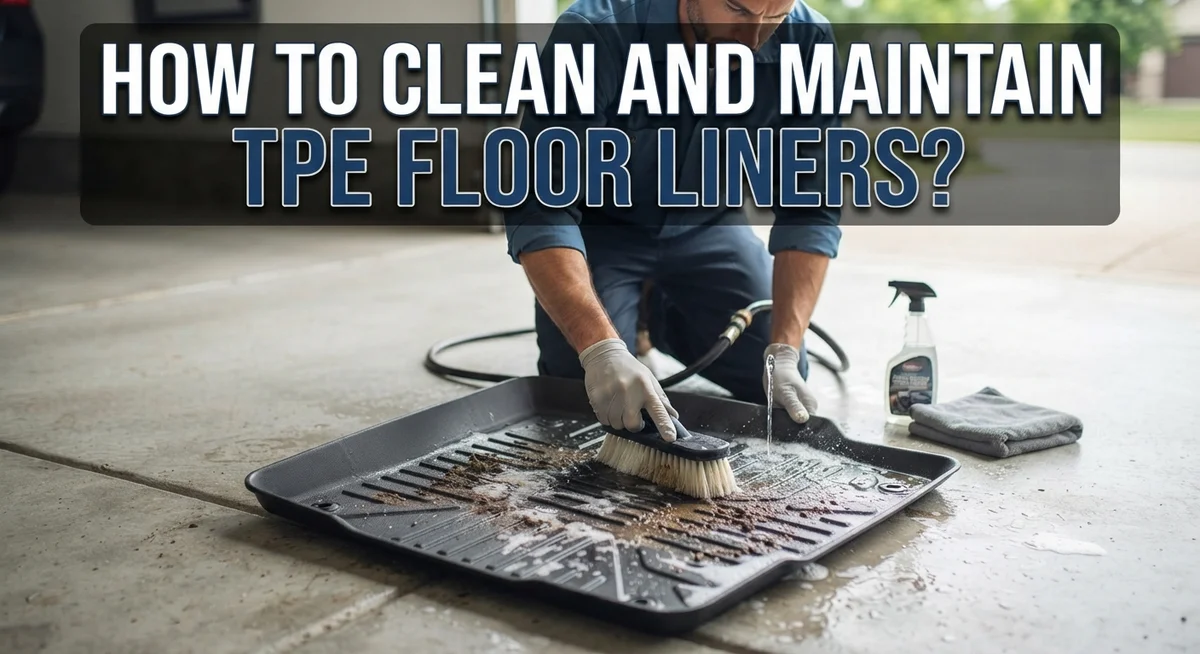
Mix mild soap with cold water in a bucket. Grab a medium bristle brush and scrub gently across the entire surface. Work in circular motions and focus on stained or soiled spots. Don’t scrub too hard, as gentle pressure works best.
Rinse the mats completely with cold water until all soap disappears. Soap residue leaves streaks and attracts more dirt later. Keep rinsing until the water runs clear.
Air dry your mats upright in a shaded location. This takes about 20 minutes depending on humidity and temperature. Avoid direct sunlight, which can fade the material over time.
If you must machine dry, use the lowest heat setting only. High heat damages TPE material and causes cracking. Most people find air drying simpler and safer.
Store clean mats in a dry place away from extreme heat. Regular cleaning prevents buildup and keeps your liners looking fresh. Follow these steps every few weeks for best results.
Best Practices for Drying and Reinstalling Your Liners
After you finish washing your TPE floor liners, the drying process matters just as much as the cleaning itself. Moisture left behind can trap odors and encourage mold growth. Air drying in shade is your best option because it protects the TPE material from heat damage while removing all moisture naturally.
Stand your mats upright in a shaded outdoor area or indoors near a window. This position allows air to circulate on both sides. Let them dry for about 20 minutes in warm weather, or longer in cooler conditions. You’ll know they’re ready when they feel completely dry to the touch with no damp spots remaining.
If you need to speed up the process, machine drying is acceptable only on the lowest heat setting. High heat can warp or crack TPE material permanently. Remove your liners from the dryer as soon as the cycle ends to prevent heat buildup.
Before reinstalling your liners, inspect them for any remaining moisture in the grooves and textured areas. Use a dry towel to wipe these spots if needed. Check your vehicle floor for any dirt or moisture before placing the mats back inside. A clean floor helps your liners stay in place and prevents trapped moisture underneath.
Position your mats carefully so they align properly with your vehicle’s floor contours. Press down firmly along the edges to ensure good contact. This prevents shifting while you drive and keeps dirt from accumulating beneath the mats.
Store any extra liners in a cool, dry location away from direct sunlight and extreme temperatures. Proper storage extends their lifespan and keeps them ready for future use.
Routine Maintenance Tips to Extend Liner Lifespan
Keeping your TPE floor liners in top shape requires simple, consistent care. The key is establishing a routine that prevents dirt buildup and material breakdown over time.
Clean your liners every two to four weeks depending on how dirty your vehicle gets. Regular cleaning stops grime from settling into the textured surface, which makes future cleaning harder. If you drive in muddy or snowy conditions, clean them more often.
Always remove your liners from the vehicle before cleaning. This gives you access to every corner and groove. Shake them outside to release loose dirt and debris quickly.
Vacuum your liners after each removal. Use standard attachments to reach the textured areas where dirt hides. This step removes particles before you wash, making the wet cleaning faster and more effective.
Inspect your liners monthly for damage. Look for cracks, tears, or areas where the material is peeling. Catching problems early prevents them from spreading. Small cracks can worsen if water seeps into them during cleaning.
Store your clean liners properly between uses. Keep them in a cool, dry place away from direct sunlight and extreme heat. High temperatures can soften TPE material and cause warping. Never stack them in damp areas where moisture promotes mold growth.
Avoid placing heavy objects on top of stored liners. This prevents permanent creasing or deformation of the material.
Rotate your liners if you have extras. Using different sets reduces wear on any single set. This extends the overall lifespan of all your mats significantly.
Follow these maintenance habits and your TPE floor liners will last for years without cracking or deteriorating.
Common Cleaning Mistakes That Damage TPE Liners
Cleaning TPE floor liners incorrectly can shorten their lifespan and cause permanent damage. Understanding what to avoid is just as important as knowing the right techniques.
Bleach and harsh chemicals are your biggest enemies. These substances break down the TPE material and cause discoloration or cracking. Many people think stronger cleaners work better, but TPE actually needs gentle treatment. Stick with mild soap only.
Dish soap and degreasers seem like good options, but they dry out the material over time. TPE needs some natural oils to stay flexible and durable. Degreasers strip these oils away, leaving the liners brittle and prone to cracking.
Machine washing is a common mistake that ruins TPE liners. The agitation and heat damage the material’s structure. Hand washing with a medium bristle brush is the only safe method. Your liners can’t handle the spin cycle or high temperatures.
Hot water accelerates material breakdown. Always use cold water for washing and rinsing. This protects the TPE from warping or becoming too soft.
Tire shine products and oil based cleaners create a slippery surface that reduces traction. These products also leave residue that attracts dirt and dust. Your liners will look clean for a few days, then get dirtier faster.
Machine drying on high heat causes permanent damage. If you must use a machine, select the lowest heat setting only. Air drying in shade is always the best choice.
Heavy objects placed on stored liners cause permanent creases and deformation. Store your liners flat or standing upright in a cool, dry space. Keep them away from direct sunlight and extreme temperatures to prevent material degradation.
Troubleshooting Stains, Odors, and Stubborn Grime
Stains on TPE floor liners respond well to specific cleaning approaches. Start by identifying the stain type because different marks need different treatment methods. Food spills, mud, and grease each require slightly adjusted techniques.
For fresh stains, act quickly. Remove loose debris first, then spray the area with cold water. Apply mild soap directly to the stained spot and let it sit for 5 to 10 minutes. This waiting period helps break down the stain’s grip on the material.
Use a medium bristle brush to scrub the stained area gently. Work in circular motions rather than aggressive back and forth movements. Rinse thoroughly with cold water until all soap residue disappears. Repeat if needed.
Stubborn grime requires patience, not force. Never use bleach, degreasers, or harsh chemicals because these damage TPE permanently. Instead, make a slightly thicker paste with mild soap and water. Apply this paste to the problem area and let it work for 10 to 15 minutes before scrubbing.
Odors often come from trapped moisture or bacteria growth. Prevention works better than treatment here. Ensure your liners dry completely before reinstalling them in your vehicle. Air dry them upright in a shaded area for at least 20 minutes.
If odors persist after cleaning, sprinkle baking soda on the dry liners and let them sit overnight. The baking soda absorbs unwanted smells naturally. Vacuum it off the next day.
Never use perfumed soaps or products with heavy oils. These leave residue that traps dirt and creates new odors. Stick with plain, mild soap and cold water for best results every time.
Seasonal Care Considerations for TPE Liners
TPE floor liners need different care depending on the season. Weather changes affect how dirt, moisture, and temperature impact your liners throughout the year.
Winter care requires extra attention to salt and moisture. Road salt gets tracked into your vehicle and sticks to liners. After winter drives, rinse your liners more frequently with cold water to remove salt buildup. Salt accelerates material breakdown if left sitting. Air dry your liners completely before storing them, as trapped moisture in cold weather can cause mildew growth.
Summer heat speeds up material degradation. Store your clean liners in a cool, shaded area away from direct sunlight. UV rays and extreme heat weaken TPE material over time. Never leave liners in a hot car or exposed to intense sun for extended periods. Clean them more often during summer months when dirt and dust accumulate faster.
Spring and fall require balanced maintenance. These moderate seasons are ideal for deep cleaning. Take advantage of mild temperatures to thoroughly wash and air dry your liners. Inspect them carefully during seasonal transitions for any damage that winter or summer stress may have caused.
Humidity levels change your drying strategy. In humid climates, air dry your liners in shade with good air circulation. Moisture takes longer to evaporate in humid conditions. In dry climates, liners dry faster, so you can clean them more frequently without worry.
Store seasonal liners properly between uses. Keep them in a cool, dry location away from temperature extremes. Check stored liners monthly to ensure no moisture or pests have caused problems. This seasonal approach keeps your TPE liners performing well year round.
Final Thoughts
Taking care of your TPE floor liners does not need to be hard. A little effort each week keeps them clean and strong for years.
Simple habits make the biggest difference. Shake off loose dirt often. Rinse and scrub with mild soap. Let them dry fully before putting them back.
Avoid the mistakes that damage TPE material. Skip bleach, degreasers, and hot water. These break down the liner and shorten its life.
Your cleaning routine should match your lifestyle. Busy families with kids or pets may need weekly cleaning. Light drivers might only need a monthly wash.
Weather also plays a big role in maintenance. Salt, heat, and humidity all affect how liners perform. Adjust your routine as seasons change.
Remember that prevention works better than repair. Clean spills right away. Do not let dirt sit and harden on the surface.
Good storage matters just as much as cleaning. Keep liners flat or upright in a cool, dry space. Avoid heavy items that cause creases.
TPE liners are built to handle daily wear. But they still need gentle care to stay in top shape. Skipping maintenance leads to cracks, stains, and odors over time.
Think of cleaning as a small investment in comfort. Clean liners protect your car floor and keep your cabin looking fresh. This small effort pays off with a longer lasting product.
Follow the steps outlined in this guide and your liners will stay flexible, clean, and durable. Consistency is the real secret to long term success.
With mild soap, cool water, and proper drying, your TPE liners can last for years. Simple care today means fewer replacements tomorrow.
Frequently Asked Questions
Can I machine wash my TPE floor liners?
No, machine washing damages TPE material. Hand washing is the only safe method. Machines apply too much agitation and heat. Your liners will lose their shape and durability. Always wash by hand using a brush and mild soap.
What soap should I use to clean TPE liners?
Use mild soap and cold water only. Dish soap is too harsh and strips the material. Degreasers dry out TPE and cause cracking. Avoid soaps with heavy oils or perfumes. A gentle hand soap or basic car wash soap works best for your liners.
How long does it take to dry TPE floor liners?
Air drying in shade takes about 20 minutes for most liners. If you use heat, set it to the lowest setting available. Never use high heat or direct sunlight. Shade drying is the safest option. Standing your liners upright helps water drain faster.
Why should I avoid tire shine products on TPE liners?
Tire shine leaves a slick coating that attracts dirt and dust. The oily residue breaks down TPE material over time. Your liners become sticky and uncomfortable. Stick to soap and water for cleaning. This keeps your liners looking fresh without damaging them.
What’s the best way to remove stubborn grime from TPE?
Use a medium bristle brush with mild soap and cold water. Scrub gently in circular motions. Don’t use force or harsh scrubbing. Let the soap sit for a few minutes on tough spots. Patience works better than pressure when cleaning TPE liners.

Philips is the founder and lead writer at GearheadGarageFinds.com, a passionate automobile enthusiast who has spent years testing, comparing, and reviewing auto products and accessories to help fellow gearheads make smarter buying decisions. When he’s not under the hood or behind the keyboard, you’ll find him exploring the latest automotive innovations and hunting for the best garage finds on the market.