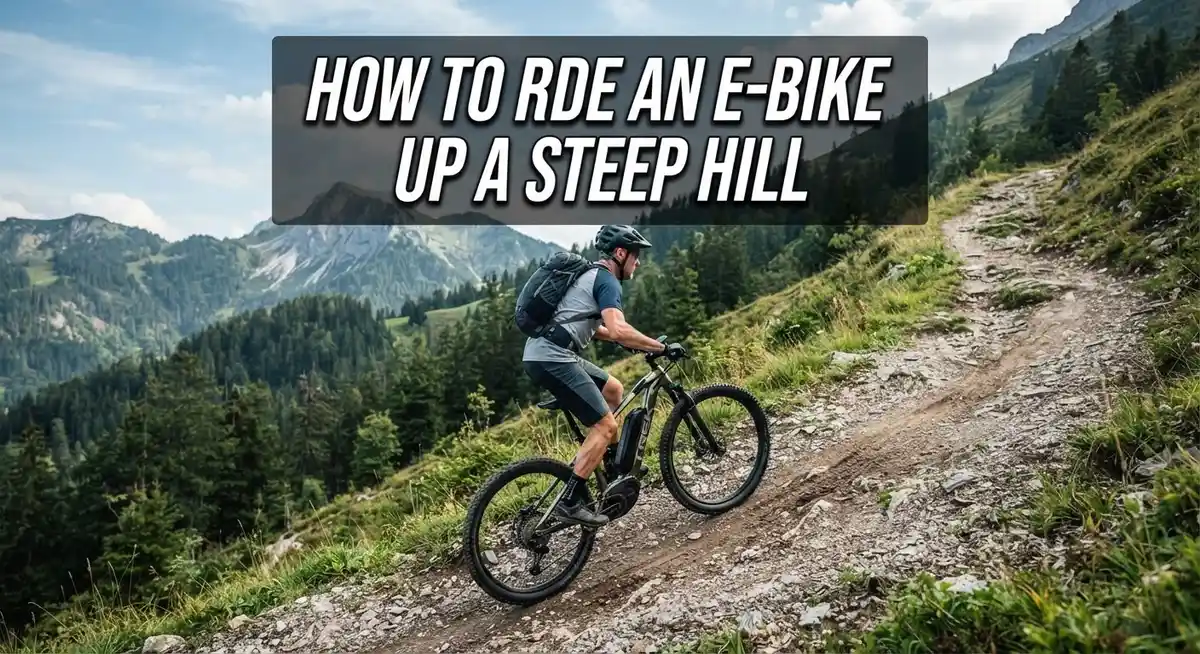
How to Ride an E-Bike Up a Steep Hill: A Complete Climbing Guide
Steep hills can turn a fun e-bike ride into a real struggle. Your legs burn. Your bike slows down. You wonder if you will even reach the top.
But here is the good news. Riding an e-bike up a steep hill is a skill you can learn. It just takes the right technique and a little practice.
This guide will show you exactly how to conquer those tough climbs. You will learn why torque matters more than speed when going uphill. We will also cover how to pick the right pedal-assist mode before you start climbing.
You will discover the ideal cadence for steady power output. We will also walk through proper gear shifting timing and smart body positioning.
Many riders make simple mistakes that waste energy and battery life. We will help you avoid those common pitfalls.
By the end of this article, you will know how to approach any steep hill with confidence. Your e-bike can handle more than you think. You just need to ride it the right way.
In a Nutshell
Riding an e-bike up a steep hill gets easy once you know the right technique. Here is a quick summary to keep in mind before you start climbing.
-
Choose torque over speed. A bike with high torque handles steep grades better than one built for top speed. Smaller wheels also help boost torque output.
-
Pick the right pedal-assist mode before you reach the hill. Switching mid-climb can break your rhythm and waste energy.
-
Shift gears at the correct moment. Downshift early so your legs keep spinning smoothly instead of straining against resistance.
-
Keep your cadence between 60 and 80 RPM. This range gives steady power without draining the battery too fast.
-
Adjust your body position on the climb. Lean forward slightly and keep your weight balanced over both wheels.
-
Check tire pressure before every ride. Soft tires reduce grip and make climbing harder.
-
On extremely steep sections, try a serpentine path to reduce the grade. This zigzag approach eases the strain on both rider and motor.
Follow these points and steep hills will feel much less scary on your next ride.
Why Torque Matters More Than Top Speed on Climbs
Torque is the rotational force your motor produces. It matters far more than top speed when climbing steep hills because it determines how much pushing power you have available.
Think of it this way: speed helps you go fast on flat ground. Torque helps you move upward against gravity. A motor with high torque can push you up a steep grade even at low speeds. A motor with high top speed but low torque will struggle on hills no matter how fast it can theoretically go.
Direct-drive motors excel at hill climbing because they deliver consistent torque throughout the entire pedal stroke. They give you steady, reliable power when you need it most. Hub motors can work too, but they often fall short on extreme grades.
Smaller wheels also increase torque on your e-bike. This is why many hill-climbing e-bikes have 20-inch wheels instead of 26-inch wheels. The smaller diameter means greater mechanical advantage when pushing upward.
When you look at motor specifications, focus on the torque rating measured in Newton meters (Nm). A motor rated at 80 Nm will climb better than one rated at 50 Nm, even if the second motor has a higher top speed.
Battery power matters too. A motor with high torque still needs sufficient voltage and current to deliver that force. This is why battery capacity affects climbing ability.
Your gearing system works hand in hand with torque. Low gears multiply the torque your motor produces. This combination of motor torque plus low gearing creates the power you need to climb steep sections without overheating your motor or draining your battery too quickly.
Choosing the Right Pedal-Assist Mode Before You Climb
Before you start climbing, take a moment to select the right pedal-assist mode. This choice makes a huge difference in how your motor helps you up the hill.
Most e-bikes offer multiple pedal-assist levels, often labeled as eco, normal, high, or numbered 1 through 5. Each level controls how much power your motor adds when you pedal. Lower modes use less battery but give you less help. Higher modes drain your battery faster but provide maximum assistance.
The key is matching the mode to the hill’s steepness. For gentle slopes, start with a lower or medium mode. This keeps your battery fresh for the rest of your ride. For steep grades, switch to a higher mode before you begin climbing. Changing modes mid-climb wastes energy and disrupts your rhythm.
Test different modes on your practice climbs to learn what works best. Pay attention to how each mode feels at your natural cadence of 60 to 80 RPM. Some riders find that medium mode on steep hills actually works better than maximum mode because it forces you to contribute more power yourself, which improves efficiency.
Check your battery level before climbing. A depleted battery cannot deliver the torque you need, even on the highest mode. If your battery sits below 20 percent, consider turning back or finding an easier route.
Set your mode while you still have flat ground ahead. Once you hit the incline, you want to focus on pedaling smoothly, not fumbling with controls. This simple preparation step prevents panic and keeps you pedaling with confidence as the hill gets steeper.
Step-by-Step: Shifting Gears and Timing for Steep Ascents
Shifting gears at the right moment makes the difference between a smooth climb and a stalled motor. Start shifting down before you feel the hill get steep. Don’t wait until your bike loses momentum.
As soon as you see the grade increase ahead, drop into a lower gear. This keeps your pedal cadence steady and prevents your motor from working too hard. Your motor performs best when you maintain that 60 to 80 RPM range.
Shift one gear at a time rather than multiple gears at once. This prevents chain strain and keeps power delivery smooth. A single shift takes just a moment and protects your drivetrain.
Time your shifts while you still have forward momentum. If you wait too long, your bike slows down and shifting becomes harder. The chain struggles to move between gears when there’s less tension.
On very steep hills, you might shift into your lowest gear before the climb even starts. This sounds extreme, but it works. You’re preparing your bike for maximum torque delivery from the moment the terrain gets tough.
Listen to your motor as you climb. If it sounds strained or labored, shift down again. Your motor should sound relatively quiet and smooth, not struggling or grinding.
Coordinate your gear shifts with your pedal-assist level. If you’re in PAS 3 with medium gears, that’s different from PAS 5 in low gears. Experiment on practice hills to find your rhythm.
Practice shifting on gentle slopes first. This builds muscle memory so your hands and feet work together automatically. When you face a real steep hill, your body already knows what to do. Smooth shifts mean consistent power and a successful climb every time.
Body Positioning and Balance Techniques for Hill Climbing
Your body position and balance make or break a steep hill climb. When you approach an incline, shift your weight forward toward the handlebars. This keeps your front wheel planted on the ground and prevents wheelies.
As the grade gets steeper, move your seat back slightly. This adjustment lowers your center of gravity and gives you better control. Your hips should stay centered over the pedals. Avoid leaning too far to either side, which throws off your balance.
Keep your elbows bent and relaxed. Stiff arms tire you quickly and reduce shock absorption. Your grip should be firm but not white-knuckle tight. Let the bike move naturally beneath you.
Maintain a steady cadence between 60 and 80 RPM. This rhythm keeps your motor working efficiently and prevents stalling. If you’re pedaling too slowly, your motor struggles. If you’re pedaling too fast, you’ll burn out quickly.
Stand on the pedals for short bursts on the steepest sections. This technique gives you extra leverage and power. Sit back down when the grade eases. Alternating between sitting and standing prevents fatigue in your legs and lower back.
Look ahead constantly. Scan for obstacles, loose gravel, or ruts that could throw you off balance. On blind corners, make noise to alert other riders or pedestrians.
Keep your weight distributed evenly between both wheels. Uneven weight causes the bike to veer left or right. Practice these techniques on gentle slopes first. Building confidence on easier terrain transfers directly to steeper climbs. Your body position matters as much as your motor’s power.
Managing Cadence, Tire Pressure, and Power Delivery
Cadence, tire pressure, and power delivery work together to help you climb steep hills smoothly. Understanding how these three factors interact makes a huge difference in your climbing success.
Cadence is your pedaling speed, measured in revolutions per minute (RPM). For steep hill climbing, aim for 60 to 80 RPM. This range lets your motor deliver consistent power without overheating. A cadence that’s too slow forces your motor to work harder and drains your battery faster. A cadence that’s too fast reduces your power output and makes climbing feel sluggish.
Find your rhythm before the hill gets steep. Start pedaling at a steady pace on flat ground. When you reach the incline, maintain that same rhythm rather than speeding up or slowing down suddenly. Your legs and motor work best when they move together consistently.
Tire pressure directly affects your climbing ability. Under-inflated tires create more rolling resistance and make your motor work overtime. Check your tire pressure before every hill ride. Properly inflated tires grip the road better and transfer power more efficiently to the ground.
Power delivery means how your motor releases energy to your wheels. Most e-bikes let you adjust this through pedal-assist modes. On steep hills, use a higher assist mode, but pair it with lower gears. This combination gives you the torque you need without forcing your motor into maximum strain.
Start with medium assist and lower gears. If you feel the motor struggling, shift down one more gear rather than jumping to maximum assist. This approach keeps your battery healthy and your climb steady. Practice these adjustments on smaller hills first so steep climbs feel natural.
Handling Extreme Grades with Zigzag Lines and Safety Signals
When you face an extreme grade, straight climbing rarely works. Your motor struggles. Your battery drains fast. Your tires lose grip. The zigzag approach solves all three problems.
Zigzagging means angling your path side to side instead of going straight up. You reduce the actual slope you climb. A 30 degree hill becomes a 15 degree path when you zigzag. Your motor delivers torque more efficiently. Your battery lasts longer. Your tires maintain better contact with the ground.
Start by identifying your zigzag route before you begin. Look for natural terrain features. Trees, rocks, or flat sections help you plan your angles. Aim for 45 degree turns rather than sharp 90 degree angles. Smooth transitions preserve your momentum and balance.
Safety signals matter on blind corners. Ring your bell or call out before each turn. Other riders or pedestrians may be coming down. Make noise consistently as you zigzag. This prevents collisions on narrow mountain paths.
Timing your turns requires practice. Don’t turn when your motor is at maximum strain. Wait for moments when the grade flattens slightly. Shift your weight toward the outside of each turn. Keep your pedaling steady through the transition.
Your speed drops significantly when zigzagging. Accept this. You reach the top safely with battery remaining. Rushing straight up burns out your motor and leaves you stranded.
On your descent, use the same zigzag path. This protects your brakes from overheating. Brake gradually and frequently rather than hard and sudden. Your safety depends on controlling your descent as much as your climb.
Descending Safely After the Climb
After conquering a steep hill on your e-bike, descending safely is just as important as the climb itself. Your brakes work harder on downhill sections, so you need a smart strategy to protect them and stay in control.
Start by shifting into a lower gear before you begin descending. This lets your legs help slow the bike instead of relying only on your brakes. A lower gear also gives you better control over your speed and reduces the strain on your braking system.
Use your brakes gently and consistently rather than grabbing them hard. Squeeze both brake levers evenly to avoid skidding or losing traction. If you brake too hard, your wheels might lock up, which makes stopping unpredictable.
Keep your body weight centered and slightly back on the seat. This position helps your rear wheel stay planted on the ground. Lean back a little more than you would on flat terrain. Keep your elbows bent and relaxed so you can absorb bumps and maintain balance.
If you took a zigzag path up the hill, use the same route coming down. This keeps your descent gradual and manageable. Avoid cutting straight down steep sections, which can overwhelm your brakes and create dangerous speed.
Watch the terrain ahead constantly. Rocks, roots, or loose gravel can cause your wheels to slip. Slow down before you reach obstacles rather than braking hard when you hit them.
On very steep descents, consider walking your bike down sections where you feel unsafe. Your safety matters more than speed. Practice descending on gentler hills first to build your confidence and muscle memory before tackling steeper terrain.
Common Mistakes That Undermine Hill-Climbing Performance
Many riders make mistakes that drain their battery and slow their climb. Understanding these errors helps you ride smarter and reach the top.
Relying on high speed settings instead of torque is a major mistake. Your motor delivers power differently depending on your assist mode. High speed modes focus on velocity, not climbing strength. Torque is what pushes you up steep grades. Always check your motor’s torque rating before buying an e-bike. Direct-drive motors typically offer more torque than hub motors.
Shifting gears at the wrong time wastes energy and stresses your motor. Many riders wait too long to downshift. Your cadence drops, and your motor works harder. Shift to lower gears before the hill gets really steep, not after you’re already struggling. Practice finding the right gear on small hills first.
Neglecting tire maintenance undermines your climbing ability. Under-inflated tires create extra rolling resistance. Your motor must work harder to push you forward. Check your tire pressure weekly. Most e-bikes need 40 to 65 PSI, depending on tire size and weight. Proper pressure makes a huge difference on steep terrain.
Poor climbing technique affects your balance and efficiency. Leaning too far forward shifts weight off your rear wheel. This reduces traction and makes your motor spin without gripping. Keep your weight centered over the bike. Let the motor do the work while you maintain steady pedaling.
Starting with maximum assist from the beginning drains your battery quickly. Use medium assist on the approach. Save higher modes for the steepest sections. This strategy extends your range and keeps power available when you need it most.
Final Thoughts
Riding an e-bike up a steep hill takes practice. You won’t master it on your first try. Every hill teaches you something new about your bike and your body.
Focus on torque, not speed. This single mindset shift changes everything. Your motor’s pulling power matters more than how fast it can go.
Pick the right gear before you start climbing. Switching mid climb often causes you to lose momentum. Plan ahead and shift early.
Keep your cadence steady between 60 and 80 RPM. This range keeps your legs working efficiently. It also protects your motor from unnecessary strain.
Check your tire pressure regularly. Soft tires eat up energy that should go toward climbing. A few minutes of maintenance saves a lot of effort later.
Body position plays a bigger role than most riders think. Lean forward slightly on steep sections. This keeps your front wheel grounded and your balance steady.
For extremely steep grades, remember the zigzag technique. Straight climbing isn’t always possible or safe. Angling your path reduces the grade you’re actually fighting.
Safety comes first on every climb. Make noise on blind corners. Watch for other riders or vehicles sharing your path.
Descending safely matters just as much as climbing well. Don’t let your guard down once you reach the top. Control your speed and brake smoothly on the way down.
Practice makes this skill natural over time. Start with smaller hills before tackling bigger challenges. Your confidence and technique will grow together.
E-bike hill climbing rewards patience and smart technique. Focus on torque, timing, and body position. These three things will carry you up almost any hill you face.
Frequently Asked Questions
What motor type climbs hills best?
Direct-drive motors work better for steep climbs than hub motors. They produce more torque, which is what you need to push uphill. Torque gives you power. Speed does not help on hills.
Hub motors focus on speed instead. This matters less when you’re going uphill slowly. If hill climbing is your main goal, choose a bike with a direct-drive motor.
Should I use maximum assist on hills?
No. Maximum assist drains your battery quickly. Start with a lower pedal-assist mode before climbing. You can increase it if needed, but most riders stay at PAS level 3 or 4.
Save your battery for the full ride. Use assist strategically. This means using lower levels on gentle slopes and higher levels only on the steepest sections.
What cadence should I maintain while climbing?
Keep your pedaling speed between 60 and 80 RPM. This range feels natural and efficient. RPM means how many times your pedals complete one full circle per minute.
If you pedal too fast, you waste energy. Too slow and you lose momentum. Find your comfortable rhythm in this range.
How does tire pressure affect hill climbing?
Proper tire pressure matters more than many riders think. Check your tire pressure before every climb. Under-inflated tires create more friction and drag.
Friction slows you down on hills. Correct pressure gives you better traction and rolling efficiency. Follow the pressure range printed on your tire sidewall.
Can I zigzag up every steep hill?
Yes, zigzagging works for extreme grades. This technique reduces the angle you climb. A gentler angle needs less power from your motor and legs.
Zigzagging takes longer but uses less energy. Use this method when the hill feels too steep for direct climbing.

Philips is the founder and lead writer at GearheadGarageFinds.com, a passionate automobile enthusiast who has spent years testing, comparing, and reviewing auto products and accessories to help fellow gearheads make smarter buying decisions. When he’s not under the hood or behind the keyboard, you’ll find him exploring the latest automotive innovations and hunting for the best garage finds on the market.