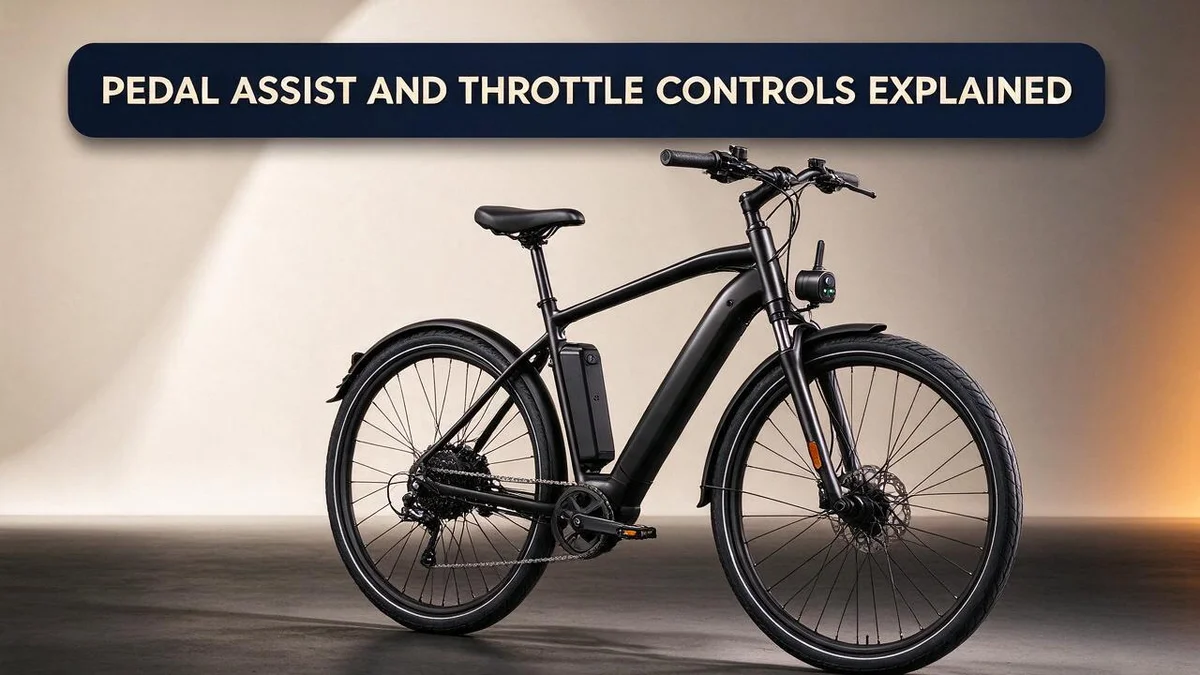
Pedal Assist and Throttle Controls Explained: How Each Works and When to Use Them
Electric bikes feel like magic the first time you ride one. You press the pedals, and the bike pushes back with extra power. Or you twist a grip, and the bike moves on its own.
Those two ways of riding come from two different controls. They are pedal assist and the throttle. Each one changes how your bike feels and how far your battery lasts.
Pedal assist, often called PAS, boosts your effort as you pedal. The motor activates when you move the cranks. PAS keeps you active and usually gives you the best range.
A throttle gives you power without any pedaling at all. It also gives you more direct control over how much power you use.
Many new riders mix these two systems up. That confusion can lead to surprise moments on the road and a drained battery.
This article explains how each system works. You will learn the key differences, how each one affects range, and how rider control compares. You will also see how the assist level shapes the power from both controls.
Let’s get you riding with confidence.
In a Nutshell
-
PAS needs your legs. The motor adds power only while you pedal, so it amplifies your own effort and keeps you active on every ride.
-
A throttle works on demand. You twist or press it, and the motor moves the bike without any pedaling. This gives you direct control over power.
-
Battery range favors PAS. Riders who pedal with assist generally get the most range from one charge. Throttle use tends to drain the battery faster.
-
Assist level sets the power. You pick a level, and that choice changes how much the motor gives. On some bikes, the selected level also controls the throttle output.
-
Both systems can work together. Many riders switch between them depending on the road, their energy, and how far they plan to go.
-
Simple choice: Pick PAS for exercise and distance. Pick the throttle for quick, hands-on control.
What Pedal Assist (PAS) Is and How It Amplifies Your Pedaling
Pedal assist works like a helpful partner for your legs. The motor stays quiet until you start turning the pedals. Then it adds power to the effort you already make.
Most riders call this system PAS for short. It gives a smooth and natural boost. The motor responds to your movement, not to a button.
The bike knows you are pedaling through a sensor. Many systems use a cadence sensor that tracks how fast the crank spins. Some bikes use a torque sensor that measures how hard you press the pedals.
This setup makes hills feel much easier. A climb that once felt tiring becomes manageable. You still move forward with your own strength, which keeps your body active.
Your assist level sets the size of the boost. A low setting gives gentle help for flat roads. A high setting gives strong support when the wind pushes against you. Choose the level that matches your energy.
Some riders notice that the assist level also shapes how the throttle and sensor respond. Check your display to see your current setting. This habit helps you stay in control.
PAS also stops when you stop pedaling. Most systems cut the motor soon after the crank stops turning. This feature keeps the bike from surging forward when you pause.
Pedal assist suits riders who want exercise. You still work your legs, but the motor lightens the load. Over time, many people ride farther and feel stronger.
PAS usually gives longer range than full power. Pedaling and assist together save battery energy. That balance makes longer trips more practical.
What a Throttle Is and How It Delivers Power Without Pedaling
A throttle is a control you use on the handlebar. You twist a grip or press a thumb lever to call for power. The motor responds right away, so the bike moves even when your feet stay still.
Throttles give you direct control over power. Small movements change how hard the motor pushes. Many riders like this feeling when they start from a stop or climb a short hill.
Here is what happens inside the bike. The controller reads your throttle input and sends power from the battery to the motor. The motor then turns the wheel and carries you forward.
Your assist level still matters. The level you pick also shapes how the throttle responds. One forum source notes that both throttle and cadence sensor output follow the selected assist level. A low setting can limit throttle power too.
Battery use is the main tradeoff. Throttle riding usually uses more battery than pedal assist. PAS generally gives the most range from one charge, so throttle use shortens each ride. Plan longer trips with this in mind.
The throttle also works well for quick starts. You can roll away from a stop sign without strain. Ease the grip gently so the bike does not jerk.
Stay alert when you use it. The motor can respond fast. Keep your hand relaxed on the grip and watch the road ahead. Know your local rules, because some places limit throttle speed.
Think of the throttle as your backup power. Use it when you need a boost or a break from pedaling. Choose PAS when you want exercise and longer range. Knowing how the throttle works helps you ride with confidence.
How Assist Levels Control Both Pedal Assist and Throttle Output
Many riders assume the assist level only affects pedaling. However, one rider discussion notes that the selected level controls both the cadence sensor output and the throttle output. In short, one setting can change how the whole bike responds.
Why this matters for you: When you raise the level, the motor gives more power to your pedaling. When you use the throttle, that same level sets how hard the motor pushes. You do not need two separate settings to manage your ride.
Adjust the level to change output. The main step is simple. Change the assist level, then ride a short stretch and notice the difference. Small changes often make a big difference on hills and flat roads alike.
Pedal assist responds to your effort. With a higher level, the motor adds more force each time you turn the pedals. With a lower level, you still do most of the work, which keeps you active.
Throttle output follows the same setting. When you press the throttle at a high level, the bike accelerates more strongly. At a low level, the same press gives a softer push. This helps you match power to the road ahead.
Battery use changes with the level. Higher levels draw more energy from the battery. Lower levels help you stretch your range. If you plan a long trip, choose a moderate level for most of the ride.
A quick check helps. Before you leave, confirm the level you want. Then test a gentle start. This habit prevents surprises, especially when you move from a quiet street to a busy road.
The research does not cover every control detail. Exact button locations and step-by-step adjustments vary by bike, so your owner manual is the best place to confirm those specifics. The core idea stays the same: the assist level shapes both systems.
How to Adjust Your Assist Level Step by Step
Changing your assist level takes only a minute once you know where to look. Follow these steps to set the power that fits your ride.
Step 1: Locate the controls. Most bikes place the buttons on the handlebar near one of your grips. Some models use a display unit with plus and minus keys.
Step 2: Check the current level. Glance at the screen before you move. The number or bar graph shows your present setting, so you know your starting point.
Step 3: Press to change the level. Press the up button to raise the level. Press the down button to lower it. Watch the screen as it updates.
Step 4: Test the new setting. Ride a short, flat stretch first. Pedal at a steady pace and notice how the boost feels. If you have a throttle, test it gently before you accelerate hard. Adjust again if the help feels too strong or too weak.
Step 5: Match the level to the terrain. Choose a lower level on flat roads to save battery. Pick a higher level for steep climbs or strong headwinds. This habit helps you ride longer and feel more comfortable.
Step 6: Save your favorite setting. Some riders keep one level for commuting and another for weekend rides. Write down the numbers that feel right so you can repeat them later.
Quick tip: Adjust the level while stopped or moving slowly. Changing settings on a busy road can distract you and cause a sudden jolt.
Remember to check often. Your ideal level can change with traffic, weather, and how tired you feel. A quick check at each stop keeps your ride smooth and safe.
Pedal Assist vs. Throttle: Control, Effort, and Riding Feel
The two systems give you power in different ways. Pedal assist waits for your effort, while throttle responds to your hand. Knowing this difference helps you choose the right option for each ride.
Control is the first big difference. With pedal assist, the motor follows your pace. Your legs set the speed of the boost.
A throttle works another way. You twist or press it, and the motor adds power right away. You can gain speed without turning the pedals at all.
Effort is the second difference. Pedal assist still asks you to pedal, so your muscles do real work on every hill. You stay active while the motor helps.
Throttle riding asks far less from your legs. That makes it useful after a long day or on a steep climb when you feel worn out.
Riding feel is the third difference. Pedal assist feels smooth and natural. Power rises as you pedal, so the boost feels connected to your effort.
Throttle power feels more direct and sudden. Many riders notice this right away on their first trip.
Think about your usual route. Short city trips with frequent stops may suit a throttle. Long rides on varied terrain may suit pedal assist, since it often stretches your battery farther.
Safety matters with both options. A throttle can accelerate fast, so start gently. Pedal assist adds no power when you stop pedaling, which gives you more time to react.
Many riders use both styles. They pedal most of the time and save the throttle for hills. Try each one on a quiet road first. Notice how your body and confidence respond. Your own feel is the best guide.
How Each Control Affects Battery Range
Battery range depends on how you use each control. Pedal assist and throttle draw energy in different ways. Knowing the difference helps you ride farther on one charge.
Pedal assist usually saves the most battery. The motor adds help only when you turn the pedals. Your legs share the work, so the motor uses less energy over the same distance.
Throttle use drains the battery faster. The motor delivers power without any pedaling. It must carry the full load alone, so energy leaves the battery more quickly.
Sudden bursts of throttle also cost extra energy. Starting from a stop with full power pulls a heavy current. Gentle pressure lets the bike build speed and keeps the battery draw steady.
Mixing both controls can extend your range. Pedal on flat sections where you can keep a steady pace. Save the throttle for short climbs or tricky starts. This balance keeps your power use under control.
Your riding habits matter too. Frequent stops and quick starts waste energy with either control. Smooth pedaling and a steady speed help the battery last longer.
Weather and terrain also change how far you travel. Cold temperatures reduce battery capacity. Headwinds and steep hills raise energy use, so expect less range on those days.
Plan your trips around your battery. Check the distance before you leave home. For long rides, keep the assist level moderate and pedal more often.
Track your results on each route. Note the battery percentage before and after a ride. Over several trips, you will see which habits give you the best range.
Practical Tips for Using Pedal Assist and Throttle Smoothly
Gentle inputs feel better than sudden changes. This habit protects your balance and keeps the bike steady.
Roll on the throttle slowly. Turn the grip with a steady motion instead of a fast twist. The bike will speed up in a controlled way.
Pedal assist works best with a steady rhythm. Keep your pedal speed consistent, even when the motor helps. This makes the assist feel natural and predictable.
Shift gears before a hill starts. A lower gear lets the motor and your legs share the load. You avoid strain and keep a steady pace.
Ease off before you stop. Reduce power a few seconds early. Brake gently so the bike slows without jerking forward.
Low speed needs extra care. Throttle can surprise you when you start from a standstill. Use one finger and small movements at first.
Anticipate traffic and turns. Watch the road ahead and adjust power early. Smooth changes help other riders predict your moves.
Practice in an empty parking lot. Try starting, stopping, and turning slowly. Repeat the drill until your hands feel relaxed.
Keep both hands on the bars. Hold the grips firmly but not tightly. A relaxed grip gives you better control over every twist.
Check your tires and brakes often. Good tire pressure and working brakes make power changes safer. Smooth riding depends on a well kept bike.
Good habits build over time. Each short ride teaches you how your bike responds. Stay patient, and your control will improve quickly.
Common Mistakes Riders Make With Assist and Throttle Controls
Many new riders make small errors with their assist and throttle controls. These habits can waste battery, tire your legs, or make the ride less safe. Knowing the common mistakes helps you avoid them.
Mistake one: leaving the assist level on the highest setting. High assist feels fun at first. However, it drains the battery quickly on flat roads where you need less help.
Mistake two: keeping the assist level too low on hills. Some riders refuse to raise the level when the road climbs. A low setting gives the motor little room to help, so the climb feels much harder.
Mistake three: forgetting that both controls follow the same level. Throttle and pedal assist both respond to the selected setting. Switching modes without checking the level can give you more power than you expect.
Mistake four: pedaling without any help on long climbs. This habit tires your legs fast and leaves you sweaty before the top.
Mistake five: changing levels in heavy traffic. A sudden jump in power can surprise you near cars or pedestrians. Change the setting when the road feels calm and clear.
Mistake six: learning the controls on a busy street. Every bike setup places buttons and grips in different spots. Practice at home first so you do not search for them while riding.
Mistake seven: ignoring the display. The screen shows your assist level, speed, and battery charge. Glancing at it often helps you adjust before the bike runs low or works too hard.
Fixing these habits takes only a few rides. Your bike will feel safer, and your battery will last longer.
Final Thoughts
Pedal assist and throttle controls do different jobs, and both are useful. Once you understand them, you can ride with more confidence.
Pedal assist boosts your effort as you pedal. It keeps you active and usually gives you the best battery range.
The throttle delivers power without any pedaling. It gives you direct control over the motor when you need a quick push.
Both controls follow the assist level you select. A lower level gives gentle help. A higher level gives stronger power.
Start with a simple plan. Use pedal assist for most of your ride. Save the throttle for starts, short climbs, or tired moments.
Match your settings to the route. Choose a lower level on flat roads to save energy. Raise it on steep hills so your legs stay fresh.
Smooth habits make every ride better. Gentle inputs, early planning, and steady pedaling protect your battery and your comfort.
Practice builds skill. Try each control on a quiet path or empty lot. Notice how the bike responds at every level. Small tests teach you a lot.
Safety always comes first. Keep both hands on the bars, watch traffic, and check your brakes and tires often.
Now you know the key differences. Pedal assist rewards your effort with extra range. The throttle gives you power on demand. Use them together, and you will enjoy longer and easier rides.
Take your bike out for a short ride today. Try one new level setting and see how it feels. Each ride will make you a smarter, more relaxed rider. Have fun and ride safe.
Frequently Asked Questions
Which control uses less battery?
Pedal assist usually uses less battery. It gives the most range because your legs do part of the work. The throttle uses more power because the motor does all the pushing.
Does pedal assist help you stay active?
Yes, it does. Pedal assist keeps you moving because you still turn the pedals. The motor adds help, so hills and long rides feel easier without giving up exercise.
Which control gives more direct power control?
The throttle gives you more direct control over power. You can add or reduce power right away with your hand. Pedal assist follows how hard you pedal, so the change feels more gradual.
Is pedal assist easier for beginners?
Pedal assist often feels easier for new riders. It keeps the power smooth and tied to your effort. Start on a low level and raise it slowly as you feel more comfortable.
Can you switch between pedal assist and throttle while riding?
This depends on your bike. Some models let you use both at the same time, while others allow only one mode. Check your owner’s manual so you know how your system works before you ride.

Philips is the founder and lead writer at GearheadGarageFinds.com, a passionate automobile enthusiast who has spent years testing, comparing, and reviewing auto products and accessories to help fellow gearheads make smarter buying decisions. When he’s not under the hood or behind the keyboard, you’ll find him exploring the latest automotive innovations and hunting for the best garage finds on the market.