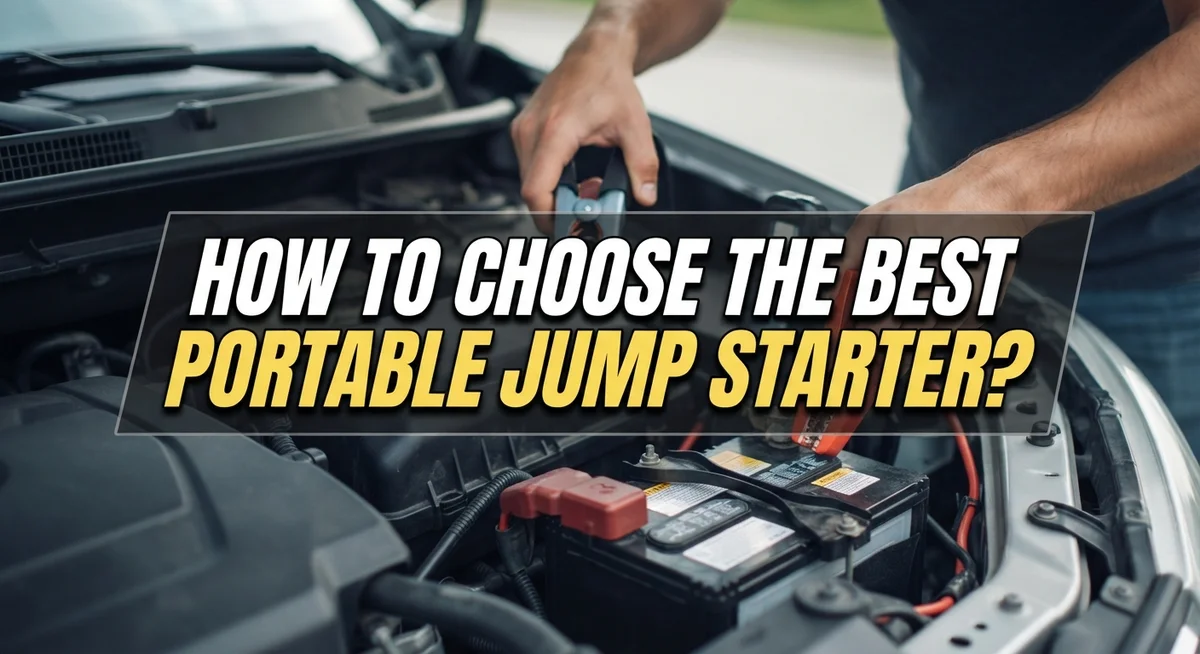
How to Choose the Best Portable Jump Starter?
Picture this. Your car battery dies on a cold morning. You have no cables and no one around to help.
A portable jump starter saves the day in these moments. It fits in your glove box and gets your engine running fast.
But here’s the problem. Not all jump starters work the same way.
Some units look powerful on paper but fail to start real vehicles. Others come with specs that confuse more than they help.
This guide breaks down everything you need to know. We will explain peak amperage and why it matters for your car.
You will learn about Cranking Amps and Cold Cranking Amps. These numbers tell you if a jump starter can handle your engine size.
We also cover energy capacity and charging time. These details affect how many times you can use the device before recharging.
By the end, you will know exactly what to check before buying. You will avoid common mistakes that leave people stranded.
Let’s help you choose a jump starter that actually works when you need it most.
In a Nutshell
Choosing the right portable jump starter comes down to a few key checks. Here is a quick summary to keep in mind before you buy.
-
Match amps to your vehicle. Check your car’s engine size and pick a jump starter with enough Cranking Amps and Cold Cranking Amps to handle it. Bigger engines need more power.
-
Look beyond peak amperage. High numbers on the box do not always mean real starting power. Focus on actual CA and CCA ratings instead.
-
Check energy capacity. A higher Wh rating means more uses before you need to recharge. This matters if you plan to use it often.
-
Review charging time. Some units charge fast, others take hours. Pick one that fits your schedule and travel habits.
-
Set a realistic budget. Decide what you need first, then find options within that range. Avoid overspending on features you will not use.
-
Verify power level before buying. Read specs carefully. A weak unit will not start your vehicle when you need it most.
What Is a Portable Jump Starter and How Does It Work
A portable jump starter is a compact battery device that delivers electrical power to your car’s engine when the main battery dies. Think of it as a backup power source you carry in your trunk or keep at home.
Here’s how it works. Your car’s battery stores electrical energy. When you turn the key, this energy flows to the starter motor, which cranks your engine. A dead battery means no energy flows, so your engine won’t start. A portable jump starter supplies that missing energy through heavy duty cables connected to your battery terminals.
The jump starter contains its own battery pack inside. This pack holds enough power to push current through your car’s electrical system and spin the starter motor. Once your engine starts, your car’s alternator takes over and recharges your main battery.
Peak amperage matters here. This number tells you how much electrical current the jump starter can push out. Your vehicle needs a specific amount of current to start. A small four cylinder engine needs less current than a large V8 engine.
Cold Cranking Amps (CCA) is the real measurement you should focus on. This rating shows how much current the jump starter delivers in freezing temperatures. Cold makes starting harder because oil thickens and batteries lose power.
The device also has an energy capacity measured in Watt hours (Wh). This tells you how many times you can use it before recharging. Higher capacity means more uses.
Modern portable jump starters include safety features like reverse polarity protection and spark proof technology. These prevent damage to your vehicle’s electrical system if you connect the cables wrong.
Understanding Peak Amps, Cranking Amps, and Cold Cranking Amps
Peak Amps, Cranking Amps, and Cold Cranking Amps measure different things. Understanding each one helps you pick the right jump starter for your vehicle.
Peak Amps represent the maximum burst of power your jump starter can deliver. This number appears large on packaging because manufacturers want to impress you. Peak Amps last only a few seconds. They show what the device can do at its absolute limit, not what it maintains during an actual start.
Cranking Amps (CA) measure how much power your jump starter delivers while starting your engine at 32 degrees Fahrenheit. This is a more realistic number than Peak Amps. CA tells you sustained power output. Most portable jump starters list this spec, and it’s more useful for comparison shopping.
Cold Cranking Amps (CCA) measure power delivery at zero degrees Fahrenheit. This is the toughest condition for starting any vehicle. CCA represents real world winter performance. If you live in a cold climate, CCA matters more than the other ratings. Your jump starter needs enough CCA to handle your vehicle’s engine size in freezing temperatures.
Here’s what you actually need to do. Find your vehicle’s engine size first. Check your owner’s manual or look under the hood. Smaller engines need 400 to 600 CCA. Larger engines require 600 to 1000 CCA or more.
Compare jump starters using their CCA rating, not Peak Amps. A unit with 1200 Peak Amps but only 300 CCA won’t start most vehicles reliably. The CCA number tells you what power actually reaches your battery when you need it most. Ignore marketing hype and focus on these three ratings during your selection process.
Matching Jump Starter Power to Your Vehicle Type
Your vehicle type determines the power level you actually need. A compact sedan requires far less power than a large truck or SUV. Start by checking your owner’s manual or the driver’s side door jamb for your engine’s Cold Cranking Amps (CCA) rating.
Small cars and sedans typically need 400 to 600 CCA. These vehicles have smaller engines that turn over easily. A jump starter in this range will reliably start your car multiple times before needing a recharge.
Midsize vehicles and crossovers usually require 600 to 1000 CCA. These engines need more electrical power to crank. Matching this range ensures you have enough capacity without overspending on unnecessary features.
Large trucks, SUVs, and diesel engines demand 1000 CCA or higher. Cold weather makes this especially important. A jump starter underpowered for your truck will fail when you need it most, particularly in winter months.
Here’s the practical approach: find your vehicle’s actual CCA requirement first. Then select a jump starter that meets or slightly exceeds that number. Buying way beyond your needs wastes money and adds bulk you don’t need to carry.
Don’t assume all jump starters work for all vehicles. A unit rated for sedans won’t reliably start a diesel truck. Conversely, an oversized jump starter for a compact car adds weight without benefit.
Check your vehicle’s specifications before shopping. Write down the CCA number. Use this as your selection baseline. This simple step prevents buying a jump starter that fails when your battery dies, especially during emergencies.
Evaluating Battery Capacity and Charging Time
Battery capacity and charging time are two separate but equally important factors when selecting a portable jump starter. Understanding both helps you pick a device that actually works for your needs.
Battery capacity measures how much energy your jump starter stores. This is shown in Watt hours (Wh). A higher Wh rating means more total power available. Think of it like a fuel tank—bigger capacity lets you jump start multiple vehicles before recharging.
For most sedans and small vehicles, 400 to 600 Wh is sufficient. Midsize SUVs and crossovers benefit from 600 to 1000 Wh. Larger trucks and diesel engines need 1000 Wh or more. Check your vehicle’s manual to see what CCA (Cold Cranking Amps) it requires, then match the jump starter’s capacity accordingly.
Charging time refers to how long it takes to restore the battery from empty to full. This matters because you need the device ready when emergencies happen. Some units charge in 2 to 4 hours using a standard wall outlet. Others take 8 to 12 hours or longer.
Consider your lifestyle when evaluating charging time. If you travel frequently, faster charging is valuable. If the device sits in your garage most of the time, slower charging is less critical.
A practical approach combines both factors. Look for a jump starter with enough Wh capacity for your vehicle type and charging speed that fits your routine. Don’t assume the cheapest option has adequate capacity, and don’t overpay for excessive power you’ll never use.
Step-by-Step Guide to Selecting the Right Jump Starter
Start by identifying your vehicle’s exact power needs. Look at your owner’s manual or check the battery specifications to find the Cold Cranking Amps (CCA) your engine requires. This number is your baseline for shopping.
Match your jump starter’s CCA rating to your vehicle’s requirements. Don’t buy the highest powered unit available. A jump starter rated for 1000 CCA won’t help a sedan that only needs 600 CCA, and you’ll waste money on unnecessary power.
Next, verify the actual power output specifications. Manufacturers sometimes highlight peak amperage in marketing materials, but that’s not the real number you need. Read the detailed specs to find the sustained cranking amps the device can deliver consistently.
Consider how often you’ll use the jump starter. If you start your car multiple times weekly, you need a larger battery capacity (measured in Watt hours). A smaller capacity works fine if you only need emergency backup once or twice yearly.
Check the charging time required. Some units charge fully in two to three hours, while others need overnight charging. Your daily routine should influence this decision. If you’re always on the go, faster charging matters more.
Verify the device works with your vehicle type before purchasing. Trucks and diesel engines have much higher power demands than compact cars. Read customer reviews from people with similar vehicles to confirm real world performance.
Finally, examine the included cables and connectors. Ensure they’re the right gauge and length for your needs. Poor quality cables reduce effectiveness even with a powerful device. Test connections fit your battery terminals properly before committing to any purchase.
Common Mistakes to Avoid When Choosing a Jump Starter
Many people make expensive mistakes when buying a jump starter. Understanding these errors helps you avoid wasting money on a device that won’t work for your needs.
The biggest mistake is buying based on marketing hype alone. Manufacturers often advertise peak amperage numbers that sound impressive but don’t reflect real performance. Peak amps represent the absolute maximum output for just a few seconds. Your vehicle needs sustained power delivery, which is why CCA ratings matter much more than flashy peak numbers.
Another common error is ignoring your specific vehicle requirements. Some buyers assume a high powered unit works for everything. This thinking costs money and creates frustration. A jump starter that’s too weak won’t start your engine. One that’s way too powerful wastes your budget on features you’ll never use.
Skipping the power verification step before purchase causes real problems. You must check your vehicle’s actual CCA requirement first. Look in your owner’s manual or contact your vehicle manufacturer. This simple step prevents buying the wrong device entirely.
Many people also overlook battery capacity details. They focus only on amperage and forget that energy capacity determines how many times you can use the jump starter before recharging. If you need multiple starts during winter months, this matters significantly.
Charging time gets ignored too often. A jump starter that takes 24 hours to recharge isn’t practical for emergency situations. Check how long the device actually takes to charge from empty to full.
Finally, some buyers neglect cable quality and connector compatibility. Poor cables reduce power delivery efficiency. Mismatched connectors mean the device won’t fit your vehicle at all.
Safety Features and Considerations for Everyday Use
Safety features matter when you use a portable jump starter regularly. Your device needs built in protection to prevent damage to your car’s electrical system and keep you safe during operation.
Reverse polarity protection stops dangerous sparks and explosions. This feature automatically shuts off power if you connect the cables backward. Your car’s battery won’t suffer damage, and you won’t face a dangerous electrical arc.
Overcharge protection keeps the jump starter’s battery from getting damaged. The device stops charging automatically when the battery reaches full capacity. This extends the lifespan of your jump starter significantly.
Look for thermal management systems in quality units. These devices monitor temperature during operation. If the jump starter gets too hot, it automatically reduces power output or shuts down completely.
Short circuit protection is essential for safety. This feature cuts power instantly if metal accidentally touches both cable terminals at once. You stay protected from electrical hazards.
Check that your jump starter has sturdy cable insulation. Cracked or thin insulation creates serious safety risks. Inspect cables before each use to spot damage early.
A reliable LED indicator light shows you the battery status. You’ll know immediately if the device has enough power before attempting a jump start. This prevents wasted time and frustration.
Spark proof technology prevents dangerous electrical arcs when connecting cables. Some units use special connectors that eliminate spark risk entirely.
Always read the safety manual before your first use. Follow all instructions carefully. Keep the device away from water and extreme temperatures. Store it in a dry location between uses. These practices combine with built in safety features to give you reliable, secure jump starting every single time.
Troubleshooting Power and Performance Issues
When your jump starter isn’t delivering the power you expect, several issues could be at play. Understanding what’s going wrong helps you fix it fast.
First, check if your jump starter’s battery is fully charged. A depleted unit won’t start your vehicle no matter how powerful it claims to be. Connect it to a charger and wait for the indicator light to show a full charge. This simple step solves most performance problems.
Next, verify the cable connections are clean and tight. Corrosion on battery terminals or loose clamps reduces power flow significantly. Wipe the terminals with a dry cloth and ensure the red cable connects to the positive terminal and the black cable to the negative. Poor connections feel loose or spark when you attach them.
Check your vehicle’s actual power requirements against your jump starter’s specs. If your car needs 400 CCA but your device only provides 300, it simply won’t work. Review your vehicle’s manual to confirm the exact cranking amps needed.
Test your jump starter on another vehicle if possible. This tells you whether the problem is with the device or your specific car. A unit that starts one vehicle but not another might have compatibility issues with certain battery types or engine sizes.
Extreme temperatures affect performance too. Cold weather reduces a jump starter’s effectiveness significantly. If you’re troubleshooting in winter, try warming the device indoors before using it again.
Finally, inspect the cables for damage or wear. Cracked insulation or bent connectors prevent proper power delivery. Replace damaged cables immediately for safety and reliability.
Final Thoughts
Choosing the right portable jump starter does not need to feel overwhelming. Focus on your vehicle’s actual power needs first. This simple step saves you time and money.
Match the amperage to your car, not to flashy marketing numbers. A small sedan needs far less power than a diesel truck. Check your owner’s manual for exact CCA requirements before you shop.
Energy capacity matters just as much as peak amps. If you plan to jump start your vehicle multiple times between charges, look for higher battery capacity. This gives you backup power when you need it most.
Charging time is another factor people forget. A jump starter that takes forever to recharge becomes useless during emergencies. Pick a unit that charges quickly and holds its charge well.
Safety features protect both you and your vehicle. Reverse polarity protection and spark proof technology are not optional extras. They are must have features for anyone using these devices regularly.
Think about how and where you will use your jump starter. Extreme weather affects battery performance significantly. If you live in a cold climate, prioritize units built to handle low temperatures.
Quality cables and connectors complete the package. Weak cables fail exactly when you need power most. Always inspect build quality before you commit to a purchase.
Take your time comparing specs against your specific vehicle requirements. Avoid the trap of buying the highest rated unit without checking compatibility. A jump starter that matches your needs works better than one with impressive but irrelevant specifications.
Your goal is reliability, not just raw power. Choose wisely, and you will have peace of mind on every drive.
Frequently Asked Questions
What’s the difference between peak amps and cranking amps?
Peak amps show the maximum power your jump starter can deliver for a short burst. Cranking amps (CA) and cold cranking amps (CCA) measure sustained power needed to start your engine, especially in cold weather. CCA is the more important number for real world situations. Peak amps sound impressive in marketing but don’t tell you if the unit will actually start your car.
How do I know what amperage my vehicle needs?
Check your vehicle’s manual or look at the battery label under the hood. Most cars need between 300 to 600 CCA. Larger trucks and SUVs typically require 600 to 1000 CCA or higher.
Don’t just buy the highest powered unit available. Match your jump starter’s amps to your vehicle’s actual needs. An oversized unit wastes money and adds unnecessary weight.
Can I use one jump starter for multiple vehicles?
Yes, if you choose the right one. Pick a unit with enough power for your largest vehicle. It will work fine on smaller cars too.
However, verify the amperage covers all your vehicles before buying. A unit rated for 400 CCA won’t start a truck needing 800 CCA.
How often should I charge my portable jump starter?
Charge it every 3 to 6 months even if you don’t use it. Battery self discharge happens naturally over time. A fully charged unit ensures you’re ready for emergencies.
Check the battery indicator before each use. If the light shows low charge, plug it in before heading out.
Does temperature affect jump starter performance?
Yes, cold weather reduces performance significantly. Battery power drops in freezing temperatures. Your jump starter may struggle to start a vehicle in winter even if it works fine in summer.
Store your unit inside your car or home during cold months. Keep it warm before attempting a winter start.

Philips is the founder and lead writer at GearheadGarageFinds.com, a passionate automobile enthusiast who has spent years testing, comparing, and reviewing auto products and accessories to help fellow gearheads make smarter buying decisions. When he’s not under the hood or behind the keyboard, you’ll find him exploring the latest automotive innovations and hunting for the best garage finds on the market.