Why Do E-Bike Pedals Feel Hard? Causes and Fixes Explained
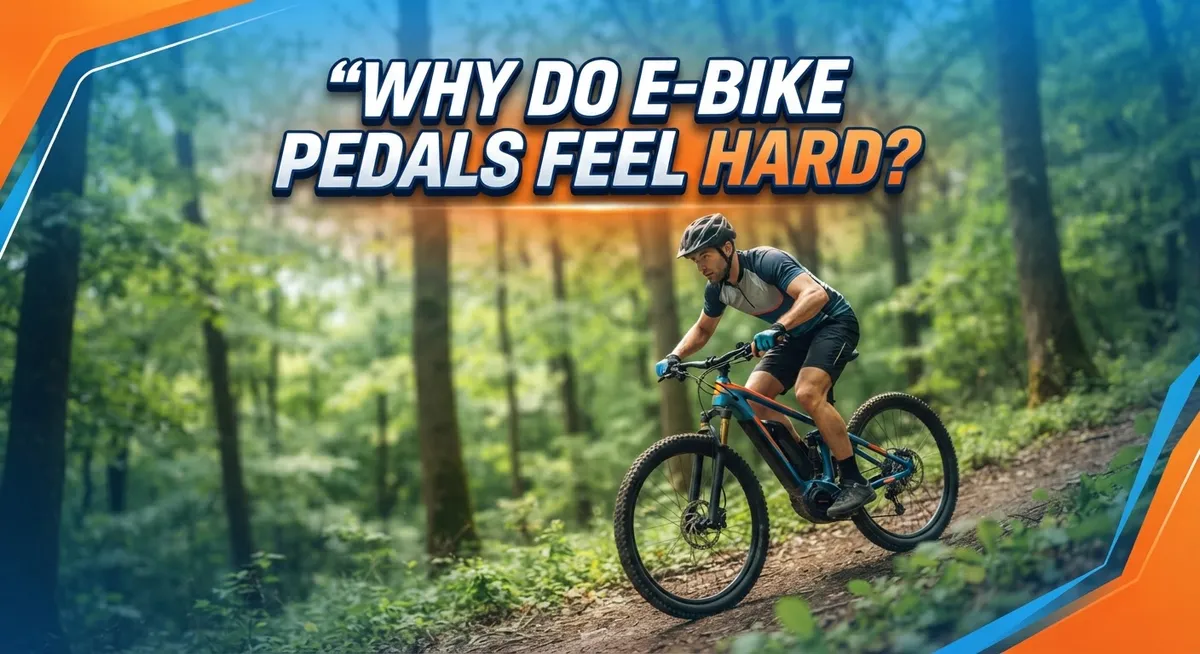
Have you ever hopped on your e-bike and felt like you were pedaling through mud? You are not alone. Many riders notice their e-bike pedals feel hard at some point, and it can be confusing.
E-bikes carry extra weight from the motor and battery. This added weight means your legs feel more resistance than on a regular bike. But that is not the whole story.
Sometimes the problem is not the bike’s design at all. It could be a simple fix like tire pressure or a setting you forgot to adjust.
In this article, we will explore why your pedals feel stiff and heavy. We will look at common culprits like incorrect PAS levels, underinflated tires, and rubbing brakes.
You will also learn quick troubleshooting steps to get your ride feeling smooth again. By the end, you will know exactly how to check your motor, battery, and settings.
Let’s get your e-bike rolling easily again.
In a Nutshell
Here is a quick summary to help you understand the problem fast.
-
Extra weight is normal. E-bikes have motors and batteries. This makes them heavier than regular bikes. Pedaling will always feel a bit different.
-
Low tire pressure is the top culprit. Soft tires create drag. This makes pedaling feel much harder than it should. Always check your tires first.
-
Your assistance level matters a lot. A low PAS setting gives you less help. Try bumping it up to level two for a smoother feel.
-
A dead motor means dead weight. If your battery is empty, you are pedaling a heavy bike with no help. This is often mistaken for a bike problem.
-
Rubbing brakes cause hidden resistance. Sometimes a brake pad sits too close to the wheel. This creates friction you might not notice right away.
-
Pedaling is optional, but smart. You do not have to pedal on an e-bike. However, pedaling helps save your battery and extends your total range.
Understanding How E-Bike Motor Assistance Works
E-bikes work by pairing a motor with your pedaling power. The motor kicks in when you pedal and provides extra force to move you forward. This system is called pedal assist or PAS.
Here is how it functions in real time. You turn on your e-bike and select an assistance level using the plus and minus buttons on your handlebars. Level 1 gives minimal help. Level 5 gives maximum help. Most riders find level 2 or 3 feels natural and balanced.
When you pedal, sensors detect your movement and tell the motor to engage. The motor then adds power to your pedals in real time. This means the harder you pedal, the more the motor responds. The combination of your leg power plus motor power propels you forward.
The motor does not move your legs for you. You still do the pedaling. The motor simply makes each pedal stroke more powerful. Think of it like having a helpful friend push you uphill while you keep pedaling.
Your battery powers the entire system. When the battery runs low or dies, the motor stops working. At that point, you are pedaling a heavy bike with no assistance. This is why hard pedaling often signals a dead battery.
The weight of the motor and battery adds about 30 to 50 pounds to a regular bike. Without assistance, this extra weight makes pedaling feel heavy. But when the motor is on and set to the right level, it compensates for this added weight.
Understanding your assistance level is key. If you set it too low, you feel the bike’s weight. If you set it too high, the battery drains fast. Finding your sweet spot takes just a few rides.
Top Reasons E-Bike Pedals Feel Harder Than Expected
Your e-bike pedals feel hard for several concrete reasons. Understanding these causes helps you fix the problem quickly.
Weight is the primary factor. E-bikes are heavier than regular bikes because of the motor and battery system. This added weight makes pedaling require more effort, especially when your motor assistance is low or turned off.
Tire pressure is the most common culprit. Underinflated tires create rolling resistance that makes pedaling feel much harder. Soft tires drag against the ground instead of rolling smoothly. Check your tire pressure regularly and inflate them to the manufacturer’s recommended PSI.
Your assistance level setting matters greatly. If your pedal assist (PAS) is set to level 1 or 2, the motor provides minimal help. You feel the bike’s full weight on your pedals. Increasing your PAS level gives you more motor support and makes pedaling feel easier.
A dead or depleted battery removes all assistance. When your battery runs out of charge, your motor stops working entirely. You are then pedaling a 30 to 50 pound heavier bike with zero help. This feels dramatically harder than normal riding.
Brake problems create hidden resistance. Rubbing brake pads slow your wheels even when you are not braking. This friction makes every pedal stroke feel heavier and more difficult.
Poor bike maintenance compounds the issue. A chain that needs lubrication, misaligned components, or worn parts all increase pedaling resistance. Regular maintenance keeps everything running smoothly.
Improper bike fit affects your power transfer. If your seat height or handlebar position is wrong, you cannot pedal efficiently. This makes the bike feel harder to ride even when nothing is mechanically wrong.
The good news is that most of these issues are easy to diagnose and fix yourself with basic troubleshooting.
Step-by-Step: Diagnosing Hard Pedaling on Your E-Bike
Start by checking if your motor is actually on. Look at your display screen. You should see lights or numbers showing power status. If the screen is dark, press the power button. A powered off motor means you are pedaling dead weight.
Next, check your pedal assist (PAS) level. Use the plus and minus buttons on your handlebars to increase the assistance. Try setting it to level 3 or 4. Lower levels give minimal help, so the bike feels heavy. Higher levels reduce your effort significantly.
Now inspect your tire pressure. This is the most common reason for hard pedaling. Soft tires create drag that slows you down. Grab a tire pressure gauge and check both wheels. Most e-bike tires need 40 to 65 PSI depending on your bike model. Underinflated tires by just 5 PSI make pedaling noticeably harder.
Spin each wheel by hand while the bike is upside down or on a stand. Listen for rubbing sounds. Brake pads that touch the rim create constant resistance. If you hear scraping, your brakes need adjustment.
Check your battery charge level on the display screen. A depleted battery removes all motor assistance. Even a battery at 10 percent provides minimal help. Charge your battery fully and test again.
Finally, examine your bike for loose parts or debris. A chain that needs lubrication increases friction. Bent derailleurs can cause shifting problems that affect pedaling feel.
Work through these steps one at a time. Most people find the issue within the first three checks. Start with motor power, then PAS level, then tire pressure. These three account for about 80 percent of hard pedaling complaints. Once you fix the actual problem, your e-bike should feel responsive and easy again.
Checking and Adjusting Your Pedal-Assist (PAS) Level
Your pedal assist level is one of the easiest things to adjust on an e-bike. Most models use simple plus and minus buttons on the handlebar display. Start by locating these buttons near your grip.
Press the minus button to lower your assistance level. Watch your display screen change from level 5 down to level 1. Lower levels mean less motor help, so you feel more pedal resistance. Higher levels mean more motor power, so pedaling feels easier.
Test different levels while riding on flat ground. Level 1 provides minimal help. At this setting, the bike still feels quite heavy. Level 2 or 3 usually feels like a normal bicycle. Levels 4 and 5 give substantial motor power, making pedaling feel effortless.
Your current PAS level might be set too low. Many riders accidentally leave their bike on level 1 after the last ride. Check your display right now to see what number shows. If it reads 1 or 2, try pressing the plus button several times.
Ride around for a minute at each new level. Pay attention to how your legs feel. Notice when pedaling becomes comfortable again. This is your ideal assistance setting. Write down this number so you remember it.
Keep in mind that your best PAS level changes based on conditions. Hilly terrain might need level 4 or 5. Flat paths work fine at level 2 or 3. Riding uphill with cargo requires more assistance than cruising empty on level ground.
Check your PAS level before every ride. Sometimes it resets to a default setting after you power off the bike. A quick glance at your display takes just seconds. This simple habit prevents the frustration of thinking something is broken when your assistance is simply set too low.
Tire Pressure, Brakes, and Maintenance Factors to Inspect
Tire pressure is the single most common reason your e-bike pedals feel hard. Underinflated tires create drag that makes every pedal stroke require extra effort. Check your tire pressure at least once a week, and more often if you ride daily.
Find the recommended pressure range printed on the side of your tire. It usually shows a minimum and maximum PSI (pounds per square inch). Use a floor pump with a pressure gauge to inflate your tires to the middle of that range. Properly inflated tires reduce rolling resistance significantly.
Your brakes might also be causing the hard pedal feeling. Rubbing brake pads slow your wheels even when you are not actively braking. Spin each wheel by hand while your bike hangs from a stand or sits upside down. The wheel should spin freely without resistance. If it stops quickly or makes a scraping sound, your brakes need adjustment.
Look closely at the brake pads to see if they touch the rim or rotor. Even slight contact creates friction that makes pedaling harder. If you see rubbing, the brake caliper may be misaligned. Gently loosen the caliper bolts and center it so pads sit evenly on both sides.
Battery charge level affects your pedaling effort too. Check your display screen to confirm your battery has charge. A dead battery removes all motor assistance, making your e-bike feel like a very heavy regular bike.
Regular maintenance prevents most hard pedaling issues. Keep your chain clean and lubricated. Check that all bolts and fasteners are tight. Look for bent spokes or damage to your wheels. These problems add resistance without you realizing it.
Perform a quick inspection before each ride. Spend two minutes checking tire pressure, spinning your wheels, and verifying your battery charge. This simple routine catches problems early and keeps your e-bike running smoothly.
Mistakes That Make E-Bike Pedaling Feel Harder
E-bike riders often make simple mistakes that turn pedaling into hard work. These errors are easy to fix once you know what to look for.
Setting your assistance level too low is a common mistake. Many riders assume lower levels save battery, but this backfires. You end up working harder and getting frustrated. Test different levels on flat ground to find what feels right for your conditions.
Ignoring tire pressure causes more hard pedaling than most riders realize. Soft tires create more friction against the ground. Check your tire pressure weekly. The recommended range is printed on your tire’s sidewall. Properly inflated tires make a huge difference in how easy pedaling feels.
Riding with a dead battery removes all motor help instantly. Your e-bike suddenly becomes a heavy regular bike. Many riders forget to charge between rides or don’t check their battery status before heading out. Glance at your display screen before every ride to confirm your charge level.
Leaving your motor powered off is surprisingly common. You might accidentally hit the power button or forget to turn it back on after maintenance. Always verify your motor is actually running before assuming something is wrong.
Neglecting brake adjustments creates constant resistance. Rubbing brake pads slow your wheels even when you are not actively braking. Spin each wheel by hand to listen for dragging sounds. Brake pads should have a tiny gap between them and your rim or rotor.
Carrying excessive cargo makes pedaling harder without realizing it. Extra weight requires more motor power. Be mindful of what you load onto your bike.
Poor chain maintenance adds friction to every pedal stroke. A dirty or dry chain resists movement. Clean and lubricate your chain regularly.
These mistakes are preventable. A quick pre-ride check catches most issues before they ruin your ride.
Troubleshooting Persistent Pedal Resistance Issues
When your e-bike pedals feel hard despite having checked the basics, you need a systematic approach to find the real problem. Start by ruling out the most obvious culprits first, then move through each potential issue methodically.
Power your motor on and verify it’s actually running. Many riders forget this simple step. Look at your display screen to confirm the motor is active. If the screen is dark or shows no assistance indicator, your motor isn’t helping you at all. This instantly makes pedaling feel like a regular heavy bike.
Next, test your PAS level at different settings during a short ride. Sometimes the problem isn’t that assistance is broken, but that you’re using the wrong level for your current conditions. Try level 3 or 4 on flat ground and notice the difference immediately. Your legs will tell you if the motor is working.
Check whether your brakes are rubbing against the wheel. Spin each wheel by hand and listen for scraping sounds. If you hear friction, your brake pads are too close to the rim or rotor. This creates constant resistance that no motor can overcome. Gently adjust your brake calipers away from the wheel if they’re touching.
Inspect your chain for dirt, rust, or dried lubricant. A dirty chain adds significant friction to every pedal stroke. Wipe it clean with a cloth and apply fresh chain lubricant if needed. Let excess oil drip off before riding.
Look at your bike’s total weight and cargo load. Heavy backpacks, panniers, or cargo racks increase the effort needed. E-bikes handle extra weight better than regular bikes, but there are limits.
If you’ve checked all these factors and pedaling still feels extremely hard, your motor might need professional service. A technician can test the motor’s power output and identify internal issues you cannot see yourself.
Final Thoughts
Hard pedaling on an e-bike almost always has a simple explanation. Low tire pressure, rubbing brakes, or a low PAS level cause most of the trouble.
A dead battery or an unpowered motor can also make your ride feel like hard work. These issues are easy to fix once you spot them.
You do not need to be a mechanic to solve this problem. A quick check before each ride saves you from frustration later.
Start simple. Look at your tires, test your brakes, and confirm your motor is on. These three checks solve most pedaling problems.
If the issue continues, dig deeper. Check your chain, inspect your cargo load, and test different PAS settings. Small adjustments often make a big difference.
Remember that pedaling is not required, but it helps your battery last longer. It also gives you good exercise during your ride.
Think of pedal resistance as useful feedback. Your e-bike is telling you something needs attention.
Regular maintenance prevents most hard pedaling issues before they start. Clean your chain, check your tires, and inspect your brakes often.
This small habit keeps your rides smooth and enjoyable. It also helps your e-bike last longer overall.
Hard pedaling does not mean something is broken. It usually means one small factor needs adjustment.
Stay calm and check the basics first. Most e-bike riders find the answer within minutes.
With a little practice, you will spot these issues quickly. You will know exactly what to check each time.
Your e-bike should feel light and easy to pedal most of the time. If it does not, trust these simple steps to guide you back to a smooth ride.
Keep this checklist handy for future rides. It will save you time and keep your e-bike running well for years to come.
Frequently Asked Questions
Why does my e-bike feel heavier to pedal than a regular bike?
E-bikes weigh more because of the motor, battery, and reinforced frame. This added weight makes pedaling harder without assistance. However, motor help at assistance level 2 or 3 makes the effort feel similar to a regular bike. You’re not imagining the difference. The extra components add 30 to 50 pounds to your bike’s total weight.
What should I check first if pedaling feels too hard?
Start with these simple checks in order. First, make sure your motor is actually powered on. Second, verify your PAS level isn’t set too low. Third, check your tire pressure with a gauge. Fourth, look for brake rubbing against the wheel. Most hard pedaling problems come from one of these four issues.
Can I ride an e-bike without pedaling?
Yes, many e-bikes have a throttle or can operate on pedal assist alone. However, pedaling extends your battery range significantly. Think of pedaling as a way to stretch your battery life further. You pedal when you want to, not because you must.
Does a dead battery make pedaling much harder?
Absolutely. A depleted battery removes all motor assistance instantly. Your bike suddenly feels like a very heavy regular bike. This is why checking your battery charge before riding matters. A full charge ensures smooth rides without unexpected hard pedaling.
How does cargo weight affect pedal resistance?
Heavy loads in backpacks, panniers, or cargo racks increase pedaling effort. Your motor must work harder to move the extra weight. Keep loads reasonable and balanced on both sides of your bike for easier pedaling.

Philips is the founder and lead writer at GearheadGarageFinds.com, a passionate automobile enthusiast who has spent years testing, comparing, and reviewing auto products and accessories to help fellow gearheads make smarter buying decisions. When he’s not under the hood or behind the keyboard, you’ll find him exploring the latest automotive innovations and hunting for the best garage finds on the market.