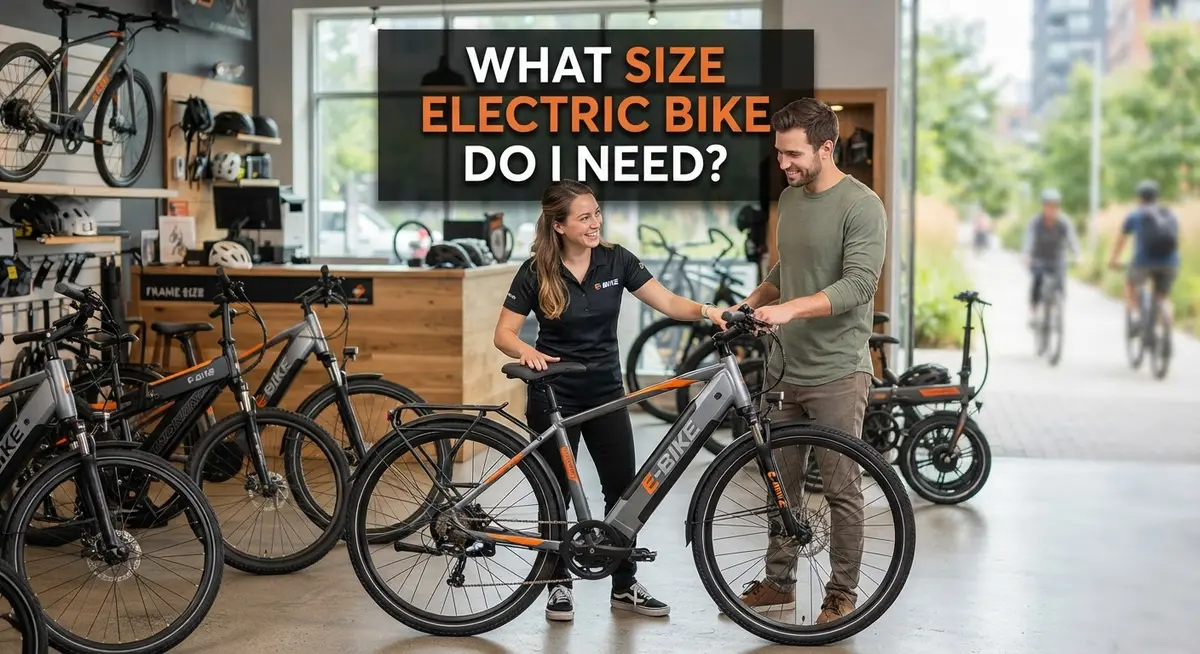
What Size Electric Bike Do I Need? A Complete Sizing Guide
Picking the right electric bike size feels tricky at first. You want a bike that fits your body. You also want one that matches your rides and needs.
Frame size is just the start. Your height and inseam help find the right fit. But that’s not the whole story.
Riding style matters too. Do you cruise short distances or tackle long commutes? Terrain plays a big role as well.
Battery capacity is another key piece. A bike with a small battery might struggle on hilly routes. One with a bigger battery could handle longer rides with ease.
Weather conditions can affect your range too. Cold days often drain batteries faster than warm ones.
This article breaks down everything you need to know. We will cover frame sizing based on your measurements. You will learn how riding style and terrain shape your choice.
We also explain battery range and how to match it to your typical trips. By the end, you will know exactly what size electric bike suits you best. Let’s get started and find your perfect fit.
In a Nutshell
Here’s a quick summary to help you choose the right size fast.
-
Check your height and inseam first. These numbers point you to the correct frame size. Most brands offer a simple size chart for this.
-
Think about your riding style. Casual rides need different sizing than daily commutes or off road trips. Your comfort depends on this choice.
-
Match battery capacity to your trips. Short rides need less power. Long commutes or hilly routes need more battery range.
-
Weather changes your range. Cold temperatures and strong winds can reduce how far you travel on one charge.
-
When unsure, pick the smaller frame size. You can always adjust seat height or stem length later. Going smaller is easier than fixing a frame that’s too big.
-
Terrain affects your decision too. Flat city streets need different specs than hilly countryside paths.
Getting these basics right saves you time and money. It also makes every ride more enjoyable from day one.
Understanding E-Bike Frame Sizes and Why Fit Matters
Frame size is the foundation of your e-bike comfort and control. The right frame size lets you reach the pedals and ground easily, which keeps you safe and reduces fatigue during long rides.
Your inseam measurement is the most reliable way to find your frame size. Stand barefoot with your feet flat on the floor. Measure from your crotch to the ground. This number directly corresponds to frame sizes in centimeters or inches. Most e-bikes use this standard to list their sizing charts.
Height alone isn’t enough to determine frame size. Two people with the same height might have different proportions. One person might have longer legs and a shorter torso, while another has the opposite. Your inseam tells the real story about what frame size works for you.
A proper fit means you can touch the ground with your toes when sitting on the saddle. Your arms should have a slight bend when holding the handlebars. You should not feel stretched out or cramped. These positions let you control the e-bike smoothly and react quickly if needed.
Frame size also affects how the e-bike handles different terrain. Smaller frames are more nimble and easier to maneuver in tight spaces. Larger frames provide more stability on rough ground and at higher speeds. Your riding environment should influence your choice.
Don’t underestimate the importance of proper fit. An ill-fitting frame causes back pain, wrist strain, and knee problems. These issues build up over time and make riding less enjoyable. You’ll ride more often and go farther when your e-bike fits your body correctly.
Many e-bikes allow adjustments through saddle height, stem length, and handlebar position. These tweaks help fine-tune your fit even after purchase. Start with the correct frame size, then adjust these components to match your preferences perfectly.
How to Measure Your Height and Inseam for Accurate Sizing
Start by wearing the shoes you’ll use most often when riding. Stand barefoot on a flat surface with your back against a wall. Have someone help you measure from the floor to the top of your head. Write this number down.
Next, measure your inseam. This is the most important measurement for e-bike sizing. Keep your shoes on and stand with your feet about 12 inches apart. Have someone measure from your inner thigh down to the top of your ankle bone. The measuring tape should be snug but not tight.
Inseam measurement is more accurate than height alone. Two riders with the same height often have different leg lengths. Your inseam tells manufacturers exactly how much space you need between the frame and your body.
Once you have both numbers, compare them to the e-bike sizing chart provided by the manufacturer. Most charts show frame sizes in centimeters or inches. They list the recommended height range and inseam range for each size.
When you get your measurements, add about one inch to your inseam. This extra space gives you comfort and safety. You should be able to stand over the frame with both feet flat on the ground and have one to two inches of clearance between your body and the frame.
Double check your measurements before ordering. Measure twice to catch any mistakes. Have a second person verify your numbers if possible. This prevents sizing problems later.
If you’re between two sizes, choose the smaller frame. Smaller frames are easier to adjust downward using the saddle and stem. You can raise the seat higher or move the handlebars closer if needed. Larger frames are harder to adjust down safely.
Keep your measurements handy. You’ll need them when shopping for an e-bike. Different brands sometimes measure frames differently, so these numbers help you compare options accurately.
Matching Frame Size to Your Riding Style and Terrain
Your riding style and the terrain you tackle shape which frame size works best for you. Different riding patterns demand different bike geometry.
Casual commuters benefit from slightly larger frames. You sit more upright, and extra room makes stop and start riding comfortable. Urban riders who frequent traffic lights and bike paths appreciate the stability a medium frame provides.
Off road and trail riders typically prefer smaller frames. Tighter geometry helps you maneuver around obstacles. You gain better control when navigating rocky paths or steep descents. A compact frame lets you shift your weight more easily during technical sections.
Long distance riders should consider frame size alongside reach. You want to stretch out slightly for comfort on extended rides. A frame that’s too small forces you into a cramped position. After two hours, cramped positioning causes shoulder and back fatigue.
Mountain terrain demands responsive handling. Smaller frames turn quicker and feel more nimble on steep climbs. Larger frames feel stable on flat sections but sluggish when you need quick direction changes.
Flat, paved routes work well with medium to larger frames. You maintain a steady pace without frequent adjustments. The extra wheelbase provides a smooth, predictable ride.
Consider your typical riding speed too. Aggressive riders who accelerate quickly prefer snappier handling from smaller frames. Relaxed riders who cruise at steady speeds adapt well to medium or larger sizes.
Think about how often you stand on the pedals. Standing riders need clearance between your body and the frame. Seated riders can work with tighter geometry.
Weather conditions also impact your choice. Muddy or slippery terrain benefits from slightly smaller frames for better control. Dry, smooth paths work with any properly fitted size.
The key is matching frame geometry to how you actually ride. Test different sizes if possible. Your real riding patterns matter more than general recommendations.
Battery Capacity and Range: Sizing for Your Commute
Your battery capacity determines how far you can ride before needing to charge. This is one of the most important factors for commuters who rely on their e-bikes daily.
Battery capacity is measured in watt hours (Wh). A higher number means more energy storage. Most commuter e-bikes range from 400Wh to 750Wh, though some go higher.
Your commute distance is the starting point. If you ride 10 miles each way, you need enough range to cover that distance. Many people want extra capacity for bad weather days or longer weekend trips.
Range depends on several factors beyond battery size. Your body weight affects how much power the motor uses. Heavier riders drain batteries faster than lighter riders. Terrain matters too. Flat, paved routes use less energy than hilly or mountainous areas.
Weather conditions significantly impact range. Cold temperatures reduce battery efficiency. Wind resistance also drains your battery faster. Riding in winter may cut your range by 20 to 30 percent compared to spring riding.
Your assist level choice changes how far you can go. Higher assist settings use more battery power. Lower settings preserve energy but require more pedaling effort. Many riders use high assist in tough conditions and low assist on easy routes.
Consider your riding style as well. Frequent acceleration and standing on the pedals consumes more power. Smooth, steady pedaling stretches your range further.
A practical approach is to match battery size to your longest regular commute, then add 20 percent extra. This buffer handles weather changes and route variations. If you commute 15 miles regularly, look for a battery that offers 18 to 20 miles of range in typical conditions.
Check the manufacturer’s range estimates, but remember these are usually best case scenarios. Real world range is often lower. Test riding before purchasing helps you understand actual performance on your specific routes.
Fine-Tuning Your Fit: Saddle Height, Stem Length, and Adjustments
Getting the right fit on your e-bike makes riding more comfortable and efficient. Start with saddle height because it affects your pedaling power and knee health.
To find your ideal saddle height, sit on the bike with the pedal at its lowest point. Your leg should have a slight bend at the knee, roughly 25 to 30 degrees. If your leg is completely straight, the saddle is too high. If your knee bends too much, lower the saddle.
A saddle that’s too high causes knee pain and wastes energy. A saddle that’s too low makes pedaling feel awkward and reduces your power output. Small adjustments matter a lot, so take time to get this right.
Stem length controls how far you reach forward to the handlebars. A longer stem puts you in a more stretched position, while a shorter stem brings the handlebars closer. Your riding style determines what works best for you.
Casual riders and commuters usually prefer shorter stems for an upright posture. This position reduces strain on your back and shoulders. Trail riders often choose longer stems for better control and weight distribution.
Test different positions before committing to changes. Many e-bikes allow you to swap stems without special tools. Start with small adjustments and ride for a few days to feel the difference.
Don’t forget about handlebar height. Handlebars that are too low force you into an uncomfortable position. Handlebars that are too high reduce your control and leverage.
Fine-tuning these three elements takes patience but pays off in comfort and performance. A proper fit means you can ride longer without fatigue. You’ll also have better control on different terrain.
Take measurements and write them down. If you make adjustments, keep notes about what worked and what didn’t. This information helps you maintain consistency across all your rides.
Common Sizing Mistakes and How to Avoid Them
Many riders make predictable mistakes when choosing an electric bike size. Understanding these errors helps you avoid them.
The most common mistake is oversizing your frame. When you buy a frame that’s too large, you create problems that are hard to fix. A bigger frame means your reach extends too far forward. Your knees may hit the handlebars when turning. You struggle to touch the ground with both feet at stops. Adjusting down from an oversized frame is difficult. It’s much easier to adjust a smaller frame up through saddle height and stem changes.
Another frequent error is ignoring your actual riding conditions. You calculate battery range based on flat, ideal terrain. Then you ride in hilly areas or cold weather. Your range drops significantly. Rain and winter temperatures reduce battery efficiency by 20 to 40 percent. If you live in a cold climate or ride in mountains, add extra capacity to your battery calculations.
Many people overlook their personal riding style when sizing. A casual rider who rarely stands on the pedals has different needs than someone who accelerates hard and climbs aggressively. Your riding habits change how quickly you drain the battery. They also affect which frame size feels responsive and comfortable.
Don’t assume one size works for everyone. Your height is just the starting point. Your inseam measurement matters more than total height. Two people at 5’10” may have different inseam lengths.
Finally, riders often skip the test ride. You can’t know if a frame feels right without sitting on it. Visit a shop and ride different sizes. Pay attention to how the bike handles. Notice if you feel stable and in control. This real world experience prevents costly mistakes after purchase.
Weather, Terrain, and Other Factors That Affect Range and Fit
Weather plays a major role in how far your e-bike travels. Cold temperatures reduce battery efficiency by up to 20 percent or more. Rain and snow also drain power faster than dry conditions. If you live in a cold climate, plan for shorter range during winter months.
Terrain affects range significantly too. Flat, smooth paths require less energy than hills or rough trails. Climbing steep grades drains your battery quickly. Sandy or muddy surfaces increase resistance and reduce distance. Know your typical riding surface before choosing battery capacity.
Your riding style impacts range as much as the bike itself. Aggressive acceleration and constant high assist drain power fast. Smooth, steady pedaling with moderate assist stretches your range. Casual riders get more miles per charge than aggressive riders on the same bike.
Wind conditions matter more than many people realize. Strong headwinds reduce range by 10 to 15 percent. Tailwinds help you go farther. Check seasonal wind patterns in your area if you ride long distances regularly.
Your body weight and cargo load affect performance too. Heavier riders and loaded bags both reduce range. Add extra battery capacity if you regularly carry gear or passengers.
Rider fitness level changes how much assist you need. Fit cyclists who pedal hard get more range. Less fit riders rely more on motor power, which drains the battery faster.
Consider all these factors together when sizing your e-bike. A bike perfect for summer commuting might struggle in winter. Think about your worst case scenario: cold weather, hilly terrain, and heavy cargo. Choose battery capacity that handles that situation comfortably.
Test riding in actual conditions helps you understand real world range. Borrow a friend’s e-bike or rent one before buying. Ride in similar weather and terrain you’ll encounter regularly. This practical experience beats any calculator or estimate.
Final Thoughts
Choosing the right electric bike size takes some thought. But it does not have to feel overwhelming. Start with your height and inseam measurements. These numbers guide you to the correct frame size.
Your riding style matters just as much as your body measurements. A commuter needs different features than someone who rides trails on weekends. Think about where and how you will actually ride.
Frame size comes first. Get this right before anything else. A bike that fits your body lets you adjust other details later. Saddle height and stem length can fix small issues. They cannot fix a frame that’s the wrong size.
Battery range matters too. Match it to your daily needs. Think about your longest regular trip. Add some buffer for unexpected detours or bad weather days.
Testing your bike before buying makes a real difference. Sit on it. Pedal it. Feel how it responds to your movements. This simple step prevents many common sizing mistakes.
Remember that every rider is different. Your friend’s perfect e-bike might not work for you. Your body, your commute, and your comfort needs are unique to you.
Take your time with this decision. Rushing leads to poor choices. A well chosen e-bike serves you for years. A poorly chosen one sits unused in your garage.
Ask questions when you shop. Good retailers want you to find the right fit. They can help you test different sizes and styles.
Trust your instincts too. If something feels wrong, it probably is. Your comfort while riding matters more than following strict rules.
In the end, the right e-bike size is the one that feels natural to you. It should feel like an extension of your body, not a struggle to control. Use these guidelines as your starting point, then adjust based on your own experience.
Frequently Asked Questions
What if I’m between two frame sizes?
Start with the smaller size. It’s easier to adjust a small frame up than to modify a large one downward. You can raise the saddle and swap the stem for a longer one to find your ideal fit.
How do I know what battery capacity I need?
Match your battery to your typical commute distance. If you ride 20 miles daily, choose a battery that covers that range plus a safety buffer. Check the manufacturer’s range estimates, then reduce them by 20 percent for real world conditions.
Does my weight affect which e-bike size I should choose?
Yes. Heavier riders may need larger frames for better weight distribution and comfort. Your weight also impacts battery range, so account for this when selecting capacity. Test ride before you commit.
Can I use an e-bike in bad weather, and does it change my sizing needs?
E-bikes work in rain and cold, but performance drops. Cold weather reduces battery range by 20 to 40 percent. Rain and snow increase rolling resistance. If you ride year round in harsh conditions, choose a larger battery capacity than your summer needs suggest.
What’s the difference between frame size and overall bike fit?
Frame size is just your starting point. True fit involves saddle height, stem length, and handlebar position. Two riders with identical heights may need different frame sizes based on their arm and leg proportions. Always test ride to verify comfort.

Philips is the founder and lead writer at GearheadGarageFinds.com, a passionate automobile enthusiast who has spent years testing, comparing, and reviewing auto products and accessories to help fellow gearheads make smarter buying decisions. When he’s not under the hood or behind the keyboard, you’ll find him exploring the latest automotive innovations and hunting for the best garage finds on the market.