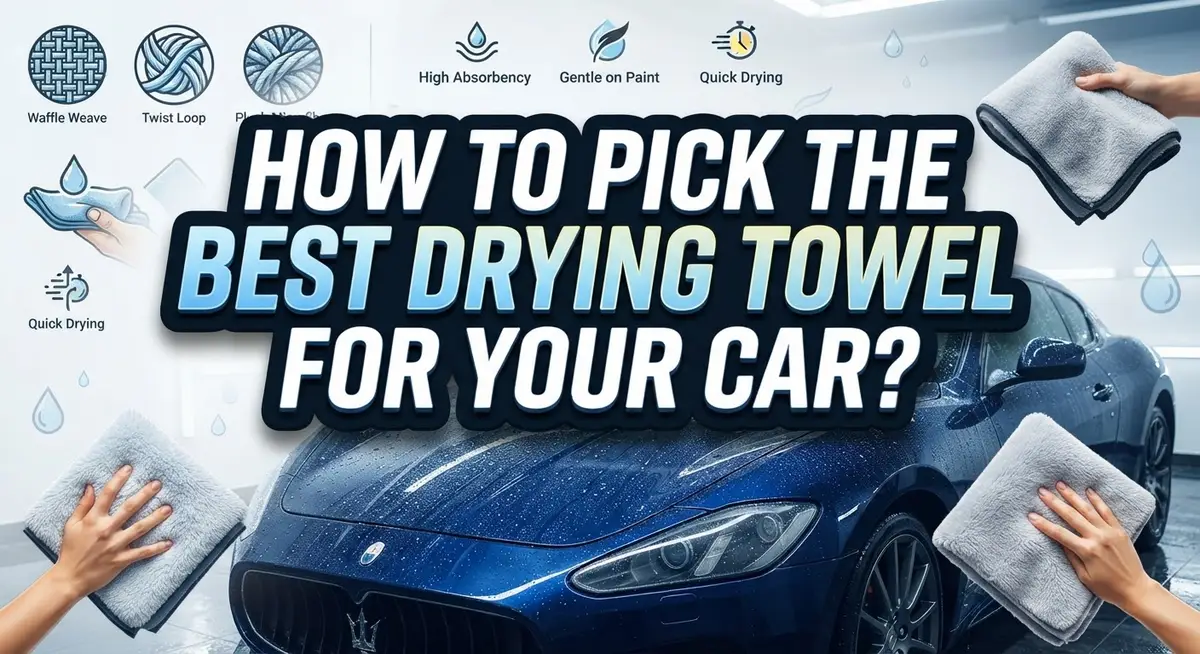
How to Pick the Best Drying Towel for Your Car?
Drying your car the right way makes a huge difference. The wrong towel can leave scratches, swirl marks, or streaks. The right one gives you a smooth, spotless shine every time.
Many people still grab an old T-shirt or a chamois leather cloth. These options soak up water poorly and can scratch your paint. A quality microfiber drying towel works much better.
Picking the best towel is not just about softness. You need to think about blend, weave, and size. Each factor affects how well the towel dries your car.
Technique matters too. A gentle pat-and-lift method protects your paint better than dragging the towel across the surface.
This guide will walk you through everything you need to know. You will learn what makes a towel truly effective, which materials to look for, and which mistakes to avoid.
By the end, you will know exactly how to choose a towel that keeps your car spotless and scratch free. Let’s get started on finding the perfect drying companion for your ride.
In a Nutshell
Here is a quick summary to help you choose the right towel fast.
-
Pick microfiber over old T-shirts or chamois. Microfiber lifts water gently and protects your paint better than rough fabrics.
-
Check the blend first. A good mix of materials affects softness and how well the towel absorbs water.
-
Look at the weave type. The weave decides how much water the towel can hold and how smooth it feels on your car.
-
Match the size to your car. A bigger towel covers more area and means less dragging across the surface.
-
Choose rounded edges only. Sharp or rough edges can scratch your paint, so this small detail matters a lot.
-
Use the pat-and-lift method. Gently press the towel down and lift it up instead of dragging it across the car.
-
Maintain your towel properly. Clean it often and store it well so it keeps working like new for a long time.
With these points in mind, you can grab a towel that keeps your car shiny and scratch free every single time.
Why Your Choice of Drying Towel Matters
Your car’s paint is constantly exposed to environmental threats like UV rays, dirt, and water spots. When you wash your car, the drying process becomes just as important as the wash itself. A poor choice here can undo all your cleaning work.
Water left on your paint creates mineral deposits. These spots become harder to remove the longer they sit. The right towel removes water quickly and completely, preventing these stubborn marks from forming in the first place.
Different towels interact with your car’s surface in different ways. Some materials are too rough and create micro scratches you won’t see until light hits them at the right angle. Other towels absorb poorly, forcing you to drag them across the paint multiple times. Each pass increases the risk of damage.
Your paint’s clear coat is delicate. It protects the color underneath but scratches easily. A quality drying towel lifts water away without friction, keeping your clear coat intact and your finish looking fresh longer.
The cost of proper paint protection is far less than professional detailing or repainting. Investing in the right towel saves money over time. You avoid expensive damage that compounds with every wash.
Speed matters too. A highly absorbent towel finishes the job faster. This means less time spent drying and less chance of water spots forming while you work. Your car stays protected from the moment you rinse it off.
Think of your drying towel as insurance for your paint. It’s the final step in your wash routine that determines whether your car looks freshly detailed or dull and spotted. The difference between a good towel and a bad one becomes obvious within just a few washes. Your paint will thank you for making a smart choice here.
Understanding Microfiber Blends
Microfiber blends are the foundation of a quality drying towel. Understanding what goes into these blends helps you pick the right one for your car’s needs.
A microfiber blend combines polyester and polyamide in specific ratios. The percentage of each material directly affects how the towel performs. Higher polyamide content typically means softer fibers and better water absorption. Polyester adds durability and helps the towel maintain its shape after many washes.
The most common blends range from 70/30 to 80/20 polyester to polyamide ratios. These blends strike a balance between softness and longevity. A towel with more polyamide feels gentler on your paint but may wear out faster with frequent use. A towel with more polyester lasts longer but might feel slightly less soft.
Weight matters in microfiber blends too. Measured in grams per square meter (GSM), heavier towels absorb more water. Towels between 300 and 400 GSM work well for most car drying tasks. Lighter towels dry faster but hold less water. Heavier towels require more effort to wring out but reduce the number of passes needed across your car.
The fiber thickness within a blend also impacts performance. Thinner fibers create a softer texture and better water absorption. Thicker fibers provide more durability and resistance to pilling. Quality manufacturers balance these factors to create towels that are both soft and long lasting.
Check the blend information before buying. Labels should clearly state the polyester to polyamide ratio and GSM weight. This transparency tells you the manufacturer stands behind their product quality. A well formulated blend ensures your towel will be gentle on your paint while effectively removing water. The right blend makes drying faster and safer for your car’s finish.
Weave Types Explained
Weave type determines how your towel performs when drying your car. The weave structure controls water absorption, surface smoothness, and how gently the towel treats your paint.
Pile weave is the most common option for car drying towels. This weave creates loops on the towel surface that trap and hold water effectively. The loops lift water away from your paint without dragging or pushing. Pile weaves come in different heights, and taller loops generally absorb more water.
Waffle weave offers a different approach. This pattern creates small squares across the towel surface. Waffle weaves work well for quick water removal because water sits in the pockets between squares. They dry faster than pile weaves but may hold slightly less total water.
Plush weave provides maximum softness and comfort. These towels feel luxurious and gentle on delicate clear coats. Plush weaves absorb water well but require more passes to dry your entire car compared to pile or waffle options.
The choice depends on your priorities. If you want maximum water absorption and fewer drying passes, pile weave works best. If you prefer speed and easier wringing, waffle weave suits you better. For those focused on gentleness and luxury feel, plush weave delivers.
Consider the weave density as well. Tightly woven towels last longer and resist pilling. Loosely woven towels feel softer initially but may deteriorate faster with regular use.
The best weave combines density with loop height. You want enough structure to prevent fraying and edge damage, but soft enough loops to protect your paint. Run your hand across different weave types before deciding. Your skin tells you what your car will experience. A good weave feels smooth and plush, not scratchy or rough.
Choosing the Right Size and Edge Design
Size matters more than most people realize when picking a drying towel for your car. A larger towel covers more surface area with fewer passes, which means less time dragging across your paint.
Standard car drying towels typically range from 16 by 24 inches up to 24 by 36 inches. Smaller towels work fine for compact cars and quick touch ups. Larger towels are better if you own a sedan, SUV, or truck since they reduce the number of strokes needed.
Think about your drying technique when choosing size. The pat and lift method requires you to gently press the towel onto wet surfaces rather than drag it. A bigger towel lets you cover your hood, roof, or doors in just a few applications. This approach protects your clear coat significantly better.
Edge design is equally important to overall size. Rounded edges are absolutely essential because they prevent accidental scratches during drying. Sharp or rough edges can catch on your paint and leave fine lines or swirl marks that are hard to fix later.
Look for towels with finished edges that curve gently rather than cut straight across. Some towels feature reinforced stitching along the edges for extra durability. This stitching also helps keep edges from fraying after multiple washes.
Consider getting multiple sizes for different situations. Keep one large towel for your main drying task after washing. Store a smaller towel in your car for quick spot drying after rain or when you notice water spots.
The combination of proper size and smooth edges creates the ideal drying experience. Your paint surface stays protected because you’re using the right tool for the job. This simple choice prevents costly damage and keeps your car looking fresh longer.
Step-by-Step: The Pat-and-Lift Drying Technique
The pat-and-lift technique is the safest way to dry your car without scratching the paint. This method protects your clear coat while removing water efficiently.
Start by positioning your towel flat against the car’s surface. Press down gently with your palm. The key is applying light pressure, not heavy force.
Once you’ve pressed the towel down, lift it straight up off the surface. Do not drag it horizontally across the paint. Dragging creates friction that can cause swirl marks and scratches.
Move to the next section and repeat this motion. Work in small, overlapping areas. This ensures you catch all the water without missing spots.
Pay special attention to crevices and panel gaps. Water collects in these areas. Use the corner of your towel to absorb trapped water. You can gently dab these spots without risk.
Work from the top of your car down to the bottom. Gravity helps water flow downward, so this approach makes sense. Start with the roof, then move to the hood and sides. Finish with the lower panels and wheels.
Change towels when they become saturated. A wet towel won’t absorb more water effectively. Keep a fresh, dry towel ready for the final pass.
The pat-and-lift method takes slightly longer than dragging, but the results are worth it. Your paint stays safer and looks better. This technique works with any quality microfiber towel.
Practice makes perfect. After a few times, the motion becomes automatic. Your hands will remember the proper pressure and lift angle.
This approach prevents the common mistake of dragging, which causes 90 percent of drying-related paint damage. By using pat-and-lift, you protect your car’s finish while achieving a streak-free, spot-free dry.
Common Mistakes That Damage Your Paint
Many car owners unknowingly damage their paint while trying to dry it. Understanding these mistakes helps you protect your vehicle’s finish.
Dragging your towel across the surface is the biggest culprit. When you pull a towel along the paint, you create friction that can scratch the clear coat. Even microfiber towels can cause swirl marks if you use this motion. The dragging action traps dirt particles between the towel and paint, which acts like sandpaper on your finish.
Using the wrong towel material causes significant damage too. Old T-shirts and rough fabrics have loose fibers that catch on paint imperfections. Chamois leather, while traditional, can become stiff and abrasive over time. These materials lack the gentle touch that your car’s surface needs.
Sharp or rough edges on your towel pose a hidden danger. When towel edges are cut straight across, they can catch and drag across your paint. This happens even when you’re trying to be careful. Rounded, finished edges are much safer and won’t create accidental scratches.
Poor towel maintenance creates problems too. Dirty towels accumulate dust and debris that scratches paint when applied. Using a saturated towel forces you to press harder and drag more to absorb water. This increases the risk of damage.
Ignoring the condition of your towel’s fibers matters as well. Pilled or matted towels lose their soft texture and become rough. Worn towels no longer absorb water effectively, making drying harder and riskier.
The solution is simple: use quality microfiber towels with rounded edges and maintain them properly. Store them in a clean place and wash them regularly. Replace towels when they show signs of wear. These small steps prevent costly paint damage and keep your car looking new.
Caring for and Maintaining Your Drying Towel
Your drying towel needs regular care to stay effective and protect your car’s paint. Proper maintenance extends the towel’s lifespan and keeps it performing at its best.
Wash your towel after every few uses. Dirt and debris trapped in the fibers can scratch your paint during your next drying session. Use warm water and a gentle detergent designed for microfiber materials.
Avoid fabric softeners and bleach. These products coat the fibers and reduce absorbency. They also make your towel less effective at gripping water. Stick to plain detergent without additives.
Dry your towel in a dryer on low heat or hang it to air dry. High heat damages microfiber fibers and reduces their softness. Air drying is actually the gentlest option if you have time.
Store your towels in a clean, dry place away from direct sunlight. Keep them separate from other fabrics that shed lint or fibers. A dedicated drawer or shelf works perfectly.
Inspect your towel regularly for damage. Look for fraying edges, matted areas, or stiff spots. These signs mean the towel is losing its effectiveness and may scratch your paint.
Replace your towel when the fibers become permanently matted or rough to the touch. A damaged towel won’t perform well, no matter how much you wash it.
Never wash your drying towel with your regular laundry. Car towels collect road salt, tar, and other contaminants that damage everyday fabrics. Keep them separate throughout their lifespan.
Check the towel before each use. Run your hand across the surface to feel for any rough spots or debris. A quick visual inspection takes seconds and prevents paint damage.
Proper care transforms your towel into a reliable tool that lasts for years. When you maintain it well, it continues protecting your paint and delivering excellent drying results every single time.
Final Thoughts
Picking the right drying towel makes a real difference for your car. The blend, weave, and size all matter more than you think.
A good microfiber towel beats old T-shirts or chamois leather every time. Those old materials scratch paint and leave streaks behind.
Quality matters more than quantity. One great microfiber towel outperforms a stack of mediocre ones.
Look for towels with an ultra-soft texture and high absorbency. These two features work together to lift water without stressing your paint.
Check the edges before you buy. Rounded edges protect your paint, while sharp or straight cut edges can catch and scratch the surface.
The weave type affects how much water the towel holds. A denser weave usually means better absorption and fewer passes needed to dry your car.
Size matters too. A towel that’s too small means more work and more chances to miss spots or drag it across the surface.
Think about your specific needs. Larger cars need bigger towels, while smaller vehicles work fine with mid-sized options.
Blend composition determines softness and durability. Higher quality blends last longer and stay gentle on your clear coat.
Don’t rush this decision. Take time to compare a few options before settling on one.
Your drying towel is an investment in your car’s finish. A good towel pays for itself by preventing scratches and swirl marks.
Remember the pat-and-lift method works best with the right towel. The correct microfiber towel makes this technique even more effective.
Combine a great towel with proper technique and maintenance. This combination gives you the best results every single time.
Picking the right towel isn’t complicated. Focus on blend, weave, size, and edge quality. Your car’s paint will thank you for the extra care and attention you put into this choice.
Frequently Asked Questions
What size drying towel should I buy for my car?
Size depends on your vehicle type and personal preference. Larger towels work well for bigger cars and SUVs because they cover more area with fewer passes. Smaller towels suit compact cars and give you better control in tight spaces.
Most people find a 16×24 inch towel to be a good all-around size. You might want two towels so you can switch to a fresh one if the first gets too wet. Having a backup towel speeds up your drying process significantly.
Can I use a regular bath towel to dry my car?
Regular bath towels are not ideal for car drying. They lack the absorbency of microfiber and can leave lint behind on your paint. Bath towels also tend to have rougher fibers that scratch your clear coat.
Old T-shirts and regular towels create friction that damages your finish. Microfiber towels are specifically designed to absorb water without harming paint. The difference in performance is substantial and worth the investment.
How often should I replace my drying towel?
Replace your towel when the fibers become permanently matted or feel rough to the touch. Most quality towels last 2 to 3 years with proper care. Regular inspection before each use helps you catch wear early.
If your towel leaves streaks or doesn’t absorb water like it used to, replacement time has arrived. A worn towel loses its protective qualities and becomes a liability for your paint.
What makes microfiber better than chamois leather?
Microfiber towels absorb more water than chamois leather and dry faster. They’re also more durable and less likely to develop odors. Microfiber doesn’t require special conditioning like chamois does.
Chamois leather can become stiff and brittle over time. Microfiber remains soft and effective through many wash cycles when you care for it properly.

Philips is the founder and lead writer at GearheadGarageFinds.com, a passionate automobile enthusiast who has spent years testing, comparing, and reviewing auto products and accessories to help fellow gearheads make smarter buying decisions. When he’s not under the hood or behind the keyboard, you’ll find him exploring the latest automotive innovations and hunting for the best garage finds on the market.