E-Bike Error Codes Explained: How to Read and Understand Display Fault Codes
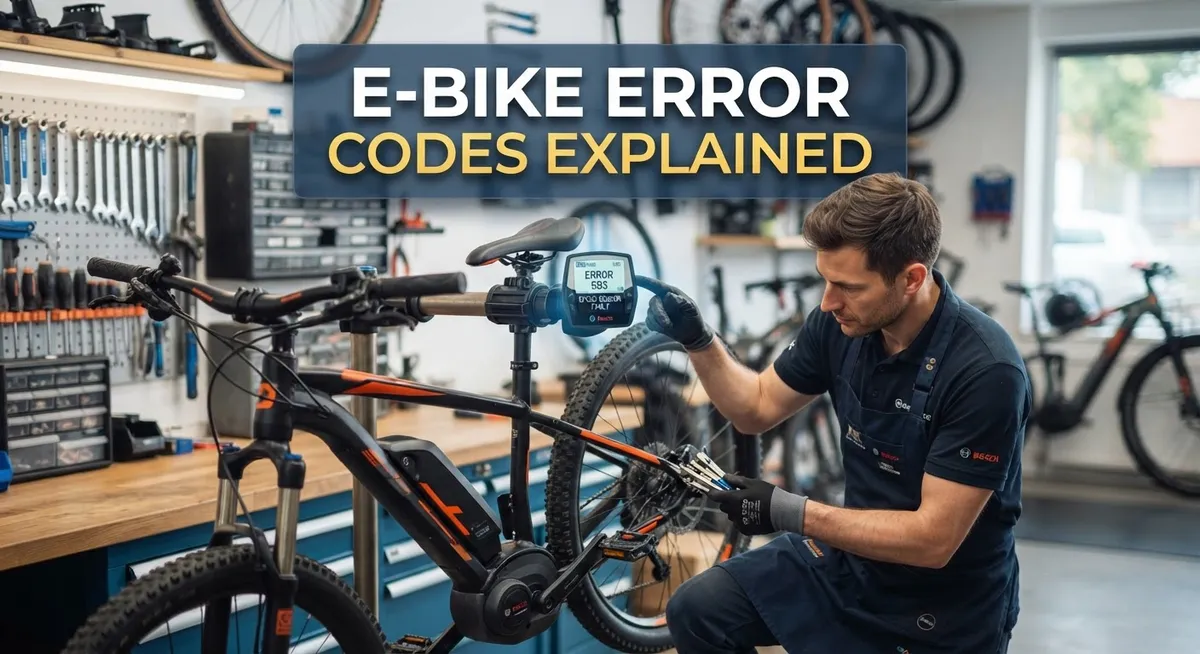
Your electric bike display suddenly flashes a strange code. Your ride stops, and you wonder what went wrong. Don’t panic. That code is your bike’s way of telling you something needs attention.
Many riders face this moment. Some see one code. Others see two codes flashing at once, sometimes with a throttle that won’t respond.
Here is the key point. Error codes depend on the model. The same number can mean different things on different bikes.
This guide explains how ebike error codes work in plain language. You will learn how to read the code on your display. You will also learn where to find the right code list for your bike.
We will cover these topics:
- What error codes are and why they appear
- How to identify your code step by step
- Why the manufacturer’s manual is your best reference
- Answers to common rider questions
Let’s start by decoding that blinking message.
In a Nutshell
-
Error codes are warning messages. Your e-bike display shows a code when the system detects a fault somewhere in the bike.
-
Codes differ by model. The same letter or number can mean one thing on one bike and something else on another bike.
-
Start with the display. Write down the exact code before you touch anything. A quick photo of the screen also works well.
-
Check your manual first. The manufacturer’s manual for your exact model lists code meanings and related settings. Forum users often point riders to this source.
-
Several codes can appear together. One rider saw two codes flash while the throttle stopped working. Note every code you see, not just the first one.
-
Avoid guessing at fixes. Generic code lists online may not match your bike. Use the official manual, and ask the manufacturer or a qualified technician for help if the code stays on the screen.
What E-Bike Error Codes Are and Why They Appear
A code on the display is a short message from the controller. It tells you the system found something outside normal operation. Think of it as a signal, not a verdict.
The controller is the small computer that manages the motor, battery, and sensors. It constantly checks these parts. When a reading looks wrong, the controller stores a code and shows it on the screen.
Why do codes appear? Several common causes exist. A loose connector can break the signal between parts. A worn brake sensor may send bad data. Low battery voltage or a damaged wire can also trigger a message.
Some codes come from the throttle or pedal assist sensor. Others point to the motor, the battery, or the display itself. Because the same system watches many parts, one fault can affect several areas at once.
Here is something many riders miss. Codes depend on your exact model. A number that means a motor fault on one bike may mean a speed setting problem on another. So the meaning depends on your exact bike.
Research shows that some riders see more than one code at a time. One rider reported two codes flashing while the throttle did not respond. This does not always mean two separate problems. Often one fault triggers several related warnings.
Good news: codes are useful. They point you to the part that needs attention. Without them, finding a fault would take much longer.
Keep one thing in mind. A code is a clue, not a final diagnosis. Read it, write it down, and then check your manual for the details.
Why Error Codes Differ by Brand and Model
Have you ever compared notes with a friend and found that your codes do not match? This happens because each brand builds its own system.
Every manufacturer designs its own controller and wiring. As a result, the same number can mean one thing on one bike and something else on another bike.
Model years also change the code list. A company may update firmware or redesign a sensor. An older model may use a code that a newer model no longer shows.
Display types vary as well. Some bikes show a simple number on a small screen. Others show letters, symbols, or short text messages.
Parts suppliers add another layer. A brand may buy motors, batteries, or sensors from different companies. Each supplier may use its own fault language, which the display then passes along.
This is why generic code lists can mislead you. A code that points to a throttle fault on one bike might refer to a brake sensor on another. Always match the code to your exact brand and model.
The manufacturer manual is your most reliable source. Most brands publish code tables for current models. Many manuals also explain related settings, which can help you spot a cause after a recent change.
Online forums can offer useful hints, but treat them as clues only. A tip from a rider with a different model may not fit your bike. Confirm any advice with the official manual or the brand support team.
Keep your model details ready. Write down the brand, model name, model year, and serial number. This information helps you find the right code table quickly.
How to Identify the Code Showing on Your Display
Your display may show a code in several ways. Some screens flash it in a corner. Others place it in a small box or an icon bar. Take a moment to scan the entire screen before you guess.
Look for the exact pattern, not just the general feeling. A code often mixes letters and numbers, such as E05 or F12. Small differences matter, so read every character slowly.
Try turning the bike off and on again. This step shows whether the code returns. If it disappears, the fault may be temporary. If it comes back right away, the issue likely needs a closer look.
Pay attention to what happens at the same time. Does the motor stop? Does the battery icon blink? Does the light button still work? These details help you describe the problem later.
Take a clear photo of the screen. A photo protects you from misreading a code. It also helps when you ask someone else for help. Zoom in so every character stays sharp.
Check whether the code appears only under certain conditions. Some codes show up when you pedal hard. Others appear after the bike sits in cold weather. Note the situation each time it happens.
Keep a simple log. Write the date, time, and conditions. Patterns often show up after a few rides. This record helps you spot repeated faults.
Remember that the display itself can sometimes fail. A loose connector may cause a blank or strange screen. If the display looks damaged, check the cable connections gently before you assume the code is accurate.
How to Find Your Code in the Manufacturer Manual
Your owner manual is the best place to start. Open the manual that came with your electric bike. Most brands place the error code list in a troubleshooting section near the back.
First, confirm your exact model. Look at the label on the frame or battery. Model names and production years matter. A list for a similar bike can give you the wrong meaning.
Next, use the index or table of contents. Look for terms like error codes, fault codes, display messages, or troubleshooting. These headings lead you to the right page quickly.
Match the code exactly. Compare the code on your display with the table. Check every number, letter, and symbol. A small difference can point to a different problem.
Read the description beside the code. Manuals often list a likely cause and a suggested action. Follow those steps in order. Stop if a step feels unsafe or needs tools you do not have.
Missing the paper manual? Visit the brand’s support page. Most companies post digital copies as PDF files. Search for your exact model name followed by the word manual.
Dealers can help too. Shops keep service records and often hold manual copies. A quick phone call or email may get you the right page within a day.
Save a copy for future rides. Take a clear photo of the code table. Store it on your phone or in a cloud folder. This habit saves time when a new code appears.
Finally, write the page number in your log. Writing it down makes future checks faster and keeps your notes organized.
What to Do When Multiple Error Codes Appear Together
When two or more codes flash at once, stay calm. Multiple codes often point to one shared problem. Your first goal is to find the root cause.
Start by writing down every code. Note the order they appear in. Also note whether they flash together or take turns. This order helps you compare the codes with your manual later.
Check the throttle first if it stops working. One rider saw two codes flash while the throttle failed. A throttle fault can trigger more than one message at the same time.
Next, inspect the wiring and connections. Loose plugs, pinched wires, or moisture can cause several faults together. Turn the bike off before you touch any connector.
Test one thing at a time. Unplug and reconnect the throttle plug. Then restart the bike and see if the codes return. Changing several things at once makes the results hard to read.
Check the battery as well. A weak charge or a loose battery connection can confuse the system. Make sure the battery is fully seated and charged.
Look up each code separately. Use the manual for your exact model to read each description. Some manuals show a main code that leads to the others. Start with the earliest or most serious code.
Some codes act as secondary messages. The system may show extra codes after the main fault. Fixing the main issue often clears the rest.
Avoid guessing from online lists alone. Generic lists can mislead you when several codes combine. Your manual gives the most accurate meaning for your bike.
If the codes return after basic checks, contact a dealer or the brand’s support team. Bring your photos and your log. This helps the technician understand the pattern quickly.
Finally, update your log after every ride. Patterns help you spot repeat problems early. A clear record also makes support conversations faster and easier.
Understanding Code Categories and Related Settings
Many e-bike error codes fall into broad groups. Sorting a code into the right group helps you narrow down where the problem likely sits.
Battery codes usually relate to power levels, temperature, or communication with the controller. They often appear after charging or during cold weather rides.
Motor codes point to problems with the drive unit or its wiring. A motor code may appear when the bike struggles to start from a stop.
Sensor and input codes involve the throttle, the pedal assist sensor, or brake cutoff switches. These codes often show up when a control feels stuck or unresponsive.
Display and communication codes suggest the screen cannot talk clearly with other parts. Loose connectors and damaged cables are common causes in this group.
Settings matter too. Some codes appear because a setting does not match the hardware. For example, an incorrect wheel size can affect speed readings and trigger a warning.
Check the voltage and speed limit settings as well. A controller set for a different battery voltage may refuse to run. Compare the values on your display with the specifications for your bike.
Many displays let you view or change these settings through a menu. Write down the original values before you change anything. This record lets you return to the earlier setup if the change causes new problems.
Keep in mind that a settings change can clear a code without fixing the cause. If the code returns, the underlying fault still needs attention. Knowing the code category helps you decide when a simple adjustment is enough and when a deeper check is needed.
Common Mistakes to Avoid When Interpreting Error Codes
Mistake one: using the wrong model guide. Codes often change between models. A code on one bike may mean something different on another. Always confirm your model before you read any table.
Mistake two: trusting a random online list. Some lists come from older firmware. They may not match your display. Use them only as a rough hint, never as the final answer.
Mistake three: assuming the named part is broken. A code often points to a general area, not one exact part. A loose plug or a low battery can trigger the same message as a failed motor.
Mistake four: clearing the code too soon. Resetting the display or changing a setting may hide the message. The root cause often remains. The code may return later on the same ride.
Mistake five: ignoring intermittent codes. A code that appears only on bumpy roads or in cold weather still matters. Write down the conditions each time it shows up.
Mistake six: replacing parts before testing. Buying new parts too early wastes money. Test one suspect at a time, and note what changes after each test.
Keep a simple log to track your progress. Write the code, the date, the conditions, and each step you tried. A clear record helps a dealer solve the problem faster.
Patience truly matters most. Slow, careful checks lead to accurate answers and safer rides. Stay safe on every single ride.
When to Contact the Manufacturer or a Qualified Technician
Some error codes need more than a quick check at home. Knowing when to step back saves time and protects your electric bike.
Start with the manual. Find the code in the manual for your exact model. Follow the listed steps only if they feel safe.
Contact the manufacturer when the manual says so. Some codes list a support contact or a required service visit. Follow that advice without delay.
Call a dealer or support team if codes return. If a code returns after basic checks, the fault may sit deeper in the system.
A dealer or technician can run diagnostic tests that go beyond basic checks.
Get help fast when safety is involved. Brake faults, sudden power loss, or a throttle that runs on its own need quick attention. Stop riding until a technician checks the bike.
Treat battery warning signs as urgent. Burning smells, swelling, overheating, or water near the battery are serious signs. Stop charging and move the bike to a dry, open area. Then contact the manufacturer or a qualified technician right away.
Keep records for the technician. Write down each code, when it appeared, and the riding conditions. Photos of the display also help. This detail helps the technician find the cause faster.
Check warranty terms before repairs. Repairs by an outside shop may affect coverage. Ask the manufacturer what they require first.
Ask clear questions during the call. Share the model name, the exact code, and what happened before it appeared. Ask whether the issue needs a shop visit or a remote check.
Remember this rule. If you feel unsure, ask a professional.
Final Thoughts
Error codes can look stressful at first. They are simply messages from your bike. Each one tells you the system noticed something unusual.
Codes are specific to each model. A code that means one thing on your bike may mean something else on another. Always check the manual for your exact model first.
The process stays simple. Read the code on the display. Write it down, then look it up in the manufacturer’s guide.
More than one code can appear at once. Some riders see two codes flashing while the throttle stops working. Note every code you see, because together they give a clearer clue.
Work in small, calm steps. Turn the bike off before you touch any part. Then check the easy things first, such as the battery seating, the plugs, and the visible connectors.
Keep a short log of what happens. Note the code, the date, the weather, and what you were doing when it appeared. This record helps a technician find the cause much faster.
Know your limits as well. Safety always comes first. If the brakes, the throttle, or the power act strangely, stop riding and ask for help.
You do not need to be an expert to handle error codes. You need the right guide, a patient attitude, and good notes. With those three tools, a flashing code becomes a useful clue instead of a mystery.
Now you know what to do the next time your display lights up. Read the code, check your manual, and take the next step with confidence. Happy riding!
Frequently Asked Questions
What do the codes mean?
Each code is a short signal from the display. The meaning depends on your model. Find the code list in the manual that came with your electric bike. Do not rely on a code chart you found online without checking the model.
Can more than one code show at once?
Yes, several codes can flash together. Some riders see two codes at the same time while the throttle stops working. Write down each code you see. Then look up each one separately in your manual.
What if I lost my manual?
Start by finding your model name or model number. This information often sits on a label near the battery or frame. Then visit the manufacturer’s website and search for the manual by that model. Most brands post free downloads for older models too.
Are the codes the same for every version of a model?
Not always. Manufacturers sometimes change codes when they update the display or firmware. Check the manual date or version number. If it does not match your bike, look for a newer or older version that does.

Philips is the founder and lead writer at GearheadGarageFinds.com, a passionate automobile enthusiast who has spent years testing, comparing, and reviewing auto products and accessories to help fellow gearheads make smarter buying decisions. When he’s not under the hood or behind the keyboard, you’ll find him exploring the latest automotive innovations and hunting for the best garage finds on the market.