E-Bike Battery Damage Warning Signs: How to Spot Them Early and Stay Safe
Your electric bike battery powers every ride. It also stores a lot of energy, so a damaged battery can quickly become a safety risk.
The good news is that batteries often give warnings first. You just need to know what to look for.
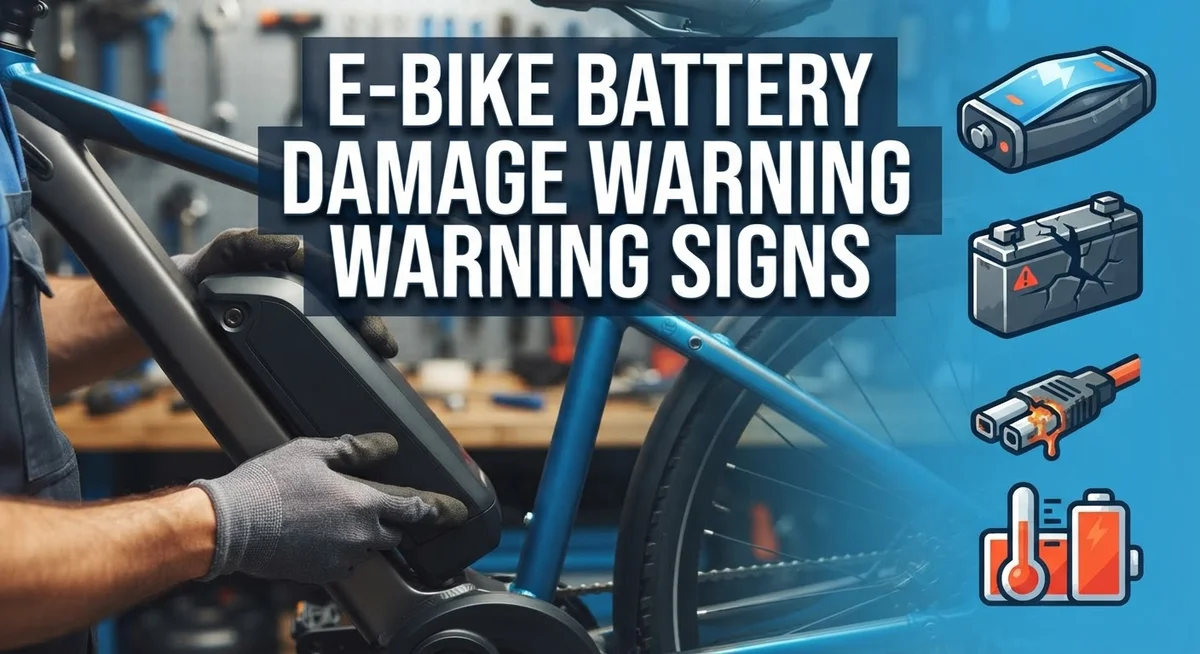
This guide covers the key warning signs of battery damage. You will learn about visible signs like smoke, flames, a swollen case, or a changed colour.
We will also look at heat. A battery that feels noticeably hot to the touch needs your attention right away.
Performance matters too. Sudden power loss, a drop in speed, and reduced range can all signal trouble. These signs do not always point to the battery, though. Unusual motor sounds or grinding often come from the motor itself.
Finally, we will explain common mistakes, such as improper charging and charging in high temperatures. Both can cause overheating.
Read on to spot problems early and ride with confidence.
In a Nutshell
-
Visible danger signs come first. Smoke or flames are clear warnings. Stay away from the battery and keep other people away too.
-
Check the shape and colour. A swollen case or a changed colour suggests the battery has suffered damage. Look at it often, not just before long rides.
-
Feel for unusual heat. A battery that feels noticeably hot to the touch needs your attention. Normal use should not make it feel that way.
-
Watch how your bike performs. Sudden power loss, a drop in speed, or reduced range can all point to a battery problem. Note when these changes start.
-
Do not blame the battery too quickly. A performance drop does not always mean a battery fault. Unusual motor sounds and grinding often point to the motor instead.
-
Charge with care. Improper charging can cause overheating. Avoid charging in high temperatures to lower the risk.
Why Recognizing E-Bike Battery Damage Early Matters
Recognizing battery damage early protects you and everyone around you. A damaged battery can overheat, and in rare cases it can start a fire. Acting quickly gives you time to solve the problem before it becomes an emergency.
Safety is the biggest reason to pay attention. Electric bike batteries store a lot of energy in a small space. When cells become damaged, that energy can release as heat. Stopping use at the first sign of trouble lowers the risk of burns or property damage.
A healthy battery also makes your ride more predictable. A sudden loss of power on a hill or in busy traffic can leave you stranded or unbalanced. Knowing what to look for helps you plan your rides with fewer surprises.
Early action can also save you money. Batteries are often one of the most expensive parts of an electric bike. If you notice a small change and stop using the battery, you may prevent further harm. That harm could make a repair impossible and force a full replacement.
Not every problem comes from the battery. Strange noises or grinding often point to the motor instead. Checking the right component saves time and stops you from replacing a part that is not broken.
Make a habit of checking your battery regularly. Look at it before and after rides. Notice whether it charges differently or holds power for a shorter time. These small habits give you clues long before a serious problem appears.
Early awareness helps you ride with confidence. You do not need to worry about every small change. You only need to know what matters and respond when it counts.
Visible Warning Signs: Smoke, Flames, and Changes in Shape or Colour
Some battery damage is easy to see. Your eyes can catch danger before a serious problem starts. Take a quick look at the battery before every ride.
What to do if you see smoke
Smoke from a battery is a serious sign. Stop riding right away. Move the bike outside, away from walls, furniture, and parked cars.
Keep your distance from the smoke. It can carry harmful gases. Never breathe it in or try to pull the battery out while it smokes.
What to do if you see flames
Flames need an immediate response. Call your local fire service without delay. Follow their guidance on how to handle a lithium ion battery fire.
Spotting a bulging casing
A battery case that bulges is a warning. Gas can build up inside a damaged cell and push the casing outward. Look along the edges and sides for raised or puffy areas.
Check for cracks too. A split case can let liquid leak out. Avoid touching leaking fluid with bare hands.
Noticing changes in colour
Colour changes tell a story. Brown, black, or yellow marks often mean heat has damaged the casing. Melted plastic or scorch marks near the connectors need attention too.
White crust or residue around the terminals can point to a leak. Wear gloves if you need to clean it, and never ignore it.
Checking the connectors and wires
Damaged wires can create dangerous heat. Look for frayed insulation, loose plugs, or a burnt smell near the connectors. Discoloured pins often signal poor contact.
Next steps after you spot a sign
Stop riding and stop charging. Store the battery in a cool, dry place away from flammable items. Then contact a qualified bike technician or the manufacturer for a safe inspection.
Heat Warning Signs: When a Battery Feels Too Hot to the Touch
Warm is normal, but hot is different. A battery often feels slightly warm after a long climb or a fast ride. That gentle warmth comes from normal energy flow.
Heat that stays high is another matter. If the battery still feels very hot long after you park the bike, pay attention. Give it time to cool in a shaded spot first.
Timing matters a lot. Check the temperature when the bike sits at rest, not only during a ride. A battery that heats up quickly while charging deserves extra care.
Test with the back of your hand. Brush the back of your hand across the battery case. Your skin is more sensitive than your palm, so this method helps you avoid a burn.
Do not press your palm against a hot case. Hot surfaces can burn skin, and a damaged battery may react badly to prolonged contact.
Compare the heat with the air around you. On a cool day, a battery that feels hot is a clearer warning sign. On a hot summer afternoon, the battery may feel warmer than usual, but it should never feel scorching.
Heat can also come from other parts. The motor and controller can warm up during hard use. Ask yourself whether the heat sits in the battery pack or nearer the motor housing.
Repeated heat is a pattern to watch. One warm moment after a steep hill is usually fine. Heat that shows up every time you ride or charge is worth a closer look.
Charging habits play a big role in temperature. Use the charger made for your bike, and charge in a cool, dry place. Avoid leaving the battery plugged in long after it finishes charging.
Smell and sound add useful clues. Heat paired with a burning smell or a hissing noise needs immediate action. Move away from the bike and keep other people back.
Write down what you notice. Note the date, the weather, and how long the bike ran. This record helps a repair technician find the cause faster.
Trust your senses. Heat is an early signal of trouble. Acting quickly keeps you safe and protects your bike for many rides to come.
Performance Warning Signs: Sudden Power Loss, Reduced Speed, and Shorter Range
Performance changes can be one of the first clues that your electric bike battery needs attention. Many riders notice these changes long before they see any physical damage.
Sudden power loss is one of the most alarming performance signs. The motor may cut out during a climb or stop giving assist without warning. A battery management system often shuts power down to protect the cells, so the bike may feel like it simply quit.
Reduced speed usually appears as a top speed that feels lower than normal on flat roads. You might notice the bike struggles to reach the speed it reached last month. Pay attention if the drop happens on the same route with the same rider weight and tire pressure.
Shorter range means the bike covers fewer miles on a full charge. A battery that once carried you twenty miles may only manage twelve. Keep a simple log of distance and charge level so you can spot the trend over time.
Aging cells lose capacity as they wear. Once a cell holds less energy, the whole pack can deliver less power and fewer miles. These changes often build up slowly over several months.
Not every performance drop points to the battery. Low tire pressure, brake drag, strong headwinds, and a worn drive chain can all reduce speed and range. Check these simple items first before you assume the battery is at fault.
Cold weather also plays a role. Lithium batteries deliver less power when temperatures drop. Once the battery warms up, performance often returns to normal. If it does not recover, the battery deserves a closer look.
Start your check by charging to full and riding a familiar loop. Note the distance, average speed, and any shutdowns. Compare the results after a few rides. If the numbers keep falling, ask a qualified bike technician to run a diagnostic test.
A sudden shutdown on a busy road is a safety issue. Slow down, move to a safe spot, and switch the bike off before you investigate. Avoid riding a bike that cuts out without warning, because a sudden loss of assist can cause a serious fall.
Battery Problem or Motor Problem? Telling the Difference
Power loss does not always mean the battery is failing. Many riders feel a drop in power and assume the battery is the cause. The motor, controller, and wiring can create the same feeling.
Start by listening to the bike. A weak battery usually stays quiet. Grinding, clicking, or whining noises that rise with speed often point to the motor. Pay attention to whether the sound comes from the hub or the drive side.
Next, pay attention to how the assistance feels. A healthy motor delivers smooth, steady help. Jerky pulses or sudden cut outs often suggest a motor or controller fault. A low battery usually reduces power evenly across every assist level.
Check the display for error codes. Many electric bikes show a code when something goes wrong. Write down the code and look up its meaning in the manual. Codes about sensors or motor wires point to the motor system. Codes about voltage point to the battery.
Try a simple spin test. Turn the bike on, lift the rear wheel off the ground, and use the throttle or pedals. A healthy motor spins freely. If the wheel drags, stops, or wobbles, the motor may need a professional inspection.
Rule out the brakes and wheel too. A rubbing brake pad or a bent wheel can make the bike feel slow and heavy. This can mimic low power, so check these parts first.
Compare power across assist levels. If the battery is fully charged and the bike only struggles on hills, a motor or controller issue becomes more likely. If the bike loses power at every level and the charge drops fast, the battery is the more likely source.
Borrow a fully charged, compatible battery if you can. Test the bike with it. If the power returns, the original battery is the likely cause. If the problem stays, focus on the motor, controller, or wiring.
Keep clear notes about the problem. Record when it happens, the temperature, the terrain, and any sounds or codes. These details help a technician find the fault faster and avoid guesswork.
Charging Mistakes and High Temperatures That Can Cause Overheating
Charging mistakes are a common reason an electric bike battery overheats. Many riders plug in without thinking about where the bike sits or which charger they use. Small habits can add up over time.
Charge in a cool, dry place. Heat works against the battery cells during charging. Avoid charging in direct sunlight, inside a hot car, or next to a heater. A room that feels comfortable to you is usually a good choice.
Let the battery cool down first. After a long climb or a fast ride, the battery may still hold extra heat. Plugging it in straight away adds more heat on top of that. Wait until the battery returns to room temperature before you charge it.
Use the correct charger. Each charger matches a specific battery voltage and design. A mismatched or damaged charger can push the wrong current into the cells. Always use the charger that came with the bike or one the maker approves.
Do not leave the battery on the charger for hours. Keeping a battery plugged in for long periods can stress the cells. Unplug it once the charger shows full. Set a phone timer if you tend to forget.
Check the charging port and cables. A loose plug, a bent pin, or a frayed cord creates resistance. Resistance produces heat right at the connection point. Look for discoloration, melted plastic, or a burning smell near the port.
Keep the area clear while charging. Blankets, bags, and piles of clothes trap warmth around the battery. Place the battery and charger on a hard surface with open air around them. Keep anything that burns easily well away from the setup.
Watch out for extreme seasons. Summer heat can push a battery past safe limits when it sits in a sunny shed or garage. Freezing cold also affects charging, so let the battery warm up gently before you plug it in.
Stop charging if something seems wrong. Unplug the charger right away if the case feels unusually hot, you hear hissing, or the battery looks swollen. Move the bike outdoors away from walls and furniture. Then contact the bike maker or a qualified technician for advice.
What to Do Immediately If You Notice a Warning Sign
If you see smoke or flames, act right away. Move yourself and anyone nearby away from the bike. Keep a clear distance and do not try to fight the fire yourself.
Smoke from a burning battery can be toxic. Fumes can irritate your eyes and lungs. Leave the area and get fresh air quickly.
Call emergency services if the fire grows or spreads. Give them your location and describe the bike. Stay upwind of any smoke so you do not breathe it in.
Do not touch a battery that feels hot or looks swollen. A bulging case often means the internal cells are damaged. Pressure can build inside, so the battery may vent or catch fire.
Move the bike outside if you can do so safely. Place it on a hard surface like concrete or tile. Keep it away from doors, windows, cars, and anything that burns easily.
Do not try to ride the bike again. Even a short trip can stress a damaged battery. Ask a qualified technician to inspect the pack before you use the bike.
Do not place a suspected battery in a bin or enclosed space. Heat can build up quickly in a small area. Keep it apart from other items until help arrives.
Contact the seller or manufacturer for guidance. Share clear photos and the battery model number. Ask how to handle, return, or replace the pack safely.
Never throw a damaged battery in household trash. Many areas have hazardous waste centers or battery recycling points. Check your local rules before you drop it off.
Watch for warning signs in other batteries too. If one pack failed, check any spare packs for swelling or heat. Store them separately until they are checked.
Stay calm and think about your next step. Quick action keeps you and others safe. A clear plan prevents extra harm.
Final Thoughts
Your electric bike battery usually gives you clues before a serious problem starts. Learning those clues helps you stay safe and ride with confidence.
The big warning signs are easy to remember. Look for smoke, flames, a swollen case, a changed colour, or a battery that feels very hot. Any of these means you should stop using the battery.
Performance changes matter too. Sudden power loss, a drop in speed, and shorter range can point to a battery problem. These signs do not always mean the battery is at fault, so check the motor and other parts before you decide.
Good charging habits protect your battery. Charge in a cool place and avoid high temperatures. Use the right charger and let a warm battery cool first. Improper charging is a common cause of overheating, and you can prevent it.
Make a quick check part of your routine. Look at the battery case before each ride. Check the charging port and cables. Notice how the bike feels and how far it goes on a normal trip.
Trust your senses. A strange smell, an odd shape, or unusual heat deserves attention. Small changes often show up first.
Act early when something seems wrong. Stop riding, keep the battery away from anything that burns, and ask a qualified technician to inspect it. Do not guess, and do not try risky repairs yourself.
Safety always comes before saving a few miles or a few minutes.
Stay alert, charge with care, and respond fast to warning signs. These simple habits help your battery last longer and keep you safe on every ride.
Frequently Asked Questions
Does a drop in power always mean the battery is failing?
Not always. A drop in speed or range can come from other parts of the bike. Unusual motor sounds or grinding often point to the motor instead. If the battery looks normal, ask a technician to check the whole system.
Can I repair a swollen battery myself?
No. Never open, puncture, or try to fix a swollen battery. The cells inside may be damaged and can react when exposed. Keep the battery away from anything that burns and contact a qualified technician for help.
What causes an electric bike battery to overheat?
Improper charging is the most common cause. Charging in a hot room, using the wrong charger, or leaving the battery plugged in for hours can all add heat. Charging in high temperatures puts extra stress on the cells. Let the battery cool before you plug it in.
Is it safe to store my battery in a garage?
Yes, if the space stays cool and dry. Avoid spots near heaters or in direct sunlight. Never store a battery that shows damage. Check the case before storing it, and keep the area clear of materials that can catch fire.
How long does an electric bike battery usually last?
The lifespan depends on how you use and care for it. Regular charging habits, cool storage, and gentle use all help the battery last longer. Heavy use in extreme heat can shorten its life. A quick check of the case before each ride helps you catch problems early.

Philips is the founder and lead writer at GearheadGarageFinds.com, a passionate automobile enthusiast who has spent years testing, comparing, and reviewing auto products and accessories to help fellow gearheads make smarter buying decisions. When he’s not under the hood or behind the keyboard, you’ll find him exploring the latest automotive innovations and hunting for the best garage finds on the market.