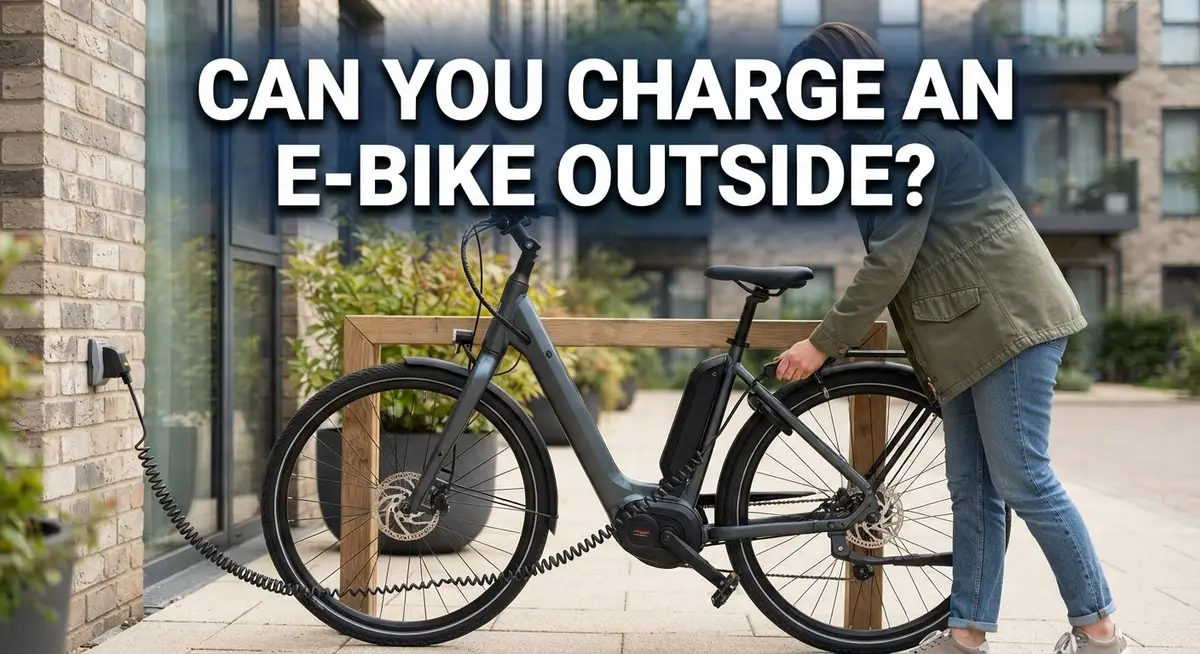
Can You Charge an E-Bike Outside? Safety Tips & Best Practices
Yes, you can charge an e-bike outside. Many riders ask this question before storing their bike in a garage, shed, or patio area.
The good news is simple. E-bikes use standard 110V or 220V household power. You do not need any special outlet to charge the battery.
But outdoor charging comes with real safety concerns. Weather, temperature, and battery type all play a role. Lithium batteries react badly to extreme heat or cold.
Some e-bikes have removable batteries. You can take these inside for safer charging. Other bikes have permanently mounted batteries. These need charging right on the bike, often outdoors.
This article covers everything you need to know. We will explain when outdoor charging works and when it does not. You will learn the correct charging steps to follow.
We also cover common mistakes riders make. Plus, you will get practical tips for safe storage and charging habits. By the end, you will know exactly how to protect your e-bike battery, no matter where you charge it.
In a Nutshell
Here’s a quick summary to keep in mind:
-
Standard outlets work fine. E-bikes use regular 110V or 220V household chargers. You do not need any special outdoor outlet.
-
Removable batteries are safer outside. Take the battery off and charge it inside your home. This protects it from weather damage.
-
On-bike charging needs extra care. If your battery stays mounted, you must charge it outdoors directly. Always use a weatherproof setup.
-
Temperature matters a lot. Avoid charging in extreme heat or cold. These conditions can harm your battery and create safety risks.
-
Certified gear reduces risk. Always use UL-certified chargers and batteries. This simple step prevents most charging accidents.
-
Follow the correct plug sequence. Disconnect the power source first, then remove the plug from your e-bike. Doing this backward is a common mistake.
-
Partial charging helps safety. Keeping your charge below 50% lowers risk during unattended charging sessions outside.
Follow these points and outdoor charging becomes simple and safe.
How E-Bike Charging Works: Batteries, Chargers, and Outlets
E-bikes run on lithium batteries that connect to standard household chargers. You plug your charger into a regular 110V or 220V outlet, just like you would for a phone or laptop. No special electrical setup is needed.
Your e-bike battery is either removable or permanently mounted to the frame. Removable batteries let you unplug them and carry them inside to charge. Mounted batteries stay on the bike, so you charge the entire bike outside if needed.
The charging process follows a specific order to stay safe. First, disconnect the power plug from the wall outlet. Next, remove the female connector from your e-bike or battery. Then plug the charger into the wall and connect it to your bike. Always follow your manufacturer’s exact sequence, as improper connections can damage the battery or charger.
Lithium batteries inside your e-bike work best when treated carefully. Use only UL-certified chargers and batteries. This certification means the equipment passed safety tests. Certified gear significantly reduces fire and damage risks.
Temperature control matters more than most riders realize. Avoid charging in extreme heat or freezing cold. High temperatures speed up battery wear and create safety hazards. Cold temperatures reduce charging efficiency and can harm battery cells. Charge during mild weather whenever possible, or move your bike to a sheltered spot.
Battery charge level affects longevity during storage. Keep your battery around 60% charged if you’re storing your bike for weeks. Don’t leave it fully charged or completely empty for long periods.
Never charge overnight without monitoring, especially outdoors. Electrical issues or weather changes can occur while you sleep. Check on your bike every 30 minutes during charging sessions. These simple habits keep your battery healthy and your outdoor charging safe.
Is Outdoor Charging Safe for Your E-Bike Battery?
Outdoor charging poses real risks to your e-bike battery and your safety. The biggest concern is weather exposure. Rain, snow, and moisture can damage the charging port and create electrical hazards. Water entering connection points may cause short circuits or corrosion over time.
Temperature extremes are equally dangerous. Charging in direct sunlight or freezing conditions stresses lithium batteries. Heat speeds up chemical reactions inside the battery, reducing its lifespan. Cold temperatures prevent proper charging and can damage internal cells permanently.
Electrical safety matters too. Outdoor outlets may not have proper grounding or protection. Extension cords left outside can develop damage you cannot see. Wet hands or wet surfaces near the charger increase shock risks significantly.
Lightning poses an often overlooked threat. During storms, outdoor charging creates a conductive path that attracts electrical strikes. This risk applies even to covered outdoor areas like porches or carports.
Battery degradation happens faster outdoors. UV rays break down plastic components on chargers and batteries. Dust and dirt accumulate in ports and connectors, creating resistance that generates heat during charging.
The safest approach is bringing your removable battery inside to charge. If your battery stays mounted on the bike, charge it in a garage, shed, or covered space away from direct weather. Keep the area dry and well ventilated.
Use certified chargers and batteries to minimize problems. Modern approved equipment includes safety features that prevent overcharging and overheating.
Monitor outdoor charging if you must do it. Never leave your bike unattended while charging outside. Check connections regularly for corrosion or damage. Charge during daylight hours when you can watch for problems.
If outdoor charging is unavoidable, keep sessions brief. Disconnect immediately once charging completes. Store your battery indoors between rides to maximize its lifespan and keep your bike safe.
Step-by-Step: How to Charge Your E-Bike Outdoors Safely
Charging your e-bike outside requires careful planning and attention to safety details. Start by checking your battery type. If your battery is removable, disconnect it from the frame first. This step alone makes outdoor charging much safer because you reduce electrical hazards near weather elements.
Next, locate your charger and inspect the cord for any damage. Look for cuts, exposed wires, or loose connections. A damaged charger should never touch water or wet surfaces. Keep the charger itself under a covered area, even if the battery sits in open air.
Connect the charger in the correct sequence. Plug the charger into the wall outlet first. Then attach the female connector to your battery. This order prevents electrical surges that can damage your battery or create safety risks.
Position your battery on a flat, stable surface away from puddles or water runoff. Never place it directly on wet ground or grass. Use a small table, shelf, or dry platform to keep moisture away from connection points.
Monitor the charging process regularly. Don’t leave your battery unattended for extended periods outdoors. Check every 15 to 20 minutes to ensure no water has contacted the charger or connectors.
Avoid outdoor charging during rain or extreme weather. Lightning can strike charging equipment. High humidity also increases electrical risks significantly.
Watch the temperature around your battery. Lithium batteries charge best between 50°F and 85°F. Cold temperatures slow charging and reduce efficiency. Heat accelerates battery degradation over time.
When charging is complete, disconnect the charger from the wall outlet first. Then remove the connector from your battery. Store the charger in a dry location immediately.
For on-bike batteries that cannot be removed, follow these same steps but keep the entire bike in a sheltered spot. Use a garage, shed, or covered porch whenever possible. This protects both your equipment and yourself from outdoor weather risks.
Weather and Temperature Considerations for Outdoor Charging
Temperature plays a critical role in whether your e-bike battery charges safely outside. Lithium batteries perform best between 50°F and 86°F (10°C to 30°C). Charging outside these temperature ranges causes damage to your battery’s internal chemistry.
Cold weather creates serious problems. When temperatures drop below 50°F, your battery cannot accept a full charge efficiently. The chemical reactions inside slow down significantly. Your battery may show it’s fully charged, but it actually holds less energy. Repeated cold charging cycles degrade your battery faster than normal use.
Hot weather is equally problematic. Temperatures above 86°F cause your battery to overheat during charging. Heat speeds up chemical breakdown inside the cells. Your battery loses capacity with each hot charging session. In extreme heat above 104°F (40°C), your battery risks thermal runaway, which is dangerous.
Rain and moisture create additional hazards. Water can seep into charging connections and cause short circuits. Even light drizzle poses risks to your electrical system. Wet conditions combined with charging create electrocution hazards for you and your battery.
Wind and dust also matter outdoors. Dust particles can enter charging ports and cause corrosion. Strong winds may knock over your bike or charger, damaging connections.
Check the weather before you charge. Wait for mild, dry conditions whenever possible. If you must charge outside, pick a sheltered location like a covered patio or garage entrance. Avoid direct sunlight, which heats your battery unnecessarily.
Monitor the temperature around your battery during charging. If it feels hot to the touch, stop immediately. Let it cool before continuing. The best practice remains simple: bring your removable battery indoors to charge in a climate controlled space. This protects your investment and keeps you safe.
Best Practices for Safe and Efficient Outdoor Charging
Outdoor charging requires you to follow specific safety steps to protect both your battery and yourself. Start by checking your charger cable for any visible damage before use. A frayed or cracked cord can create electrical hazards outdoors.
Position your e-bike on flat, stable ground away from water sources. Puddles and water runoff can reach your charging connections and cause dangerous short circuits. Make sure the surface won’t shift or tip during the charging session.
Connect your charger using the correct sequence every single time. Plug the charger into the wall outlet first. Then attach the female connector to your e-bike battery. This order reduces electrical stress on components.
Keep the charging area clear of obstacles. Your battery needs good airflow around it while charging. Don’t cover it with tarps or place it in enclosed spaces. Air circulation helps prevent overheating.
Check your battery temperature periodically during charging. Touch the battery casing gently with your hand. It should feel warm, not hot. If it becomes too warm to touch comfortably, stop charging immediately and let it cool.
Stay nearby while your e-bike charges outside. Don’t leave it unattended for extended periods. Monitor the charging indicator lights on your battery or charger. Most modern chargers show when charging completes.
When charging finishes, disconnect the charger from the wall outlet first. Wait a few minutes before removing the female connector from your battery. This prevents electrical surges.
Use UL certified chargers and batteries whenever possible. Certified equipment meets safety standards and reduces fire risk significantly. Always follow your manufacturer’s specific instructions for your battery model.
Keep outdoor charging sessions as brief as possible. Remove your removable battery and charge it indoors whenever you can. This remains the safest approach for protecting your investment and ensuring reliable performance.
Common Mistakes to Avoid When Charging Outside
Outdoor charging brings unique risks that indoor charging avoids. Understanding these mistakes helps you protect your battery and stay safe.
Ignoring manufacturer guidelines is the biggest mistake people make. Each e-bike model has specific charging instructions. Your battery might use 52V, 60V, or 72V power levels. Using the wrong sequence or wrong voltage damages the battery permanently. Always read your manual before charging outside.
Connecting plugs in the wrong order causes serious problems. You must plug the charger into the wall outlet first. Then connect the female plug to your e-bike. Reversing this sequence can create electrical surges that harm your battery. This takes only seconds but makes a huge difference.
Charging during extreme weather is extremely dangerous. Many people think a covered porch is safe enough. Rain, snow, and humidity still reach charging connections. Water causes short circuits and battery failure. Cold temperatures below 32°F slow charging and reduce battery lifespan. Heat above 104°F damages internal cells. Check the weather forecast before you start charging.
Leaving your battery unattended for hours creates fire risks. Overnight outdoor charging without monitoring is risky. Lithium batteries can overheat if something goes wrong. Stay nearby during the entire charging session. Check battery temperature every 15 to 20 minutes.
Using non certified chargers or batteries increases danger significantly. These products lack proper safety features and testing. Always verify your charger and battery have UL certification marks.
Charging in dusty or windy conditions allows particles into connections. These particles cause corrosion and electrical problems. Position your e bike away from dust sources and wind when possible.
Finally, many people charge too frequently or keep batteries at full charge constantly. This reduces battery lifespan. Charge when your battery drops to 20 percent. Stop charging at 80 percent for extended storage periods.
Troubleshooting Outdoor Charging Issues
When outdoor charging goes wrong, you need to know how to fix it. The most common problem is a loose or corroded connection. Check both the charger plug and the battery port for dirt or debris. Gently clean these areas with a dry cloth. If corrosion appears, use a pencil eraser to carefully rub the metal contacts.
Connection issues often stop charging dead. Make sure you follow the correct plug sequence every time. Insert the female connector first, then attach the charger to the wall. Reverse this order when disconnecting. A loose connection prevents power from flowing to your battery.
If your battery refuses to charge outdoors, temperature is likely the culprit. Lithium batteries have strict temperature ranges. Most require charging between 32°F and 104°F (0°C to 40°C). If it’s colder or hotter outside, bring your battery indoors and wait for the temperature to stabilize. Never force charging in extreme conditions.
Slow charging happens when you use an extension cord or power strip outdoors. These devices reduce voltage and slow the process. Plug directly into a wall outlet when possible. Wet conditions also slow charging because moisture creates resistance in the circuit.
Some batteries show charging errors or won’t start at all. First, unplug everything and wait five minutes. Then try again from the beginning. If the problem persists, your charger or battery may need inspection by a professional.
Check your manufacturer’s manual for your specific battery model. Different batteries have different troubleshooting steps. Keep the manual handy when charging outside. If you notice burning smells, sparks, or unusual heat, stop immediately and move away from the battery. Never attempt repairs yourself on damaged equipment.
Final Thoughts
Charging your e-bike outside is possible. It works well when you follow the right steps. Safety always comes first in this process.
Your battery deserves careful attention no matter where you charge it. Outdoor charging adds extra variables like weather and temperature. These factors need your focus every time you plug in.
Removable batteries give you more options. You can take them inside for charging if outdoor conditions seem risky. This flexibility helps you avoid bad weather or temperature swings.
Permanently mounted batteries require you to charge on the bike itself. This means outdoor access becomes necessary for many riders. Planning ahead makes this process smoother and safer.
Standard household chargers work fine for most e-bike batteries. You do not need special outlets or equipment. This makes outdoor charging accessible for almost everyone.
Higher voltage batteries like 52V, 60V, or 72V can handle full wattage charging. This speeds up your charging time significantly. Always check your manufacturer’s specific guidelines first.
Safety protocols matter more outdoors than indoors. Weather, temperature, and environmental factors all play a role. Taking these seriously protects your battery and your home.
Think about keeping your charge level around 60% during storage. This helps your battery last longer over time. Avoid letting it sit at full charge constantly.
If safety concerns you, keep charges below 50%. This reduces risk while still giving you usable power. It is a simple trade off worth considering.
Outdoor charging does not have to feel complicated. With the right precautions, it becomes routine. Your e-bike battery can charge safely outside your home.
Remember to stay informed about your specific battery type. Manufacturer guidelines always provide the best direction. Following these steps keeps your charging experience positive and safe.
Frequently Asked Questions
Can I charge my e-bike battery while I’m riding it?
No, you cannot charge your battery while actively using it. The battery powers your motor during rides, so it cannot receive a charge at the same time. If you need power while touring, consider carrying a spare removable battery or using solar charging options between rides.
What’s the difference between removable and permanently mounted batteries?
Removable batteries detach from your e-bike frame. You can bring them indoors to charge in a safe, controlled space. Permanently mounted batteries stay attached to the bike itself, which means you must charge your entire e-bike outside or wheel it to your charging location.
Do I need a special outlet to charge outside?
No special outlet is needed. E-bike chargers use standard 110V or 220V household power. You can plug into any regular outdoor outlet, but make sure the outlet has proper weatherproofing and ground fault protection to prevent electrical hazards.
How long can I leave my battery charging unattended outside?
Avoid leaving your battery unattended for extended periods. Set a timer and check on your battery regularly. Most e-bikes charge fully within 4 to 8 hours depending on battery size and charger wattage. Stay nearby during the charging process, especially outdoors where conditions change quickly.
Is outdoor charging less safe than indoor charging?
Yes, outdoor charging carries more risks. Weather exposure, temperature extremes, dust, and moisture can affect your battery and charger. Indoor charging provides better protection for your equipment. If you must charge outside, choose a covered, dry location and follow all manufacturer guidelines closely.

Philips is the founder and lead writer at GearheadGarageFinds.com, a passionate automobile enthusiast who has spent years testing, comparing, and reviewing auto products and accessories to help fellow gearheads make smarter buying decisions. When he’s not under the hood or behind the keyboard, you’ll find him exploring the latest automotive innovations and hunting for the best garage finds on the market.