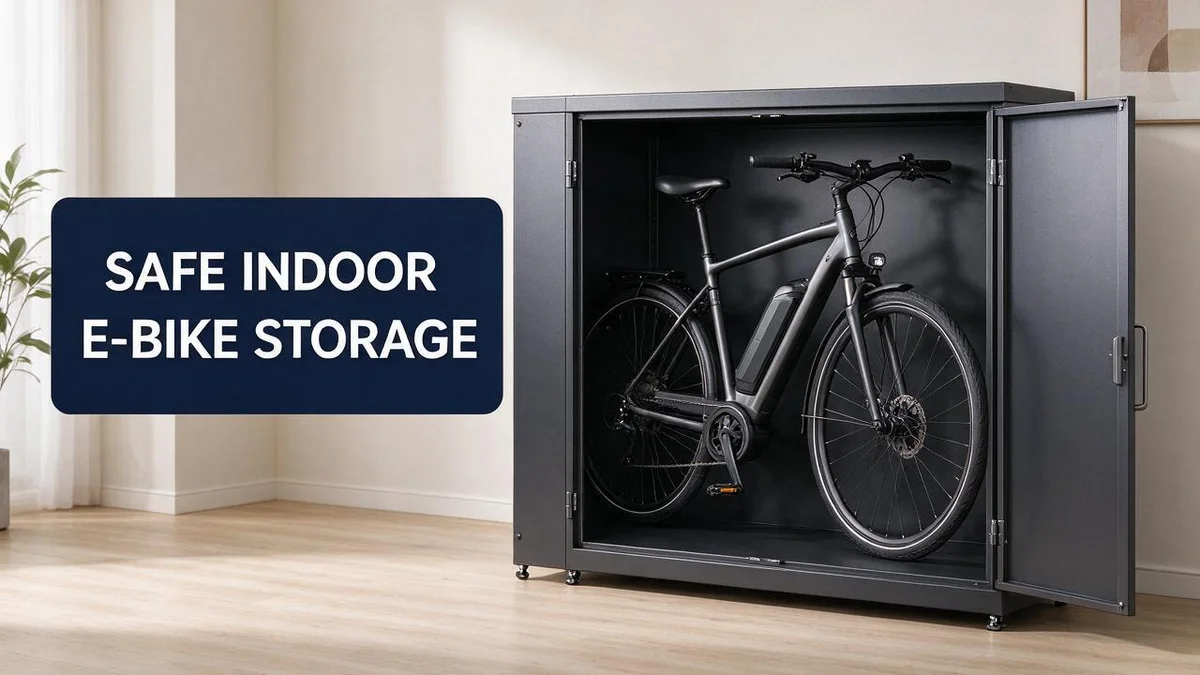
Safe Indoor E-Bike Storage: A Practical How-To Guide for Garages and Homes
You love your electric bike, so you want it safe when you are not riding it. A good indoor spot protects it from weather, theft, and accidental bumps.
Indoor storage sounds simple, but ebikes are heavier than standard bikes. Many indoor bike racks are rated for regular bike weight, so your rack may not hold your ride.
Most riders store their bikes in a garage or inside the house. Each spot has its own needs.
The battery needs extra care too. Choose a UL certified battery, and avoid counterfeit ones because they create a real safety risk.
This guide walks you through the basics:
- How to pick the right spot in your garage or home
- Why heavy duty mounts and floor to ceiling racks can help
- When to remove the battery and why it matters
- Simple habits, like putting the kickstand down
You will also see a few common mistakes to avoid. Let’s get your ebike stored the safe way.
In a Nutshell
-
Check the weight rating first. Most indoor racks suit a standard bike. An e-bike may need a heavier duty mount or a floor to ceiling rack that holds the extra weight.
-
Remove the battery. Riders who store bikes indoors take it out for safety and for better climate control. Keep the pack in a spot that stays comfortable.
-
Know your battery type. Find out which battery came with your bike. Choose packs with UL certification so you know they meet recognized safety standards.
-
Avoid counterfeit batteries. Fake packs count as a serious safety risk. Stick with sources you trust and check the labels.
-
Put the kickstand down. This simple habit keeps the bike steady while it waits in your garage or home.
-
Pick a visible spot if you store outside. UK guidance says to choose a well lit area and avoid secluded corners. For details on temperature, charging, and fire safety, read your bike maker’s manual.
Why Indoor E-Bike Storage Needs Extra Care
Indoor spaces feel safe, but they hide a few risks. An electric bike carries a large lithium battery and a motor. Both parts need careful thought before you store the bike for long periods.
Start with the space itself. A hallway or crowded corner can block your exit if a fire starts. Keep the path to the door clear so you can leave fast.
Temperature matters too. Extreme heat or deep cold can wear down battery cells over time. A room that stays mild through the year works best for most riders.
Charging needs its own plan. Many people charge their bikes overnight inside the house. Use the charger that came with the bike. Never leave it plugged in unattended for hours on end.
Pick a hard floor for charging. Keep the spot away from bedding, curtains, paper, and cardboard boxes. Clear surroundings reduce the fire risk if something overheats.
Smoke alarms make a real difference. Test them each month. A working detector gives you early warning if trouble starts near the bike. Many homes also keep a fire extinguisher nearby, which helps you respond quickly.
Moisture is another quiet threat. Damp air can rust parts and affect electrical connections. A dry, ventilated room keeps the frame, brakes, and wiring in good shape.
Plan for long gaps in riding too. If you will not ride for several months, check the charge level. Keep it within the range the manufacturer lists in the owner’s manual. Add a reminder to your calendar so you remember to check.
Small habits add up. A clear path, a safe charging spot, and a dry room protect both your bike and your home.
Choosing Where to Store: Garage vs. Inside the House
Many riders wonder whether a garage or the house makes the better home for their bike. The right choice depends on your space, your routine, and your comfort level. Garages are the most common option, and they offer plenty of room.
A garage gives you space to move around the bike. It also keeps tools and cleaning supplies close at hand. However, garages often see bigger temperature swings than living areas. They can also collect dust and damp air, so the bike may sit in a space that is not sealed from the weather.
Storing the bike inside the house offers a more stable setting. Living spaces usually stay closer to a steady temperature. Many riders also feel more at ease knowing the bike sits behind a locked door. Theft risk tends to be lower when the bike stays inside your main home.
The trade-off is floor space. A bike in a hallway or living room can block walkways and scuff walls. Measure the area before you decide. Leave enough room to walk past the bike without turning sideways.
Think about the route, too. Can you carry or roll the bike up steps and through narrow doors without strain? A heavy electric bike needs a clear, easy path. Choose a route you can use every day without wearing yourself out.
Safety rules matter in both places. Keep the bike away from fuel cans, paint, and gas appliances. Never block an exit or a fire door. Park the bike where a quick escape stays open.
Ask yourself a few simple questions. How often do you ride? How long does the bike sit between rides? Does your garage stay stable, or does your home offer a better spot? Your honest answers will point you to the best option.
Weight Ratings: Racks and Mounts That Can Handle an E-Bike
Electric bikes often weigh much more than regular bicycles. That extra weight changes what your storage setup must hold.
Many indoor racks are built for standard bike weight. Using one for an electric bike can strain the rack, the wall, or the floor over time.
Start by finding the rated limit. Check the label, the manual, or the maker’s website for the maximum load. Look for the limit per hook or arm, not just the total. Then compare that number with the full weight of your bike, including the battery.
A rating on paper is only part of the story. The wall anchors or shelf brackets must also be strong enough. Solid wood studs or masonry usually hold more than hollow drywall. If you rent, ask your landlord about mounting rules before you drill.
Think about how the bike hangs. A wheel resting on a single hook puts stress on one small point. Supporting the frame and both wheels is safer when the design allows it.
Floor stands spread the load across a wider base. Place the stand on level ground, away from doorways and walkways.
Count every item on the rack. If two electric bikes share one rack, add both weights together. Keep the total well below the maximum. Bags, baskets, and locks add weight too.
Inspect the mounts every few months. Look for loose bolts, cracks, or bent metal. Tighten the hardware and replace worn parts right away.
If you feel unsure, ask a bike shop or the rack maker for advice. Clear answers help you avoid damage to your bike, your wall, and your floor.
Step-by-Step: Preparing Your E-Bike for Storage
Before you park your electric bike for a long break, take a few simple steps. Good preparation protects the bike and makes the next ride much easier.
Start by cleaning the bike. Wipe off mud, salt, and road grime with a soft, damp cloth. Then dry every part well.
Pay extra attention to the chain and gears. Apply a light coat of lubricant after the bike dries. This layer blocks rust and keeps moving parts smooth.
Next, remove the battery. Taking the battery out supports both safety and climate control. Many riders who store bikes indoors follow this habit.
Keep the battery separate from the frame. Place it in a cool, dry spot where you can see it. Keep it away from heaters, stoves, and sunny windows.
Check the tire pressure. Soft tires can develop flat spots and lose their shape over time. Inflate the tires to the level printed on the sidewall.
Look over the brakes and cables. Squeeze the brake levers and check for worn pads or stiff cables. Fixing small issues now means the bike is ready when you return.
Remove loose accessories. Take off bags, baskets, and lights. Store them together so nothing gets lost or damaged.
Write a quick storage note. Record the date and the battery charge level. A simple note helps you plan your first check-in.
Finally, set a reminder to inspect the bike every few weeks. Look for dust, damp spots, or unusual smells. Catching problems early keeps your bike in good shape and saves you trouble later.
Battery Safety Basics: Removal, Type, and UL Certification
The battery is the most important part of an electric bike to think about during storage. It holds a large amount of energy, so safe handling matters. Knowing a few basics protects both your bike and your home.
Start by learning the battery type that came with your bike. Check the label on the battery, the manual, or the maker’s website. Many bikes use lithium ion packs, but designs vary by model. Knowing the exact type helps you choose the right charger and storage steps.
Look for UL certification on both the battery and the charger. UL stands for Underwriters Laboratories, an independent safety group that tests electrical products. A UL mark shows that the item met recognized safety standards. Choose certified parts whenever you can.
Counterfeit batteries pose a serious risk. Cheap copies may look like the original, but they often lack proper cell quality and protection circuits. Never buy a battery from an unknown seller just because the deal looks too good. Fake packs can overheat, swell, or even catch fire.
Removing the battery also gives you a chance to inspect it. Look for cracks, bulging, leaks, or a strange smell. Stop using any damaged battery right away. Contact the maker or a qualified repair shop for advice on safe replacement or disposal.
Store the battery somewhere cool, dry, and out of direct sunlight. Room temperature works best for most packs. Keep it away from heaters, stoves, and flammable materials such as paper, rags, or fuel. Avoid leaving it in a hot car or a freezing shed. Place it on a shelf rather than the floor so water cannot reach it.
Check the battery now and then, even during long breaks. A quick look every few weeks can catch small problems early. Good habits keep your riding safe and your storage simple.
Common Mistakes to Avoid, Including Counterfeit Batteries
Many owners make small mistakes that can lead to big problems. Knowing these errors helps you store your bike safely and protect your home.
Leaving the charger plugged in is one of the most common habits to break. A charger that stays connected for days can overheat. Unplug the charger as soon as the battery reaches full charge.
Charging right after a ride also causes trouble. The battery often feels warm after a long trip. Let it cool down for a while before you plug it in.
Storing the bike near heat sources creates another risk. Keep your electric bike away from radiators, heaters, water heaters, and sunny windows. Heat can speed up battery wear and raise the chance of damage.
Buying cheap replacement parts is a serious error. Counterfeit cells may lack the protection circuits that stop overcharging and overheating. Always buy replacement batteries from the original maker or a trusted dealer.
Ignoring damaged cables can also cause problems. Look at the charger cord, plug, and connectors often. Frayed wires, cracks, or a burning smell mean you should stop using the charger right away.
Blocking exits with the bike is a safety mistake people often miss. Never store your bike in a hallway, near a door, or beside stairs. Clear paths help you leave quickly if a fire starts.
Skipping smoke alarms leaves your home less protected. Place a working smoke alarm near the storage area. Test it once a month so you know it works.
Leaving the battery at the wrong charge level can shorten its life. Check the owner manual for the advised storage charge. Many makers suggest a partial charge rather than a full or empty battery.
Simple habits prevent most of these problems. A few minutes of care each week keeps your electric bike safe and ready to ride.
Security Tips and Choosing a Visible, Well-Lit Spot
Choosing the right spot matters just as much as the lock. A safe location makes an electric bike harder to steal and easier to check on. Here is how to pick the best place.
Start by checking the weight rating. Most indoor bike racks are built for standard bike weight. Electric bikes are heavier, so they may need a heavier duty mount or a floor to ceiling rack. Confirm the rack can hold the full weight before you hang the bike.
Garages are the most common place to store an electric bike. Many owners also keep bikes inside the house. Either option works well when the area stays dry, open, and free of clutter.
Next, pick a spot that other people can see. A bike tucked into a dark corner invites trouble. If you can, place it near a window or a light source. Good lighting helps you spot problems fast and discourages thieves.
Avoid secluded areas, even at home. Hidden corners of a yard or a quiet back lane give thieves time to work. If you must park outside, choose a well lit, visible spot near people or busy paths. This advice matches UK guidance for outdoor storage.
Always put the kickstand down. A bike resting on its stand stays steadier and is less likely to tip over. Then secure the frame to a fixed object. Use a sturdy anchor point that cannot slide or lift away.
Keep the walkway clear, too. Do not let the bike block doors, windows, or emergency exits. A clear route helps you leave quickly if you ever need to.
Make a simple habit of checking the area. Look at the spot each time you return. Notice any scratches, lock damage, or missing parts. Quick checks stop small issues from turning into big losses.
Final Thoughts
Safe indoor storage comes down to a few simple habits. You protect the battery, support the weight, and keep the bike out of harm’s way. Each step is small, but together they make a big difference.
Start with the battery. Remove it, know its type, and choose one with UL certification. Avoid counterfeit batteries, because they pose a real safety risk.
Next, check the rack or mount. Most indoor bike racks are rated for standard bike weight. An electric bike weighs more, so look for a heavy duty mount or a floor to ceiling rack that lists a higher limit.
Pick your spot with care. A garage is the most common choice, and many owners also store bikes inside the house. In both cases, keep the bike stable and put the kickstand down if it stands on the floor.
Visibility matters too. A bright, open area makes theft less likely. Avoid secluded corners, even at home.
Some questions have no one size fits all answer. You may wonder how to store a bike for six months, or how to lock it in your city. The research here gives no firm rules on those points. Details on temperature, charging, and fire safety are also thin.
So check your owner’s manual and contact the bike or battery maker. Ask your local police or a trusted bike shop about locking tips for your area. Those sources know your exact model and your local risks.
Finally, build a quick routine. Look at the bike, the battery, and the storage area each time you return. A minute of checking can prevent a costly problem later.
Take these steps one at a time, and your electric bike will stay safe, secure, and ready for your next ride.
Frequently Asked Questions
Can I store an electric bike inside my house for six months?
Yes, long storage indoors works well. Choose a dry room with steady temperatures. Avoid spaces that freeze or overheat. Check your battery manual for the exact storage range.
How do I store an electric bike in a shed or basement?
Sheds and basements often have damp air or large temperature swings. Use a dehumidifier in damp spaces. Lift the bike onto a stand if water might collect on the floor.
What should I do if the battery feels hot or smells strange?
Stop using the bike right away. Move it outside or to an open area, away from buildings and flammable items, if you can do so safely. Call your local fire service. Never try to charge or repair a damaged battery.
Is a standard lock enough in Spokane?
Local crime levels change over time, so check with local police for current advice. Use a strong lock that passes through the frame and the back wheel. Lock the bike to a fixed object in a busy area for the best protection.

Philips is the founder and lead writer at GearheadGarageFinds.com, a passionate automobile enthusiast who has spent years testing, comparing, and reviewing auto products and accessories to help fellow gearheads make smarter buying decisions. When he’s not under the hood or behind the keyboard, you’ll find him exploring the latest automotive innovations and hunting for the best garage finds on the market.