E-Bike Charger Compatibility Guide: How to Match Your Charger to Your Battery Safely
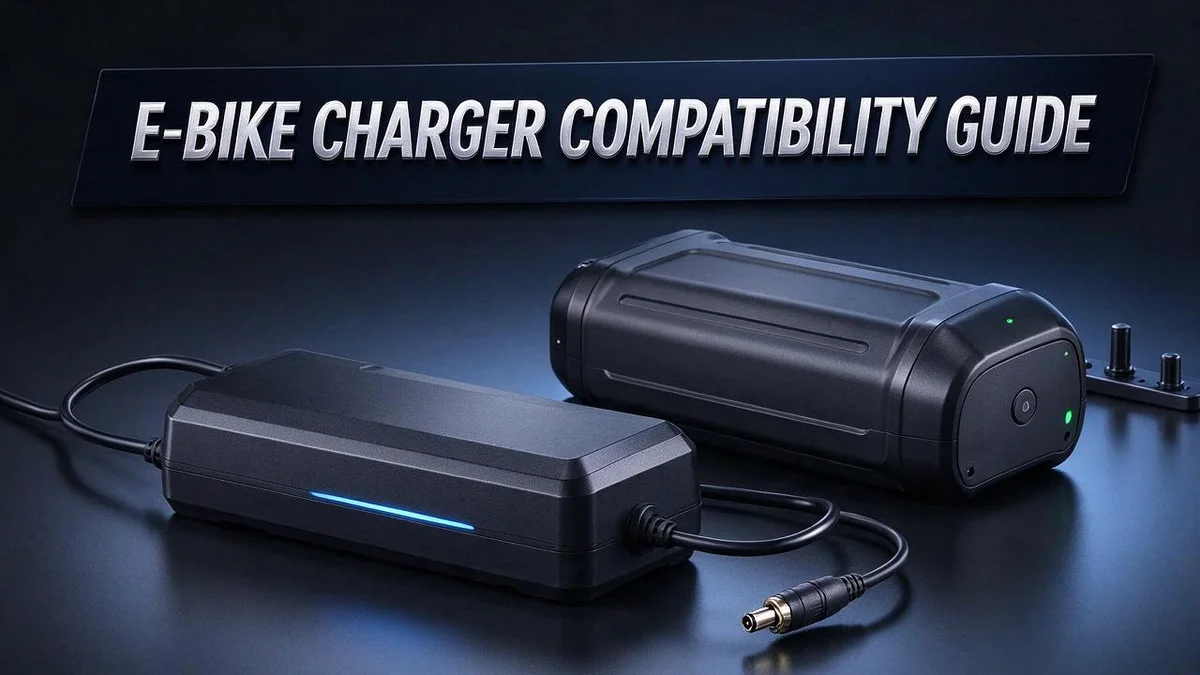
Your ebike charger looks simple, but it does a big job. It sends power into your battery, and the wrong one can cause real trouble.
Many riders believe every charger fits every bike. That belief is a common and costly mistake. A plug that fits the port does not always match the battery.
The key factor is voltage. A charger must match the battery’s rating, such as 36V, 48V, or 52V. A mismatch can cause undercharging or even battery damage.
Compatibility also goes beyond the connector. The charger must suit the whole battery system design. It must not be built for lead acid or nickel cadmium batteries either.
This guide makes the process easy. You will learn how to read your manual and find the voltage and connector details. You will see why the manufacturer approved charger is the safest choice. You will also learn how to confirm a replacement or third party charger before you plug it in.
Let’s help you charge with confidence.
In a Nutshell
-
Match the voltage first. The charger’s voltage must equal the battery’s rating, such as 36V, 48V, or 52V. A mismatch can cause undercharging or battery damage.
-
Check your manual. The manual or the manufacturer’s specs list the correct voltage and connector type. This takes one minute and prevents most mistakes.
-
Use the approved charger. The manufacturer approved charger for your exact battery is the safest choice. Always confirm the voltage before you plug in a replacement or third party unit.
-
Look beyond the plug. A matching connector is fine only if the voltage also matches. The charger must suit the battery system’s design, not just fit the port.
-
Watch the chemistry. Your charger should not be built for lead acid or nickel cadmium batteries. A smart charger for lithium batteries is a good option.
-
Avoid the common traps. Do not assume chargers are universal. Do not skip the manual. An incompatible charger can damage the battery or cause a malfunction.
Why E-Bike Chargers Are Not Universal
Every e-bike battery has its own design. Manufacturers choose the cell count, the internal wiring, and the safety circuits for each model. A charger must work with all of these parts together.
Think of the battery and charger as a team. When one part does not match, the whole system struggles.
The charger pushes power into the battery at a set voltage and current. If the output drifts from the battery design, the pack may stop charging fully. In other cases, the battery takes in too much energy and gets hot.
The battery management system plays a big role too. This small circuit watches each cell and tells the charger when to stop. Some systems expect a specific signal from the charger. A generic charger may not send that signal, so the battery may refuse to charge or shut down.
Plug shapes can also mislead you. Two chargers can look identical yet deliver different outputs. Always read the label on the charger itself. Look for the output voltage and the output current printed in writing.
Current rating deserves attention. A charger with a higher amp rating does not always help. The battery sets its own safe limit. Going above that limit can stress the cells and shorten battery life.
Heat is a clear warning sign. A charger or battery that feels hot during charging needs attention. Unplug it and let it cool. Then check the specs again before you try another charge.
Warranty coverage matters as well. Many manufacturers only cover damage when the official charger is used. Using an unknown charger may remove that protection.
Here are the key points to remember. The output voltage must fit the battery. The output current must stay within the battery limit. The battery management system must accept the charger signal. Each part of the system must agree before charging begins.
Understanding Battery Voltage Ratings: 36V, 48V, and 52V
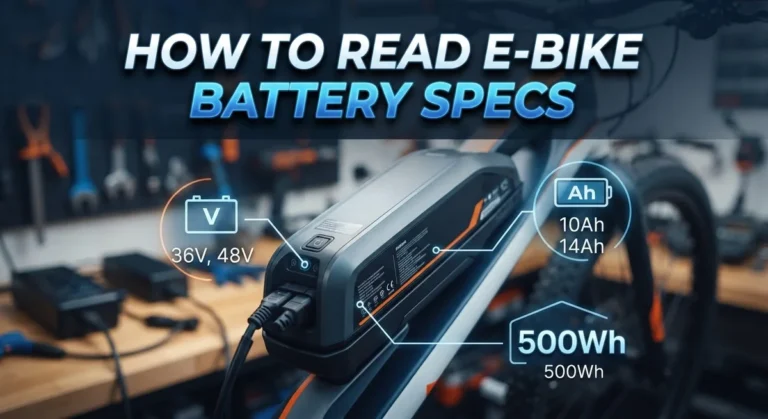
Battery voltage is one of the first numbers you should understand. Most ebike batteries use a rating of 36V, 48V, or 52V. Each rating describes the pack design and the power it delivers.
A 36V battery usually suits lighter motors and casual trips. A 48V pack often powers stronger motors and longer rides. A 52V system offers even more power for high performance models.
These numbers are nominal ratings, not exact readings. A fully charged 36V pack may show a higher number on a meter. This is normal behavior. The charger still needs to match the rated voltage on the label.
Voltage depends on how the cells connect inside the pack. Cells wired in series add their voltages together. More cells usually mean a higher rating. Each battery design follows its own wiring plan.
Why does voltage matter so much? A charger with the wrong voltage can undercharge the pack. It can also push too much voltage into the cells. Over time, this may shorten battery life or create safety risks.
Finding your voltage takes only a minute. Check the label on the battery, the frame, or the manual. Write down the number before you compare chargers.
Then read the charger label carefully. The output voltage should match the battery rating exactly. A close number is not enough. Small differences can still cause problems.
Keep your voltage notes handy. You will need them for any replacement, upgrade, or spare charger. This simple habit protects your battery and helps your ride run smoothly for years.
Why Connector Match Alone Does Not Guarantee Compatibility
A matching plug can look like proof that a charger will work. Many riders assume that if the connector fits, the charger is safe. This idea causes more problems than most people expect.
A connector is only the doorway for power. The electrical rules behind that doorway come from the battery design. Two chargers can share a plug style and still deliver very different results.
Voltage remains the deciding factor. A charger that outputs a different level than the pack expects may charge poorly. Over time, the mismatch can also wear the battery down faster.
Connectors can also look alike across different systems. Some manufacturers use similar housings for several voltage levels. A quick glance at the plug can hide a real mismatch that only the label reveals.
Current output deserves attention too. A charger that pushes more amps than the battery expects can stress the cells. The battery management system monitors these signals and may stop charging or show a fault code.
Battery chemistry adds another layer. A plug says nothing about whether a charger suits lithium cells. Chargers built for lead acid or nickel cadmium may use a similar plug, yet they charge in a completely different way.
Heat offers a useful clue. If the plug, charger, or battery feels unusually hot during charging, unplug everything right away. Heat often signals that the system parts do not work well together.
Before you connect any charger, slow down for a moment. Read the label and the manual. Confirm the voltage, the current rating, and the battery type. A matching plug takes seconds to notice, but a full check takes only a few minutes. That short review protects your battery, your bike, and your peace of mind.
Battery Chemistry and Charger Design: What Actually Matters
Most e-bikes today use lithium ion batteries. Chemistry decides how the charger must behave. A lithium pack needs a precise charging routine to stay healthy over many years.
Lithium ion cells usually charge in two stages. The charger first pushes a steady current into the pack. Then it holds a steady voltage while the current slowly drops toward zero.
Lead acid and nickel cadmium batteries follow different rules. They use other voltage limits and charging timing. A charger built for those chemistries can overheat or damage a lithium pack.
Cell count sets the pack voltage. Each lithium cell has a fixed safe voltage range. Manufacturers link many cells in series to reach a higher rating. The charger must match that total, so the cell arrangement matters as much as the chemistry.
Cells in the same pack can drift apart over time. Small differences in charge can grow with each cycle. The pack’s internal circuitry works to balance these cells during charging. A charger that stops at the right point helps this process succeed.
Cutoff timing matters more than charging speed. A fast charger that overshoots the target voltage can stress the cells. A charger that stops cleanly protects capacity and lifespan. Many owners focus only on how quickly the battery fills, but the stop point is the real safeguard.
Temperature also changes how lithium cells accept charge. Cells charge best within a moderate range. Some chargers pause when the pack feels too cold, and this behavior is normal. It protects the cells from lithium plating, which can permanently reduce capacity.
Check the chemistry before you charge. The battery label or manual usually names the chemistry. Look for the words “Li ion” or a similar marking. If the label is unclear, stop and confirm with the manufacturer before connecting any charger.
Step-by-Step: How to Verify a Charger Matches Your Battery
Follow these steps to confirm that a charger fits your battery. You only need a few minutes and both labels in view.
Step 1: Find the battery label. Look on the battery pack itself. It often sits on the bottom of the pack or near the seat tube.
Step 2: Write down the voltage. Note the number followed by V, such as 36V, 48V, or 52V. Keep this number handy for the next steps.
Step 3: Check the charger output. Find the output rating printed on the charger. The voltage must match your battery exactly.
Step 4: Open the owner manual. The manual lists the approved charger and its specifications. Look for a section called charging or technical data.
Step 5: Compare the manufacturer details. Check whether the brand names a specific charger for your model. If it does, choose that charger first.
Step 6: Confirm the battery type. Make sure the charger supports lithium cells. Chargers made for lead acid or nickel cadmium packs should stay away from your battery.
Step 7: Ask the manufacturer if you feel unsure. Share your battery serial number and request written confirmation. Support teams can answer your question quickly.
Step 8: Do one final inspection. Look over the charger and the plug before you connect anything. Stop right away if you see cracks, loose parts, or missing labels.
Never assume that an e-bike charger works with every battery. A quick check today can prevent costly damage later. Take the time to verify each step, and you can charge with confidence.
Using Manufacturer-Approved, Replacement, and Smart Chargers
Manufacturer-approved chargers are the safest choice for most riders. The brand tests the charger with your exact battery.
The approved charger matches the voltage and charging profile your pack needs. Check your owner manual for the model name.
Replacement chargers help when the original is lost or damaged. A replacement must match the original specs.
Look for the same voltage on the label. Confirm that the output current is equal to or lower than the original. A lower current charges more slowly, which is usually gentler on the cells.
Third party replacements need extra care. Choose sellers who list the voltage, output rating, and connector type clearly. Avoid units with no printed specs.
Smart chargers include built-in circuits that monitor the pack during charging. Many of them stop when the battery reaches full charge.
Smart chargers are designed for lithium packs. Make sure the label says it supports lithium before you use it.
A smart feature cannot fix a voltage mismatch. Even a smart charger can cause problems if its voltage is wrong for your battery.
Some riders assume a smart charger works with any battery. That idea is risky. The charger still has to match the battery system.
Before you plug in any replacement, compare three things. Check the voltage, the output current, and the battery chemistry.
If the details do not line up, do not connect it. Ask the manufacturer or check the manual again.
Keep the original charger label or model number on hand. This makes it easier to find a correct replacement later.
With a little checking, you can choose a charger that keeps your battery healthy and your ride reliable.
Common Compatibility Mistakes and the Risks of Mismatched Voltage
Many riders assume every electric bike charger works the same way. This belief causes several avoidable problems.
Mistake 1: Trusting the plug shape
A plug can look identical even when the voltage differs. A matching connector does not prove that a charger fits your pack.
Mistake 2: Choosing a charger by price
Cheap chargers may lack accurate voltage control. Always read the output specs before you plug anything in.
Mistake 3: Borrowing a charger from another bike
A friend or family member may own a different model. Their charger may work well for their pack but not for yours.
Mistake 4: Ignoring small voltage gaps
Some people think a close number is good enough. Even a small difference can stress the cells over many charge cycles.
Mistake 5: Using adapters to force a fit
Adapters that join mismatched plugs bypass the original design. They can overheat and create loose connections.
Risks of mismatched voltage
A wrong voltage can create several problems. Each one can shorten the life of your battery or make your ride less reliable.
Undercharging
The pack never reaches full capacity. You lose range and notice weaker performance on hills.
Overcharging
Excess voltage pushes too much energy into the cells. This creates heat, swelling, and permanent damage.
Battery management system faults
The internal protection circuit may shut the pack down. You may also see error codes that stop the bike from running.
Fire risk
In severe cases, a mismatched charger can cause overheating. Heat is the main danger that leads to battery fires.
Voided warranty
Many manufacturers refuse coverage when a non-approved charger causes damage. You may pay for a full replacement pack.
Simple habit to prevent problems
Check the voltage on both the charger and the battery each time you swap chargers. If the numbers do not match, stop charging. Contact the manufacturer for guidance before you try again.
Final Thoughts
Charger compatibility comes down to one simple rule. The charger voltage must match the battery voltage. Everything else supports that rule.
A matching plug does not prove a match. Plugs look alike across many models. The voltage on the label tells you the truth.
Always read the labels first. Check the battery, then check the charger output. Then confirm both numbers in the owner manual.
Your manual is your best guide. It lists the approved charger and the correct connector type. A two minute check can save your battery.
Keep these quick habits in mind:
- Match the voltage, such as 36V, 48V, or 52V.
- Use the charger approved for your exact battery.
- Confirm lithium support before you plug in.
- Skip adapters that force a fit.
Replacement and smart chargers can work well. They must still match your battery voltage. A smart feature never fixes a voltage mismatch.
Do not borrow a charger without checking it. Your friend’s bike may use a different system. Even a small voltage gap can cause trouble.
Mismatched charging can lead to undercharging, poor performance, or battery damage. These problems cost time and effort. A careful check prevents them.
Your questions now have clear answers. Can you use a different charger? Yes, but only if its voltage matches your battery. Are electric bike chargers universal? No, they are not.
Treat charging as part of regular bike care. Take a moment to compare the labels each time you buy or borrow a charger. That habit protects your battery, your ride, and your budget.
If you still feel unsure, contact the bike maker for help. They can confirm the right charger for your model. A short message gives you peace of mind and keeps your battery healthy for years.
Frequently Asked Questions
Can I use a different charger on my electric bike?
Only if its voltage matches the battery. A charger with the wrong voltage can undercharge the pack or cause damage over time.
Are electric bike chargers universal?
No, they are not. An incompatible charger can damage the battery or make the system malfunction. Each bike needs a charger that fits its exact battery design.
Do lithium batteries need a specific type of charger?
Yes, lithium packs need a charger built for lithium. Look for a label that says it supports lithium. Chargers made for lead acid or nickel cadmium batteries do not suit lithium packs.
Where can I find the correct voltage for my battery?
Check the battery label or the owner’s manual first. Common ratings include 36V, 48V, and 52V. Write the number down so you know what to match.
Should I check compatibility after a battery upgrade?
Yes, always check. A new battery can use a different voltage than the old one. Confirm the charger matches the new battery before you plug it in.

Philips is the founder and lead writer at GearheadGarageFinds.com, a passionate automobile enthusiast who has spent years testing, comparing, and reviewing auto products and accessories to help fellow gearheads make smarter buying decisions. When he’s not under the hood or behind the keyboard, you’ll find him exploring the latest automotive innovations and hunting for the best garage finds on the market.