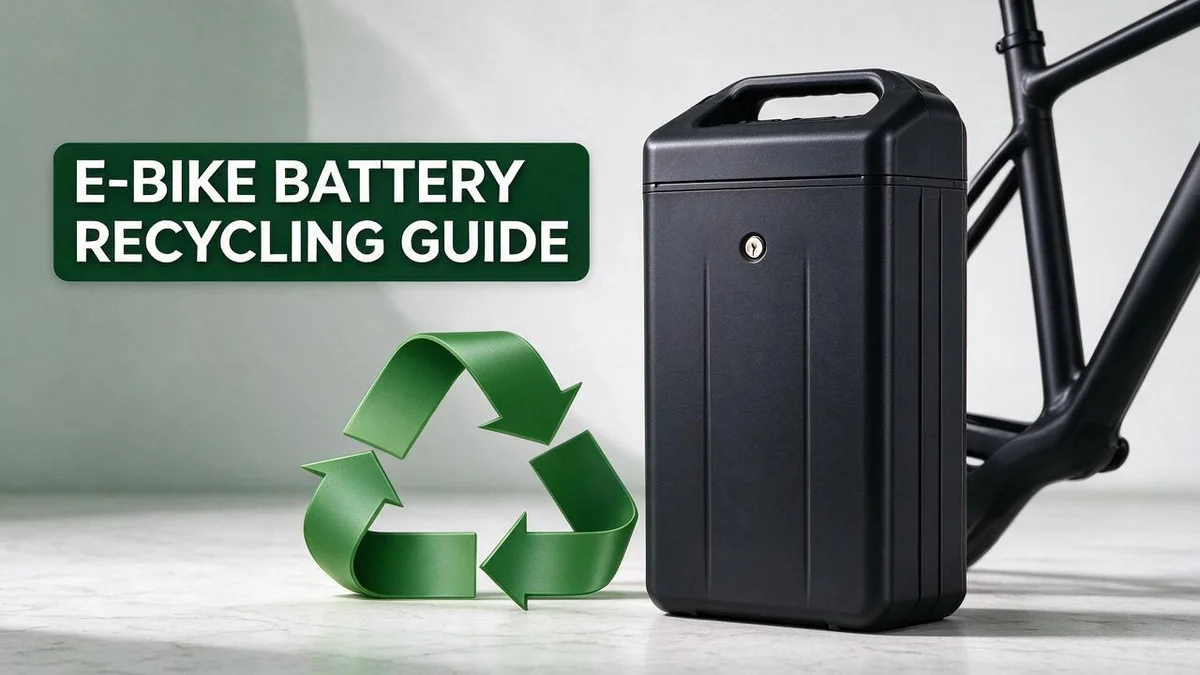
E-Bike Battery Recycling Guide: How to Safely Dispose of Old Batteries
Your electric bike battery no longer holds a charge. Now you wonder what to do with it. Please don’t throw it in the trash. That choice can start fires and harm the environment.
Old ebike batteries have three paths. You can repair them, recycle them, or replace them. A shop can check the battery health first and help you decide.
This guide shows you how to recycle an ebike battery safely. You will learn how to ask your dealer or manufacturer about take back programs. You will also learn how to use The Battery Network’s locator to find a trained collection site.
We also cover storage and transport tips. Keep the battery dry and cool. Avoid hot spots, like a car trunk in direct sunlight.
You will also see the most common mistakes, such as tossing batteries into curbside blue bins. Let’s get started and handle your old battery the right way.
In a Nutshell
-
Start with the seller. Contact your dealer or manufacturer and ask about a take back collection. Many sellers offer this service, and it is often the easiest option.
-
Ask about a manufacturer program. Some brands run their own recycling program. A quick call or email will tell you whether yours does.
-
Find a trained collection site. The Battery Network runs a dedicated ebike battery recycling program. Its locator tool shows sites that accept ebike batteries near you.
-
Get a health check first. A bike shop can test the battery before you choose repair or disposal. Repairs do not always work. One battery failed again after a fuse repair, and the BMS was reported as fried.
-
Keep it dry and cool. Store and carry the battery away from heat and moisture. A car trunk in direct sunlight is a bad spot.
-
Never put it in the trash. A dead battery needs a proper drop off point. Trained collection sites handle it safely.
Why E-Bike Batteries Need Special Handling
An ebike battery stores a lot of energy in a small case. Its lithium-ion cells can overheat, swell, or catch fire when damaged. That risk makes ordinary waste handling unsafe.
Damage does not always show on the outside. A dropped pack may hide a cracked cell. Water can corrode the circuits. Either problem can build heat slowly over time.
The battery management system, or BMS, controls charging and protects the cells. When the BMS fails, the pack may charge unevenly or shut down. Some of these failures cannot be reversed.
Waste workers face danger too. Crushed batteries can spark inside garbage trucks and compactors. Fires at waste facilities cost communities time and money. Proper collection protects workers and neighbors.
Ebike batteries also contain valuable metals such as lithium, cobalt, and nickel. Specialized processors can recover these materials. Recovery keeps resources in use and reduces the need for new mining.
Special handling starts at home. Keep the pack away from stairs, heaters, and direct sunlight. If the battery feels hot or smells unusual, move it outdoors away from buildings and call your local waste service.
Transport needs extra care as well. Place the pack in a sturdy box with padding. Tape over the exposed terminals so they cannot touch metal. Always check shipping rules before you send a damaged battery.
Repair is possible in some cases, but not every battery is worth saving. A simple fuse fix may not solve a deeper BMS problem. Knowing these risks helps you pick the safest next step.
Clear labels also make a difference. Mark the battery as damaged or dead so staff know what they are handling. This simple habit prevents mix ups and keeps drop off sites running smoothly.
Repair, Recycle, or Replace: Deciding What to Do With an Old Battery
Start by looking closely at the battery. Check for swelling, cracks, leaks, or a strange smell. Any of these signs means the battery needs careful handling right away.
Next, think about the age and use of the pack. A newer battery with one small fault may be worth fixing. An older pack with many charge cycles often costs too much to repair and may not last long after the fix.
Repair does not always work. One rider replaced a fuse, and the battery failed again soon after. The BMS was reported as fried, which means the control board was damaged beyond repair. Only try a repair after a qualified technician tests the whole system.
Replacement makes sense when the pack has reached the end of its useful life. Choose a new battery that matches your bike’s voltage, capacity, and connector type. Confirm the fit before you buy, so the new pack works safely with your frame and charger.
Recycling is the right path when the battery cannot be saved. Ebike batteries contain lithium, cobalt, and nickel, and these materials can be recovered. Recycling keeps them out of landfills and reduces the need for new mining.
Use a simple rule to decide. If the battery is swollen, damaged, or fails again after repair, recycle it. If the pack is young and only one part has failed, ask a technician about repair. If the bike still runs well but the battery is worn out, a replacement is often the easiest choice.
Whatever you choose, do not let a damaged battery sit around the house. Move it to a safe, cool place and arrange recycling as soon as you can.
Getting a Battery Health Check Before You Decide
A health check gives you facts before you decide what to do. It shows the real condition of the pack, so you do not have to guess.
Bring the battery and charger together. Many shops use diagnostic tools to read voltage, capacity, and charge cycles. The charger matters too, because it can reveal charging faults that the pack alone might hide.
Ask for a written report. Request the results on paper or by email. Look for the state of health percentage, cell balance, and any error codes. Clear numbers make your next step much easier.
Check for warning signs yourself first. Look for swelling, cracks, leaking fluid, or a strange smell. Visible signs still matter, though. If the case looks damaged or feels hot, stop charging it and move it to an open area away from flammable items.
Think about how the battery has behaved. Did the range drop over the past few months? Did it shut off in cold weather or charge much slower than before? These clues help the technician focus the test.
Rule out other causes. A faulty charger, loose wiring, or a motor problem can copy the symptoms of a failing battery. A thorough shop checks these parts before it blames the pack.
Share your repair history, too. If someone replaced a fuse or another component before, tell the technician. Past repairs can change how the pack responds during testing.
Use the results to choose a path. A healthy pack may only need a new charger or a minor fix. A weak pack often belongs in the recycling stream. Written results help you compare your options with confidence.
Store the battery somewhere shaded and stable while you wait for the appointment. Good storage keeps the pack safe and helps the test results stay accurate.
Step-by-Step: Contacting Your Dealer or Manufacturer About Take-Back
Start with the shop that sold or services your bike. Many dealers accept old batteries, especially when you buy a new pack from them. A quick call can save you a lot of effort.
When you call, ask a few clear questions:
- Do you accept old ebike batteries for take back?
- Do you accept packs from other brands?
- Can I drop off the battery during your normal hours?
- Do you pass the battery to a certified recycler?
If the dealer cannot help, contact the manufacturer. Check the brand’s website or the owner’s manual for a recycling contact. Ask whether the company runs its own take back or recycling program for its batteries.
Some manufacturers send a shipping label or point you to a partner site. Ask about the steps before you pack anything, so you know what to expect.
You can also use The Battery Network’s locator. This tool helps you find a trained collection site that accepts ebike batteries near you. It works well when neither the dealer nor the manufacturer offers a program.
Give the staff full details about the battery. Tell them the brand, the model, and the age of the pack. Mention any swelling, leaking, unusual heat, or past damage. This information helps them handle the battery safely.
Confirm the plan before you travel. Ask whether you need an appointment, and whether they want the charger with the battery. A short phone call can prevent a wasted trip.
Keep the battery safe until drop off day. Store it in a cool, dry spot away from direct sunlight. Do not leave it in a hot car, and do not put it in your regular trash or curbside bins.
Taking these steps makes the process simple. A quick call to the dealer, a check with the manufacturer, and a visit to a trained site will get your old battery where it belongs.
Step-by-Step: Finding a Collection Site With The Battery Network Locator
Using The Battery Network locator is the fastest way to find a drop off point. The Battery Network runs a dedicated ebike battery recycling program. Its locator helps you find a trained collection site that accepts ebike batteries.
Start by visiting The Battery Network website and opening the locator. Enter your city or postal code. The results show nearby sites that take ebike packs.
Check each listing before you travel. Look at the battery types each site accepts. Confirm the hours and whether you need an appointment.
Call the site first. Ask if they accept your battery brand and voltage. Some sites only take certain packs, so a quick call saves time.
Pack the battery safely for the trip. Keep it dry and cool during storage and transport. Store it away from heat sources.
Never leave the battery in a hot car trunk. Direct sunlight can raise the temperature fast. Keep the pack upright and secure it so it does not shift.
Do not throw the battery in the trash. Also avoid curbside and blue recycling bins. These bins are not designed for lithium batteries.
If the locator shows no site nearby, try other options. Contact your dealer or the manufacturer. They may run a take-back program or point you to a partner site.
When you arrive, ask the staff a few clear questions. Ask whether they pass batteries to a certified recycler. Ask if they can give you a receipt for your records.
Can a repaired battery be saved? Not always. One user’s pack failed again after a fuse repair, and the BMS was reported as fried. A health check before you decide is a smart step.
How to Store and Transport Batteries Safely Until Drop-Off
Storing your battery safely protects your home and family while you wait for drop off. Choose a spot that stays cool, dry, and well ventilated. A garage shelf or utility room often works well.
Keep the battery away from flammable items like paint, gasoline, cardboard, and old rags. Set it on a hard, non-flammable surface. Avoid carpet and wooden floors when possible.
Charge level matters too. Store the battery with a partial charge, around 30 to 50 percent. Do not leave it fully charged or completely empty for long periods. Unplug the charger once charging finishes.
Protect the terminals before you move anything. Place tape over the metal contacts or cover them with plastic caps. This step stops loose metal objects from causing a short circuit.
Inspect the pack every time you handle it. Look for swelling, cracks, leaking fluid, burn marks, or a strange smell. If you notice any of these signs, stop handling the battery and tell the collection site before you move it.
When you transport the battery, use the original box if you still have it. If not, wrap the pack in a dry towel and place it in a sturdy plastic bin. Keep it upright and fixed in place so it cannot slide or bump around.
Choose a vehicle with good airflow. Keep the battery away from passenger seats and foot areas. Keep a fire extinguisher nearby if you have one.
Plan your trip so the battery spends as little time in transit as possible. A short, direct drive lowers the chance of damage during travel. Drop off the battery on the same day you pick it up when you can.
Common Mistakes to Avoid When Disposing of E-Bike Batteries
Mistake one: Assuming a repair will always save the battery. A simple fuse fix can seem like an easy answer. One rider found the battery failed again after repair, and the BMS was reported as fried. Ask a shop to check battery health first.
Mistake two: Ignoring warning signs. Swelling, a strange smell, or heat during charging all point to damage. Stop using the battery right away. Keep it away from other items until you arrange drop off.
Mistake three: Waiting too long to act. A dead battery sitting in a garage can slowly lose its condition. Many owners forget about it for months. Plan a drop off soon after the battery stops working.
Mistake four: Mixing battery types. Some people toss e-bike packs in with other batteries or electronics. Each battery type needs its own handling. Tape the terminals and keep each pack in its own container.
Mistake five: Skipping the paperwork. The owner’s manual and purchase receipt often list the battery model and voltage. Collection sites may ask for these details. Keep them with the battery so the drop off goes smoothly.
Mistake six: Opening the pack yourself. Cutting or prying open the casing can expose cells. This can cause short circuits or fires. Leave the pack sealed and let trained staff handle it.
Avoiding these errors protects your home, saves time, and helps the environment. A little planning goes a long way.
Final Thoughts
Recycling an e-bike battery takes a little planning, but the process is simple. You have three paths for an old pack: repair, recycle, or replace. The right choice depends on the battery’s health.
Start with a health check. A bike shop can test the pack and tell you if repair makes sense. Some batteries recover, but others do not. A fuse repair can fail again if the battery management system is damaged.
If the pack is finished, recycle it the right way. Contact your dealer or the manufacturer and ask about a take back program. Many offer free collection or can point you to a partner site.
You can also use a trained collection site that accepts e-bike batteries. A quick phone call saves you a wasted trip. Ask if the site accepts your battery type before you go.
Keep safety in mind at every step. Store the battery dry and cool, and keep it away from direct sunlight. Never leave it in a hot car trunk.
Remember the main rule: never put an e-bike battery in the trash or a curbside recycling bin. Damaged cells can start fires in trucks and sorting facilities. They also contain materials that should be recovered, not buried.
Here is a quick checklist to follow:
Check the battery’s health with a shop.
Ask the dealer or manufacturer about take back options.
Find a trained collection site if needed.
Store and carry the pack with care.
Act early. An old battery that sits in a garage for months creates more risk and more worry. A short call this week beats a problem later.
Responsible recycling protects your home, your community, and the environment. It also helps recover valuable materials for reuse. Take these steps, and you will handle your old battery with confidence.
Frequently Asked Questions
Where can I recycle a dead electric bike battery?
Start with the dealer or manufacturer. Many shops and brands offer take back collection for old packs. You can also use The Battery Network locator to find a trained collection site that accepts electric bike batteries.
Does the manufacturer run a recycling program?
Ask the manufacturer directly. Some companies have their own recycling programs for electric bike packs. A quick call or email can help you find the right option.
Can a broken battery be repaired?
Not always. A simple fix may fail again. One owner saw a battery die after a fuse repair, and the battery management system was reported as fried. A shop can test the pack first.
What happens to the battery after drop off?
Trained handlers check each pack before they sort it. The battery then goes to a proper recycling facility. This keeps harmful materials out of landfills and helps recover useful metals.
Can I drop off the battery without the bike?
Yes, in most cases. Many collection sites accept loose packs. Still, call ahead to confirm the site takes electric bike batteries before you travel.

Philips is the founder and lead writer at GearheadGarageFinds.com, a passionate automobile enthusiast who has spent years testing, comparing, and reviewing auto products and accessories to help fellow gearheads make smarter buying decisions. When he’s not under the hood or behind the keyboard, you’ll find him exploring the latest automotive innovations and hunting for the best garage finds on the market.