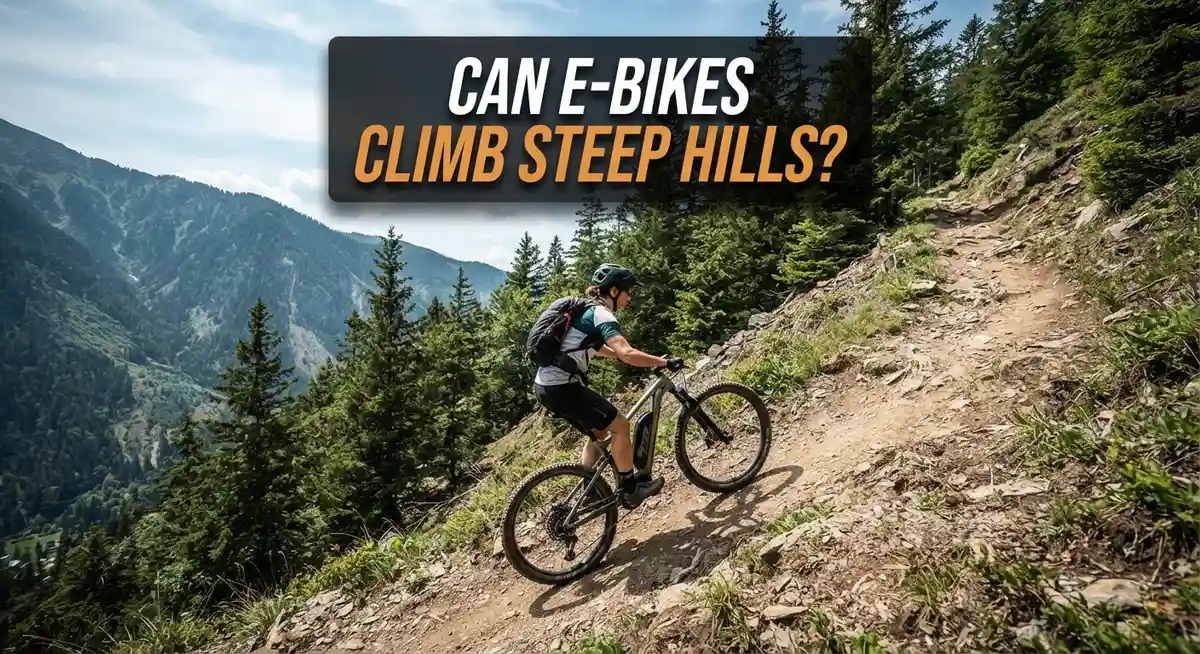
Can E-Bikes Climb Steep Hills? What You Need to Know
Steep hills stop many riders in their tracks. Your legs burn. Your bike slows to a crawl. You wonder if you should just get off and push.
E-bikes change this picture completely. They give your pedaling a serious power boost. But can they truly handle the toughest climbs out there?
The short answer is yes, with some conditions. E-bikes do not erase the hill. They reduce how hard you work to get up it. A good motor and the right setup make a steep grade feel much more manageable.
Motor power plays a huge role here. A 250W motor works fine on gentle slopes. But steep hills often need 500W or more to keep you moving smoothly.
Physics still matters too. Even the strongest motor cannot defy gravity or traction limits forever.
This article explains how e-bikes tackle steep terrain. You will learn about motor power needs, torque requirements, and smart riding techniques. We will also cover common mistakes riders make on climbs.
By the end, you will know exactly what it takes to conquer that hill near your home.
In a Nutshell
Here is the quick rundown you need:
-
Yes, e-bikes can climb steep hills, but your motor’s power decides how easy that climb feels. A 250W motor works fine for gentle slopes. Steeper grades need 500W or more.
-
Torque matters just as much as wattage. Look for 60 to 80Nm of torque if steep hills are part of your regular rides.
-
Pedal assist levels change everything. Use a lower PAS setting on steep climbs. This protects your motor from overheating during long ascents.
-
Gearing works alongside your motor. Downshift to a lower gear when the road tilts upward. This keeps your cadence smooth and your motor cool.
-
Physics still applies here. Extremely steep grades can challenge your bike’s traction, no matter how strong the motor is.
-
A dead battery does not mean you are stuck. You can still pedal up a hill on a dead e-bike. It just takes a lot more muscle.
Keep these points in mind, and steep hills become much less scary.
How E-Bike Motors Assist Hill Climbing
E-bike motors work by sensing your pedal effort and adding power to your strokes. This system is called pedal assist, and it makes climbing feel much easier than a regular bike would.
The motor measures how hard you push the pedals. When it detects effort, it kicks in power to multiply your force. On a steep hill, this assistance becomes your biggest advantage. You still pedal, but the motor carries a significant portion of the load.
Motor wattage determines climbing ability. A 250W motor handles gentle slopes without trouble. For steep grades, you need at least 500W or more to feel real support. The motor’s torque rating matters even more than raw watts. Higher torque means the motor can push through resistance without bogging down.
Your pedal assist level controls how much help you get. Lower PAS settings use less battery and generate less heat. Higher settings deliver maximum power but drain your battery faster and can overheat the motor on long climbs. Smart riders adjust their PAS level based on the hill’s steepness.
Gearing works hand in hand with motor assistance. Shifting to lower gears reduces the strain on your motor and keeps it running cool. Your legs also work more efficiently in lower gears, so the motor doesn’t need to compensate as much.
The motor assists your effort rather than replacing it completely. You still need to pedal and contribute power. The motor simply multiplies what you give it, making steep climbs feel achievable instead of impossible.
Temperature management matters too. Motors can overheat on sustained climbs, especially at high PAS levels. Downshifting and using moderate assist settings prevent this problem and keep your climb smooth and steady.
Motor Power and Torque: What’s Needed for Steep Grades
Motor power and torque work together to determine how well your e-bike handles steep grades. Understanding this relationship helps you choose the right bike for your local terrain.
Wattage tells part of the story. A 250W motor handles moderate inclines, but steep hills demand more. Most riders find that 500W or higher provides genuine climbing assistance on challenging grades. The motor’s wattage directly affects how much extra push you receive with each pedal stroke.
Torque is equally important. Torque measures rotational force, and steep climbs require 60 to 80 Newton-meters (Nm) of torque to feel comfortable. This number matters because raw wattage alone does not tell you how much force the motor applies to your wheels. A motor with high torque output makes the difference between struggling and cruising uphill.
Here is what happens on a steep grade. Your legs work harder, and the motor senses this increased effort. If your motor lacks sufficient torque, you will feel the limitation quickly. The bike may still climb, but you become the primary power source instead of the motor being your partner.
Physics creates real limits. Even a powerful motor cannot overcome extreme steepness if traction fails. Your tires must grip the ground, and your body must stay balanced on the frame. Beyond a certain angle, these physical constraints matter more than motor power.
Matching motor specs to your terrain prevents frustration. If you live in hilly areas, aim for at least 500W and 60Nm torque. If your terrain is mostly flat with occasional gentle slopes, 250W works fine. Check your local hills and be honest about their steepness. This simple step ensures your e-bike performs when you need it most.
The Physics of Steepness: When Traction Becomes the Real Limit
When your e-bike encounters a steep hill, physics creates boundaries that even powerful motors cannot ignore. Traction becomes the real limiting factor before raw power does.
Here’s what happens: as the grade gets steeper, your bike’s wheels need to grip the ground to push forward. If the slope exceeds what your tires can grip, the wheel spins without moving you uphill, no matter how strong your motor is. This spinning happens before your motor runs out of power.
Steep grades demand specific conditions for success. Your body weight distribution shifts backward on very steep climbs. This reduces weight on the front wheel and can cause the rear wheel to lose grip. The steeper the hill, the more pronounced this effect becomes.
Tire quality directly impacts traction. Worn or smooth tires slip more easily than fresh treads with good grip patterns. Even a 750W motor cannot overcome a wheel that spins freely on loose gravel or wet pavement.
Stability also matters on extreme slopes. Beyond a certain steepness, your e-bike becomes physically unstable to ride. Most bicycles handle slopes up to 20 to 25 degrees comfortably. Steeper than that, and balance becomes difficult regardless of motor power.
Your motor’s torque helps, but it cannot defy physics. Torque lets you accelerate from a standstill and maintain momentum, yet it cannot create traction where none exists.
This is why experienced riders focus on three things: matching their motor to local terrain, maintaining proper tire condition, and understanding their bike’s physical limits. A 250W motor on a gentle slope works great. That same motor on a 30 degree grade with loose dirt becomes irrelevant once traction fails.
The real lesson: power matters, but traction and stability set the true ceiling for steep hill climbing.
Step-by-Step: Riding an E-Bike Up a Steep Hill
Riding an e-bike up a steep hill requires a strategic approach. Your success depends on using the right pedal assist level, choosing proper gears, and maintaining steady momentum.
Start by selecting a lower pedal assist level before you begin climbing. Many riders make the mistake of maxing out their PAS settings right away. High assist levels on steep grades cause your motor to work harder and heat up faster. Instead, begin at level 2 or 3 and increase only if needed. This keeps your motor cool and extends your range.
Shift down to lower gears as you approach the hill. Lower gears make pedaling easier and help your motor work more efficiently. Your legs and the motor work together as a team. When you’re in an appropriate gear, you pedal smoothly while the motor adds power to each stroke. This combination prevents the motor from straining.
Maintain a steady speed throughout the climb. Avoid sudden changes in pace or jerky pedal strokes. Smooth, consistent pedaling helps your motor deliver assistance evenly. Think of it like climbing stairs at a regular pace rather than sprinting then stopping.
Monitor your motor’s temperature on long, steep climbs. Most e-bikes have temperature sensors that reduce power if the motor gets too hot. If you notice assistance dropping partway up, your motor is likely overheating. Reduce your PAS level or take a brief pause to let it cool.
Keep your body weight centered over the bike. Lean slightly forward to maintain traction and stability. Your weight distribution affects how well your tires grip the ground, especially on steep angles.
Finally, plan your route if possible. Knowing the hill’s length and steepness helps you pace yourself properly. Steep hills demand patience. Your e-bike assists your effort, but you’re still doing the work. Combine motor assistance with smart gearing and pacing, and you’ll climb successfully.
Common Mistakes That Hurt Climbing Performance
Many riders make simple mistakes that reduce their e-bike’s climbing ability. Understanding these errors helps you climb more effectively.
Running high pedal assist levels continuously is the biggest mistake. Many people think “more power equals better climbing,” but this drains your battery quickly and causes motor overheating. Your motor generates heat during sustained climbs, and pushing it to maximum assistance accelerates this problem. Instead, use moderate PAS levels and let your legs do some work.
Ignoring gear selection hurts performance significantly. Riders often stay in high gears while climbing, forcing the motor to work harder. This creates unnecessary strain and heat buildup. Shift down to lower gears before you start climbing. Lower gears let your motor operate more efficiently and keep temperatures manageable.
Underestimating terrain difficulty causes real problems. You might assume your e-bike can handle any hill because it has a motor. Steep grades demand specific motor power and torque. A 250W motor handles gentle slopes but struggles with steep terrain. Knowing your motor’s specifications and matching them to local hills prevents disappointment and damage.
Neglecting motor temperature leads to reduced assistance mid-climb. Motors throttle back when they overheat as a safety feature. This happens faster on sustained steep climbs. Check your motor’s temperature gauge if available, and take breaks on very long hills.
Assuming a dead battery means failure discourages many riders. Yes, climbing with a dead battery is harder, but it’s still possible. Your legs provide the power. However, this should not be your climbing strategy. Plan your routes so you have enough battery charge for climbs.
Poor body positioning also reduces efficiency. Lean forward on steep sections to maintain traction and balance. Sitting too far back shifts weight away from the front wheel, reducing grip and control.
These mistakes are easily corrected with awareness and practice.
Pro Tips for Tackling Steep Terrain Efficiently
Tackling steep terrain with an e-bike requires a smart strategy that combines motor assistance with proper technique. Here’s how to climb efficiently without draining your battery or overheating your motor.
Start with the right pedal assist level. Many riders crank their assistance to maximum, thinking it helps more. This backfires. High pedal assist levels on steep grades force your motor to work harder and heat up faster. Instead, begin on a lower or moderate pedal assist level. You’ll still get meaningful help, and your motor stays cooler longer.
Shift your gears early and often. Lower gears make climbing easier by reducing the resistance your motor must overcome. Shift down before you hit the steep section, not during it. This prevents your chain from struggling and keeps your pedaling smooth. Your motor appreciates steady, manageable work more than sudden spikes in load.
Maintain steady speed and cadence. Consistent pedaling helps your motor deliver assistance smoothly. Avoid stopping and starting, which taxes your motor more than continuous climbing. Aim for a steady pace you can sustain without gasping for breath. Your motor will support this rhythm better than erratic efforts.
Watch your motor temperature on long climbs. Most e-bike motors have thermal limits. On extended steep sections, take brief breaks if possible. Let your motor cool down. This prevents the system from throttling back assistance when you need it most.
Keep your body position centered. Lean slightly forward on very steep hills to maintain traction. Avoid shifting your weight too far back, which can lift your front wheel or cause slipping. A centered position helps your motor work more effectively because your bike stays stable.
These practical adjustments make steep climbing manageable and keep your e-bike performing at its best.
Troubleshooting Overheating, Power Loss, and Stalling
When your e-bike struggles on steep hills, three main issues surface: overheating motors, sudden power loss, and complete stalling. Understanding what causes these problems helps you fix them quickly.
Motor overheating happens when you demand too much power for too long. Your motor has thermal limits. Running maximum pedal assist continuously on a steep climb pushes the motor past safe temperatures. The motor then reduces power automatically to protect itself. This feels like your bike suddenly becomes sluggish mid-climb. To prevent this, use lower pedal assist levels even on tough grades. Your legs do more work, but your motor stays cool and responsive.
Power loss during climbs often stems from battery depletion or poor electrical connections. Check your battery charge before starting. A partially drained battery delivers less power when you need it most on steep terrain. Loose cable connections at the battery or motor also cause power to cut out unexpectedly. Inspect these connections regularly and ensure they click firmly into place.
Stalling occurs when your motor cannot produce enough torque for the hill’s steepness combined with your body weight and bike weight. This is different from overheating. A 250W motor simply lacks sufficient power for very steep grades. Lower gears help reduce the resistance your motor faces, but they cannot overcome fundamental power shortages on extreme inclines.
Quick troubleshooting steps include shifting to lower gears immediately, reducing your pedal assist level by one or two steps, and checking that your battery is fully charged. On long climbs, pause briefly to let your motor cool if you feel power dropping. Monitor your motor temperature gauge if your e-bike has one. These adjustments address most climbing problems without requiring repairs or replacements.
Final Thoughts
E-bikes can absolutely climb steep hills. The motor gives your legs a real boost on tough grades. But physics still applies here.
A pedal assist system reduces your effort. It does not remove it completely. You still need to pedal and work with your bike, not against it.
Motor power plays a big role in this story. A 250W motor works fine on gentle slopes. Steep hills demand 500W or more, paired with 60 to 80Nm of torque.
Your riding technique matters just as much as your motor’s specs. Smart gear shifts, proper pedal assist levels, and good body posture all add up. These small choices make a huge difference on long climbs.
Even a dead battery does not mean you are stuck at the bottom of a hill. It just means you pedal like a regular bike. This is harder, but not impossible.
Think of your e-bike as a partner, not a magic solution. It shares the load with you. It does not carry you up the mountain alone.
Steep hills test both your bike and your skills. The good news is that most climbing problems have simple fixes. Lower your gear. Adjust your assist level. Watch your motor’s temperature.
With the right approach, almost any hill becomes manageable. Your e-bike gives you the power. Your technique gives you the control.
Before buying an e-bike for hilly terrain, think about your local slopes. Check the motor’s wattage and torque rating. Make sure it matches what your rides demand.
Steep hills do not have to scare you anymore. With a capable e-bike and smart habits, you can tackle climbs that once felt impossible. The combination of decent motor power and good riding technique turns intimidating hills into fun challenges.
Your e-bike is a tool. Learn how to use it well, and steep hills become just another part of your ride.
Frequently Asked Questions
What motor wattage do I need for steep hills?
A 250W motor handles gentle to moderate slopes well. For steep hills, you need at least 500W of power. The real measure is torque—aim for 60 to 80 Newton meters on very steep terrain. Higher wattage gives you more consistent assistance on long climbs without the motor struggling or overheating.
Can I climb hills with a dead battery?
Yes, you can climb with a dead battery, but it becomes significantly harder. Your e-bike weighs more than a regular bike due to the motor and battery. You’ll pedal uphill with that extra weight working against you. Plan your rides to avoid running completely flat on steep sections.
Why does my motor overheat on hills?
Motors overheat when you demand maximum power for too long. Running high pedal assist levels continuously on sustained climbs pushes the motor beyond its thermal limits. Lower your assist level and shift to easier gears instead. This keeps your motor cool while still giving you the help you need.
Does pedal assist eliminate climbing effort?
No. Pedal assist reduces your effort, not removes it. You still pedal and work your legs. The motor simply makes each pedal stroke more powerful. Think of it as a helper that makes the work easier, not a replacement for your own power.
Will an e-bike climb any hill?
Most e-bikes climb most hills, but physics has limits. Extreme steepness can exceed your bike’s traction or stability before power becomes the problem. Very steep grades combined with loose surfaces or poor weight distribution can cause slipping. Choose terrain that matches your bike’s design and your skill level.

Philips is the founder and lead writer at GearheadGarageFinds.com, a passionate automobile enthusiast who has spent years testing, comparing, and reviewing auto products and accessories to help fellow gearheads make smarter buying decisions. When he’s not under the hood or behind the keyboard, you’ll find him exploring the latest automotive innovations and hunting for the best garage finds on the market.