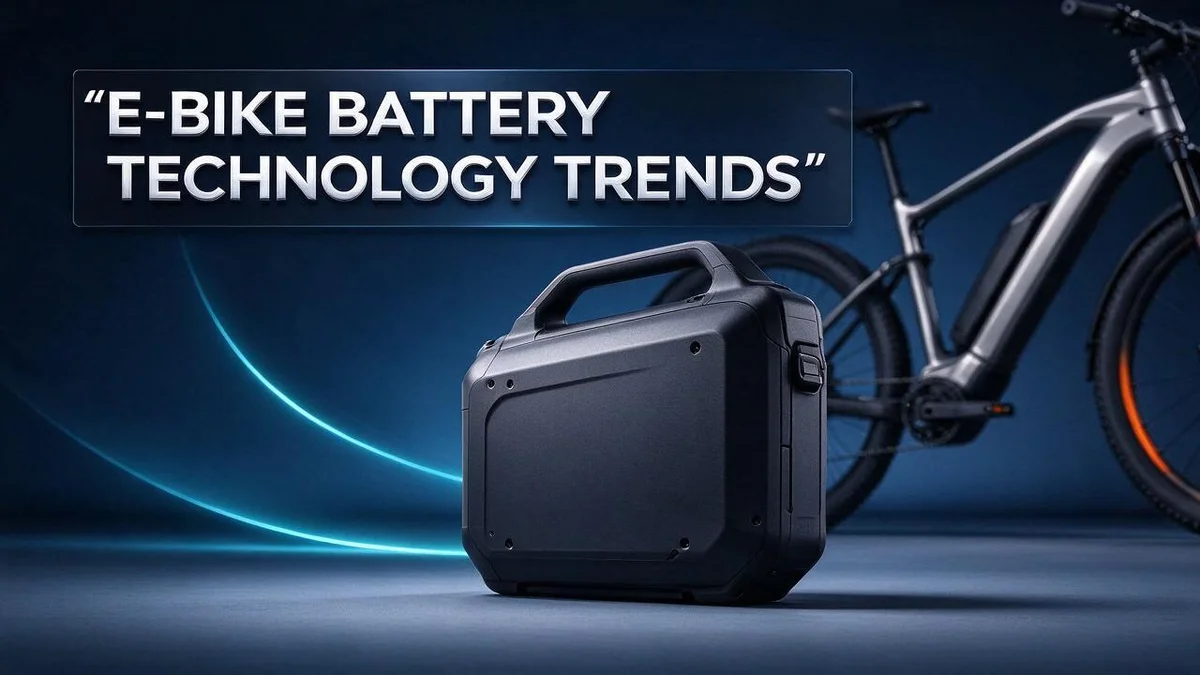
E-Bike Battery Technology Trends: What’s Changing and Why It Matters
Your ebike battery decides how far you ride, how fast you climb, and how long your bike lasts.
That small pack does a lot of work. Battery technology is changing fast, and riders feel the difference on every trip.
Today, lithium ion is the most common ebike battery. It offers a long lifespan and high energy density. It also replaced lead acid packs, which weighed more and gave less range.
Modern packs also rely on a battery management system, or BMS. This system watches the cells and keeps the pack safe and steady.
This article covers the key trends shaping ebike batteries. You will learn about higher energy density, faster charging, and smarter battery management. We also look at solid state batteries, an emerging option for the future.
You will also see why real range changes with rider weight, hills, rain, and cold. We explain the most common sign that a battery needs replacing: significantly reduced range.
Let’s start with how ebike batteries work today.
In a Nutshell
-
Lead acid gave way to lithium ion. Lithium ion packs weigh less, offer more range, and last longer than the older lead acid option.
-
Higher energy density is a major trend. Packs store more power in the same space, so riders can go farther on a single charge.
-
Faster charging is becoming more common. Shorter waits mean your bike spends more time on the road and less time at the wall.
-
Smarter battery management protects each cell. The BMS tracks heat, voltage, and charge flow to keep the pack safe and healthy.
-
Solid state batteries are an emerging option. They are not mainstream yet, but they point to the next big step in e-bike power.
-
Watch for a sharp drop in range. This is the most common sign that a battery needs replacing. Also check your local class rules, since they vary across the 51 US jurisdictions.
How E-Bike Batteries Evolved From Lead-Acid to Lithium-Ion
Early ebikes often used lead acid batteries. These packs were heavy and held less energy. Many riders felt the extra weight slowed their climbs.
Engineers then turned to lithium ion chemistry. Today, this type sits at the center of most ebike designs. It gives riders a strong balance of power and size.
Why did the switch happen? Lithium ion cells store more energy for each kilogram. A lighter pack can therefore deliver longer rides. The cells also handle many more charge cycles before they wear out.
The biggest gains fall into three areas.
Weight: Lighter packs make the bike easier to lift, carry, and steer.
Range: More stored energy means more distance on a single charge.
Lifespan: A well cared for pack can last for several years of regular use.
Lithium ion packs also work with a battery management system. This system watches voltage, temperature, and current. It protects each cell from damage.
Real range still varies. Rider weight, hills, rain, and cold weather all reduce how far you travel. Plan your routes with these factors in mind.
Lithium ion is not the final step. Engineers continue to test new ideas. Solid state designs are one promising path for future bikes.
Watch for warning signs. A sudden drop in range often means the pack needs replacing. Check charge levels and note how far you ride each time. Early signs help you avoid being stranded on the trail.
Why Lithium-Ion Dominates: Energy Density, Weight, and Lifespan
Energy density is the biggest reason lithium ion leads the market. It describes how much energy fits inside a given space. Higher energy density gives riders more distance without adding bulk to the frame. Riders notice this most on hilly routes.
Weight also plays a big role in daily riding. A lighter pack keeps the bike manageable on stairs and racks. Riders often feel the difference most when they lift the bike or walk it uphill.
Lifespan describes how long a pack keeps useful capacity. Each charge cycle slowly wears down the cells. Lithium ion packs handle many cycles when owners follow simple care habits. Cells in good condition deliver steady power for years.
The battery management system acts like a silent guard. It watches voltage and temperature for every cell. This monitoring prevents overcharging and deep discharge, which helps the pack last longer.
Practical habits protect your investment. Store the battery at room temperature when you are not riding. Avoid leaving it in a hot car for hours. Partial charges often suit daily commutes.
Aging packs often show clues before they fail. Shorter rides on a full charge are a common signal. Longer charging times can also point to wear. Check the pack after cold weather, since low temperatures can reduce output.
Future designs may bring solid state options with more power. For now, lithium ion remains the practical standard for most riders.
Knowing these traits helps you understand your ebike battery. Lithium ion balances energy, weight, and lifespan better than older options. Use this knowledge to plan longer trips with more confidence.
The Role of the Battery Management System (BMS)
The battery management system, or BMS, sits inside most modern ebike packs. Many riders never see it, yet it guides almost every charge and ride.
Think of the BMS as a manager for every cell. A pack contains many small cells wired together. Each one can drift slightly in voltage over time.
The BMS checks voltage, current, and temperature many times each second. This constant monitoring helps it spot problems early. It can then respond before damage occurs.
Cell balancing keeps the pack even. Balancing moves energy so weaker cells can catch up with stronger ones. Without it, the whole pack can lose capacity sooner.
The system also limits charging and discharging. It stops overcharging, which can stress cells. It also cuts power when a cell drops too low.
Temperature control matters too. Lithium ion cells work best within a safe range. The BMS can slow charging in cold weather or reduce output when the pack gets hot.
Smarter BMS designs support faster charging. Advanced software can adjust current based on each cell’s condition. This helps riders charge quicker without harming the pack.
The BMS also estimates state of charge. That is the percentage you see on your display. It can also track health data over months of use.
Health data gives useful warning signs. A steady decline in usable capacity often shows up here first. Checking this information helps you plan ahead for replacement.
Practical tip: Store the pack at a moderate charge level when you will not ride for a while. Avoid leaving it empty or fully charged for long periods. Keep it somewhere cool and dry.
Trend: Higher Energy Density for Longer Range
Higher energy density is one of the clearest trends in ebike batteries today. Energy density describes how much energy a pack stores for its size and weight. When density rises, the same battery can hold more power without growing bigger.
Engineers reach this goal in several ways. They refine the materials inside each cell so ions move more efficiently. They also design cells that fit together tightly, which leaves less wasted space inside the pack.
For riders, the result is simple. More stored energy means more distance on each charge. A rider can take a longer commute or a weekend trail ride without searching for a place to plug in.
Manufacturers use this gain in different ways. Some keep the pack the same size and extend the range. Others shrink the battery to save weight while keeping the range steady. Both choices give riders real benefits.
A higher rating on paper does not guarantee miles on the road, though. Check the watt hour rating, which shows total capacity. A higher number usually means more range, but your actual results still depend on conditions.
Riders can also stretch each charge with a few habits. Use lower assist levels on flat sections. Keep tires inflated to the recommended pressure, since low pressure creates extra drag. Store the pack at a moderate charge when the bike sits unused for long periods.
Looking ahead, researchers keep testing new chemistries. Solid state designs could eventually store even more energy in a smaller space. For now, steady improvements in density help every rider go farther on a single charge.
Trend: Faster Charging and Smarter Battery Management
Faster charging is one of the most useful changes in ebike batteries today. Riders want shorter waits between rides, and newer packs answer that need.
Charging speed depends on how much current the pack can accept safely. Higher current fills the pack quicker, but it also creates more heat.
Fast charging works in stages. The charger first pushes a steady current into the pack. Then it slows down as the cells near full capacity, which protects each cell from stress.
Smarter battery management makes this possible. The BMS reads data from every cell and adjusts the charge rate in real time. If one cell warms up, the system can lower the current for that group.
Charger matching matters. Always use the charger that came with the bike or one the manufacturer approves. A mismatched charger can push the pack beyond its safe limits.
Temperature plays a major role in charging speed. Cold cells accept current slowly, so many packs restrict charging in freezing weather. Warming the battery indoors before charging can help.
Software updates are another trend to watch. Some manufacturers release firmware that refines charge curves over time. The same pack may then charge more efficiently.
Keep the pack healthy with simple habits. Charge in a cool, dry room. Avoid leaving the pack at full charge or empty for long periods. Store it at a moderate level if you will not ride for weeks.
Overall, faster charging and smarter management go hand in hand. Together, they give riders quicker turnarounds and longer pack life.
Solid-State Batteries: The Emerging Future Option
Solid state batteries are the emerging future option for ebike power. Many riders hear this term often. These batteries swap the liquid electrolyte in standard lithium ion cells for a solid material.
Why this change matters. A solid electrolyte may allow engineers to store more energy in the same space. That could mean longer range without a bigger pack. Riders would notice the difference on every ride.
Possible safety gains. Researchers believe solid designs may reduce the risk of leaks. They may also handle heat in a more stable way. Better stability could support steady performance over many years.
Why they are not common yet. Solid state cells are still in testing. Engineers test these designs in labs. Making them at scale takes time and investment. Most ebikes on the road today still use lithium ion packs.
What to expect next. Early versions may appear first in premium or niche models. Change will likely come slowly. Lithium ion technology will stay practical for many years.
How to prepare today. Focus on the battery you can use right now. Check the BMS features, charging habits, and warranty terms. These factors matter more than a chemistry that is not yet available.
Looking ahead. Solid state batteries show real promise for ebikes. They could bring safer and denser power in the future. Keep watching research news as the technology matures.
Key takeaway. Solid state cells represent a promising path forward. Most riders will still choose proven lithium ion packs for now. Smart care and smart buying remain the best steps today. Stay practical about timing today.
Real-World Range: How Weight, Hills, Rain, and Cold Affect Performance
Many riders wonder how far their ebike will really go. The range number on the box is often a best case result. Real range shifts with a few key factors, and knowing them helps you plan every ride.
Rider and cargo weight matter a lot. Every extra pound makes the motor and battery work harder. A heavy load drains watt hours faster, especially when you accelerate from a stop. Pack light when you can.
Hills take a big bite out of range. Climbing needs far more power than riding on flat ground. A long, steep grade can use a large share of the stored energy. Choose a lower assist level on long climbs to save power for the top.
Rain and wet roads add hidden drag. Wet conditions can increase friction in the drivetrain. Mud and grit also make pedaling feel harder. Clean and lubricate the chain after wet rides to keep resistance low.
Cold weather reduces usable capacity. A lithium ion cell holds less charge when temperatures drop. Many riders notice a clear drop on winter mornings. Keeping the battery indoors until you ride can help it perform closer to its rated capacity.
Tire pressure and riding style also count. Soft tires increase rolling resistance, so check pressure before each trip. Frequent full throttle starts pull more current from the pack. Smooth pedaling and steady speeds often stretch each charge further.
Track your results over time. Note the distance, weather, and load after each ride. Patterns show which factors hurt your range the most. If range keeps dropping even in mild conditions, the battery may be aging. Significantly reduced range is the most common sign that a battery needs replacing.
Signs a Battery May Need Replacing and Why Regulations Vary
Your range is the first clue. Significantly reduced range is the most common sign that a battery needs replacing. Check how far your ebike travels on a full charge. Compare that distance with the range you saw when the bike was new. A steady drop over time usually points to aging cells.
Charging habits reveal problems too. The pack may take longer to fill up than it once did. It may also shut off before the display reads empty. These symptoms often mean the cells cannot hold charge well.
Physical damage needs quick action. Look for swelling, cracks, leaks, or a hot case during charging. Stop using the pack right away if you spot these signs. Damaged lithium ion cells can pose serious safety risks.
Storage conditions also matter. Keep the battery away from extreme heat and freezing cold. If the bike sits unused for months, store the pack at a moderate charge. Poor storage speeds up wear.
Weak power on hills is another warning. A healthy pack delivers steady current when you climb. If the motor feels weak, the cells may struggle to deliver power.
Error codes deserve attention. Modern packs use BMS technology to monitor each cell. When the BMS detects a fault, it may display a warning code. Check your manual to learn what each code means.
Regulations vary from place to place. Class rules differ across US jurisdictions, and there are 51 in total. Local laws may set limits on motor power, top speed, and where riders can go.
Check rules before upgrading. A higher power pack may change your bike’s legal class.
Final Thoughts
E bike battery technology moves fast, and riders gain from every step forward. Lithium ion remains the standard because it offers a long lifespan and high energy density.
It replaced lead acid packs for good reasons. Lithium ion weighs less, delivers more range, and lasts longer.
Three trends stand out right now. Higher energy density gives you more range. Faster charging saves you time. Smarter battery management protects each cell and keeps the pack healthy.
The BMS acts like a quiet guardian inside the pack. It watches voltage, temperature, and current so the battery stays safe and balanced.
Solid state batteries are the next big idea. They are still emerging, so treat them as a future option and not something to wait for.
Real life matters more than lab numbers. Your weight, the hills, rain, and cold all change how far you ride. Plan each trip with a safety margin.
Good habits extend battery life. Store the pack away from extreme heat and cold. Use the correct charger, and check the case often.
Watch for warning signs as well. Significantly reduced range is the most common clue that a replacement is due. Swelling or a hot case needs quick action.
Check your local rules too. Class rules vary across US jurisdictions, and there are 51 total to consider. Look up your own area before you ride.
Better batteries make e biking easier for everyone. Learn the basics, care for your pack, and ride with confidence. You now have the knowledge to use battery power wisely.
Frequently Asked Questions
What does energy density mean for my ebike?
Energy density measures how much power a battery stores for its weight. Higher energy density means more range without adding pounds. Modern lithium ion packs fit more energy into the same frame space, so your bike stays light and easy to handle.
How long does an ebike battery last?
Most packs serve riders for several years with good care. Lifespan depends on how many charge cycles the pack handles, how often it gets hot, and how deeply you drain it. A steady routine helps your battery last longer.
Does fast charging hurt the battery?
Fast charging works well when you need a quick top up. Using it every day can add some stress over time. Choosing a moderate charge rate for daily use helps protect long term capacity, while fast charging remains useful for busy days.
Should I charge my ebike after every ride?
You do not need to charge after every ride. Partial charges are fine for lithium ion packs. If you will not ride for several weeks, store the battery at about half charge in a cool, dry place.

Philips is the founder and lead writer at GearheadGarageFinds.com, a passionate automobile enthusiast who has spent years testing, comparing, and reviewing auto products and accessories to help fellow gearheads make smarter buying decisions. When he’s not under the hood or behind the keyboard, you’ll find him exploring the latest automotive innovations and hunting for the best garage finds on the market.