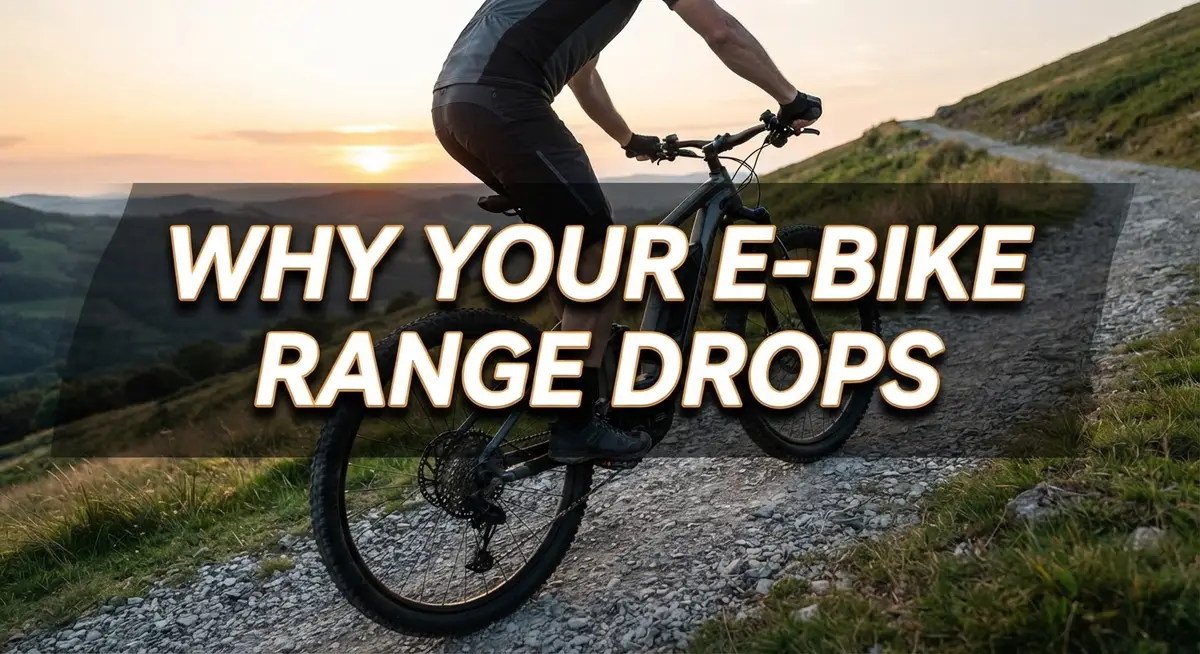
Why Your E-Bike Range Drops: Causes, Fixes, and How to Measure It
You charge your battery, head out for a ride, and the display drops faster than you expected. That feels frustrating.
Your ebike range is not a fixed number. Range depends on two things: the usable energy your battery can supply and the energy your bike uses per mile.
Many factors change that balance. Cold weather, rider weight, headwinds, hills, rough roads, low tire pressure, and high speeds all pull more power from the battery.
Heat and age also play a part. Extreme heat can permanently reduce battery capacity, and freezing temperatures can shrink your range for a while.
Many riders trust the manufacturer’s estimate and feel let down later. Those numbers rarely match real riding conditions.
This article explains why your range drops. You will learn how battery specs, motor efficiency, and assist levels shape your miles.
You will also see how voltage sag works, why it is normal to a degree, and how to track your battery health over time.
In a Nutshell
- Range has two sides. It depends on the usable energy your battery can supply and the energy your bike uses per mile.
- Ride conditions matter. Rider weight, headwinds, hills, rough terrain, and low tire pressure all raise energy use and shorten your range.
- Speed and assist level count. Faster riding and higher assist settings drain the battery sooner, so a lower setting stretches your miles.
- Temperature changes your battery. Freezing cold reduces range, and leaving the battery in the cold hurts it more. Extreme heat can permanently reduce capacity, so store the battery in a mild spot.
- Voltage sag is normal to a degree. The voltage dips under heavy load, such as a steep climb. It should recover once the load drops.
- Estimates are best case numbers. Manufacturer figures rarely account for your weight, terrain, and speed. Track your real rides over time to spot true battery wear.
How E-Bike Range Really Works: Usable Energy vs. Energy Per Mile
Think of ebike range as a simple division problem. Two numbers decide how far you can go. The first is the usable energy your battery can deliver. The second is the energy per mile your bike needs to cover each mile.
Usable energy starts with battery capacity. Capacity is measured in watt hours, and it sets the total energy stored in the pack. The number on the label is only a starting point. The battery must also send that energy to the motor, and some of it is lost along the way.
Energy per mile works in the opposite direction. Every mile costs a certain amount of power. This cost rises when the bike carries extra weight, pushes into a headwind, or climbs a steep grade. Rough surfaces also add resistance, so the motor works harder to keep you moving.
Motor efficiency and assist level shape this cost too. A powerful motor on the highest setting pulls more energy per mile. A lower setting spreads the same battery across more distance. Many riders gain several extra miles just by adjusting one setting on their display.
You can estimate your own range with a simple formula. Divide the usable watt hours by the energy your bike uses per mile. Use numbers from your own rides instead of relying only on factory claims. Record your average watt hour use over a few trips to get a realistic figure.
Your readings can also reveal changes over time. If your energy per mile climbs while your route stays the same, something has shifted. Check your tire pressure, your load, and your battery health first.
Keep a simple log of each ride. Write down the distance, the weather, the assist level, and the energy used. After several weeks, patterns will appear. You will know exactly which factors cost you the most range, and you can plan longer rides with confidence.
Rider Weight, Hills, Headwinds, and Rough Terrain
Your body weight is only part of the load. The bike, your cargo, and any bags add mass that the motor must push. Every extra pound asks the battery for more energy.
Rider weight matters most during starts and climbs. Accelerating from a stop takes a burst of power. A heavier load makes each burst cost more, so frequent stops drain the battery faster.
Hills work the same way, but they hit harder. Climbing lifts your total weight against gravity. The motor pulls hard for longer stretches, so the battery drops faster than it does on flat roads.
Going downhill helps only a little. Many ebikes recover very little energy on descents, so the gain rarely offsets a long climb.
Wind pushes against you the entire time. Air resistance grows quickly as speed rises. A headwind forces the motor to work harder to hold the same pace, and even a light breeze can shorten a long ride.
Rough terrain costs energy too. Gravel, potholes, and cobblestones make the tires flex and bounce. Some of your power turns into vibration instead of forward motion.
Tire pressure plays a big role here. Low pressure increases rolling resistance, which makes the motor pull harder. Check your pressure before each ride and match it to the surface you plan to cover.
Combined conditions add up fast. A heavier rider climbing a hill into a headwind on gravel may see range drop well below the estimate. Plan each ride with these factors in mind.
Try a lower assist level on hard sections. You can also shift gears early on climbs, which helps the motor stay efficient.
How Speed and Assist Level Affect Your Range
Your assist level works like a power dial. Each step up asks the motor for more help, and the battery supplies that extra energy. Small changes in setting can shift your range noticeably over a single ride.
Many systems scale their help with your pedal input. A steady, moderate effort on a middle setting often balances your legs and the battery well.
Speed raises the cost of every mile. A smooth pace uses less energy than repeated bursts after each stop. Hold a steady rhythm when traffic allows.
Frequent acceleration pulls heavily on the battery. Each launch demands a surge of power, so fewer stops often mean more miles.
Gears give you another useful tool. Shift down before a hill or a stop, so the motor does not strain while pulling you upward. A comfortable cadence keeps the system working in its efficient zone.
Test this on your own ebike. Ride the same loop three times. Use eco, then a middle setting, then the top setting. Record the battery percentage lost on each run. The numbers reveal your real tradeoffs.
Plan your settings around your route. Use a middle level for most of a long trip. Save the highest setting for short climbs or quick bursts to clear a busy crossing.
Check your results after a few rides. Look for patterns in speed, setting, and charge used. Your notes will guide smarter choices on future trips, and they show how your habits affect range over time.
Temperature Effects: Cold Rides, Hot Storage, and Battery Health
Cold weather slows the chemical reactions inside your battery. When that happens, the battery delivers less energy to the motor. Many riders notice this most on chilly mornings.
Cold rides can cut range fast. At freezing temperatures, the usable capacity may drop noticeably. The effect often feels worse than the numbers suggest.
Keep the battery warm before you ride. Bring it indoors during winter trips. A warm battery gives you more power from the first pedal stroke.
Cold weather also makes riding feel harder. Wind chill and bulky clothing add drag. Your motor then works harder to hold the same speed.
Heat creates a different problem. Hot storage is just as harmful over time. A battery left in a hot car or a sunny shed can lose capacity for good.
Heat causes lasting damage. Extreme heat permanently reduces battery capacity. The battery may seem fine at first, but its range shrinks over months.
Store your battery in a cool, dry place. Choose a room away from direct sun. Avoid metal sheds that swing between hot and cold.
Charging right after a hot ride also adds stress. Let the battery cool down first. Then plug it in.
Long term storage needs a plan too. Many guides suggest storing the battery at about half charge. Avoid storing it full or empty.
Check the battery every month or two. Top it up if the charge drops too low. A deep discharge can harm the cells.
Keep your range log going through every season. A gradual drop after a year may be normal aging. A sudden drop deserves a closer look, so check connections and charging habits.
Temperature is one factor you can control. Small habits protect your range all year. Start with warm storage and cool charging.
Tire Pressure and Other Overlooked Drains on Range
Tire pressure is one of the most overlooked drains on range. Many riders check their tires only when they look flat. Small drops in pressure can still cost you miles.
Always inflate your tires to the pressure printed on the sidewall. Use a simple gauge before each ride. Pressure also drops slowly over time, so a monthly check helps you stay on track.
Tire width and tread matter too. Wide, knobby tires roll with more resistance than slim, smooth ones. If you ride mostly on pavement, a road focused tire can help you keep more energy.
Brakes can quietly steal power. If the pads rub the rim or disc, the motor must work harder to hold your speed. Adjust the brakes so the wheels spin freely when you are not braking.
Your chain also deserves attention. A dirty, dry, or stretched chain adds friction with every pedal stroke. Clean and lubricate it regularly, and replace it when it wears out.
Voltage sag is another factor. When you ask for a lot of power, the battery voltage dips for a moment.
This dip is normal to a degree. The voltage should recover once the load drops. If it stays low, the battery may need a closer look.
Finally, check for wobbly wheels and loose axles. These issues make the bike drag and waste energy. A quick inspection every few weeks keeps your bike moving smoothly.
Small fixes add up over time. Combine good tire care with smart maintenance, and you will notice more miles from each charge. Track your results after each change so you can see what works best.
Voltage Sag vs. Real Battery Capacity Loss
Voltage sag is a short term dip. Hard acceleration or a steep climb pulls a heavy current from the cells. The voltage falls for a few seconds. When the load eases, the voltage should climb back up. Sag is temporary, so it does not mean the battery is dying.
Real capacity loss is permanent. Over months and years, the cells hold less energy. Each full charge delivers fewer miles than it once did. Heat, deep discharges, and age all speed up this wear. Rest will not restore the lost capacity.
Here is a simple way to tell them apart. Let the bike rest for ten to fifteen minutes after a ride. Then check the voltage on the display or app. If it returns to normal, sag caused the drop. If a full charge still gives short range on flat ground, the battery has likely lost capacity.
Pick one flat route you know well. Ride it at the same assist level and speed each time. Note the miles left after a full charge. Repeat this test every month or two. A steady decline over several months points to capacity loss rather than one bad ride.
Low charge and cold weather make sag worse. A battery at twenty percent dips more under load than a full one. So a weak reading on a cold day may not mean failure.
How to Estimate and Track Your Real-World Range
Manufacturer range claims often assume ideal conditions. Your real range depends on your own habits. This guide shows you how to estimate and track it.
Start with two numbers. First, find your battery capacity in watt hours. Second, learn how much energy your bike uses per mile.
Battery capacity usually appears on the battery label or in the manual. Divide it by your energy use per mile to get a rough estimate.
Energy use per mile is the key number. Many display screens show it directly. Otherwise, divide the watt hours used by the miles you ride.
Motor assist level matters a lot. Higher assist uses more energy, so lower settings stretch your range further.
Your load also changes the math. Rider weight, cargo, and extra gear all add work for the motor. Track rides with and without cargo to see the difference.
Speed plays a big role. Riding faster means more air resistance, and that drains the battery faster than many riders expect.
Terrain counts as well. Hills, gravel, and headwinds raise energy use per mile. Flat routes give you the cleanest baseline.
Keep a simple log. Write down the date, route length, assist level, weather, and battery percentage at start and finish.
Use the same route for several rides. Repeat rides show patterns, so you can spot real changes instead of random swings.
Compare your logged numbers over several weeks. If your estimate keeps falling on similar rides, your battery may be aging.
Test before you trust. Ride a known loop at one assist level, then record results. Repeat the test each month.
Common Range Mistakes to Avoid
Many riders forget that cold weather cuts range too. Leaving the battery in a freezing garage or car can lower its output. Bring it indoors and let it warm up before you ride.
Frequent stops and starts waste energy. Every restart needs a burst of power from the battery. Plan a steady pace and watch the traffic ahead so you can coast more often.
Headwinds push back harder than most riders think. Wind resistance grows quickly as speed rises. Check the forecast and choose a route with natural shelter when possible.
Pedaling very lightly while the assist stays high is another common error. The motor works hard while your legs do very little. Match your pedaling effort to the assist level so the system shares the work.
Riding in cold weather needs extra planning. Batteries deliver less energy when temperatures drop. Expect shorter trips on chilly mornings and plan a route with a charging point nearby.
Should you replace a battery that loses range after one year? Opinions vary, and no single answer fits every rider. Check the capacity first, then decide based on how much range you still need.
Small habits add up over time. Avoiding these mistakes helps your bike go farther on every charge. Start with the cold storage habit, since it is the easiest one to fix.
Final Thoughts
A drop in e-bike range rarely has just one cause. Usually, several small factors stack up on the same ride.
Range comes down to two things: the usable energy in your battery and the energy your bike uses per mile. Once you see this, the mystery fades.
Start with the factors you control. Lower your assist level, ease off your speed, and keep your tires at the right pressure. These habits cost nothing and often add noticeable miles.
Next, plan around the factors you cannot change. Hills, headwinds, rough roads, and extra cargo all raise energy use. Cold weather also shrinks what the battery can deliver.
Protect the battery itself. Extreme heat can cause permanent capacity loss, so avoid leaving it in a hot car. Store it indoors, away from freezing air and direct sun.
Remember that a brief voltage dip under load is normal. Real capacity loss shows up slowly, over months and years. A simple ride log helps you tell the difference.
Do not treat the manufacturer estimate as a promise. Think of it as a best case number, then build your own from your logged rides.
If your battery loses range after a year, check your log first. Then decide whether to keep it, replace it, or upgrade the bike. The right choice depends on your routes and your needs.
Small, steady habits keep your e-bike going farther. Pick one or two changes this week, and watch your numbers improve.
Frequently Asked Questions
Does extreme heat hurt my battery?
Yes, it can. Very high heat speeds up wear inside the battery. Repeated exposure can permanently reduce its capacity. Keep the battery out of hot cars and direct sunlight when possible.
Does tire pressure change how far I can ride?
Yes. Low tire pressure creates more rolling resistance. The motor works harder, so the battery drains faster. Check the pressure before each ride and match the number printed on the tire sidewall.
How does rider weight affect range?
Heavier loads need more energy to move. A heavier rider or extra cargo uses more power on every climb and every start. The effect is strongest on steep routes.
Why does my range drop on hills?
Climbing demands high motor output. The battery releases energy faster during long climbs. Choosing a lower assist level on steep sections or taking flatter routes can save power.
Should I store my battery in a cold place?
No. Leaving the battery in freezing conditions hurts its ability to deliver power. Store it indoors at room temperature. Charge it to a moderate level before long storage periods.

Philips is the founder and lead writer at GearheadGarageFinds.com, a passionate automobile enthusiast who has spent years testing, comparing, and reviewing auto products and accessories to help fellow gearheads make smarter buying decisions. When he’s not under the hood or behind the keyboard, you’ll find him exploring the latest automotive innovations and hunting for the best garage finds on the market.