Swollen E-Bike Battery: What to Do and How to Stay Safe
A swollen ebike battery is a warning sign you should never ignore. The pack may look puffy, bulge, or feel tight inside its case.
This problem is a fire safety concern. Heat, dirt, and poor charging habits can all push a battery toward trouble.
Many riders ask the same question. Is my battery still safe after bumpy roads? The sources give no firm answer, so caution matters.
This guide explains what to do when you spot swelling. You will learn the common risk factors, such as temperatures below freezing or above 60°C. You will also see how dirt and dust can clog cooling vents.
Next, you will find simple habits that help prevent problems. These include waiting at least 30 minutes after a ride before charging. You will also learn to drain the battery once a month and clean the terminals and vents.
Let’s get started and keep you and your home safe.
In a Nutshell
-
Act fast: If you see swelling, stop riding and charging the battery right away. Place it on a hard surface outdoors, away from anything that burns.
-
Watch the temperature: Freezing cold and heat above 60°C raise the risk. Store and use your battery in moderate conditions.
-
Let it cool first: Wait at least 30 minutes after a ride before you plug in the charger. Charging a warm battery is a common mistake.
-
Mind the charge level and calibration: One source says to avoid charging when the battery still sits at 75 to 90%. Drain it at least once a month to calibrate it.
-
Keep it clean: Wipe the terminals and cooling vents often. Dirt and dust block airflow and can cause overheating.
-
Check after rough rides: Riders ask if bumpy roads damage a battery. The sources give no clear answer, so inspect it closely after hard rides.
What a Swollen E-Bike Battery Is and Why It’s a Fire-Safety Concern
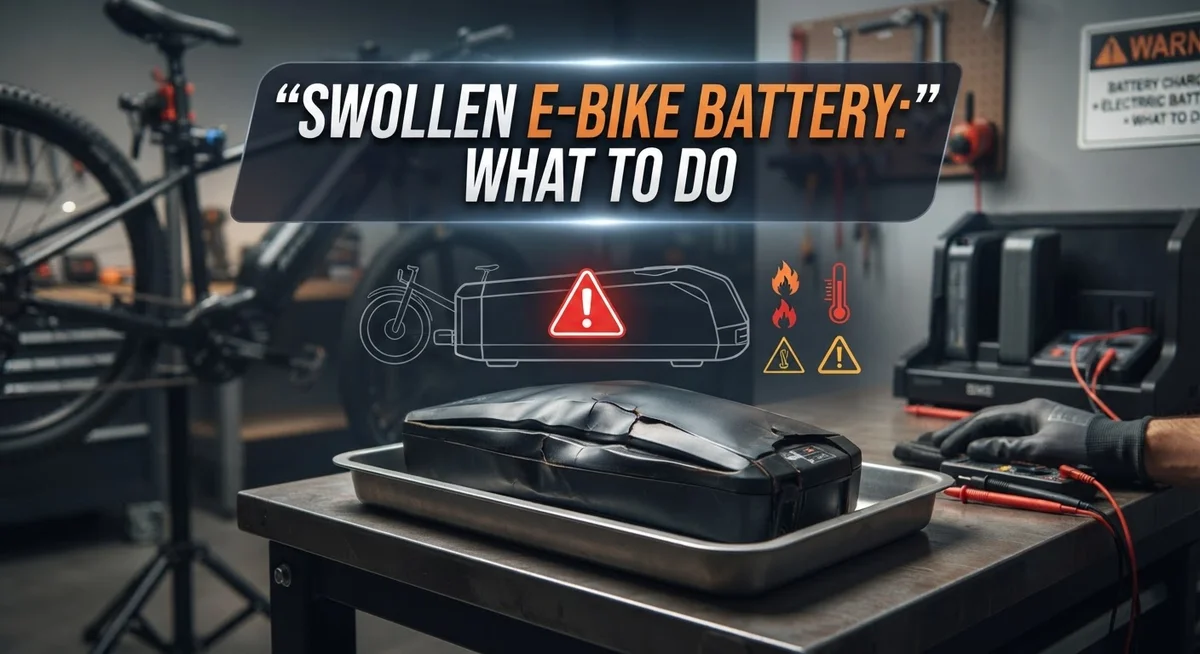
A swollen ebike battery looks puffed up, bulged, or misshapen. The outer case may feel tight, or the battery may no longer sit flat in its mount. Some packs also show cracks or leaks around the seams.
Swelling happens because of gas inside the cells. Most ebike batteries use lithium-ion cells. Over time, small chemical reactions inside these cells can produce gas. When heat or damage speeds up this process, the gas builds up and pushes the cell walls outward. The whole pack then bulges.
The main concern is fire safety. Swelling usually means the cells have been stressed, overheated, or physically damaged. A damaged cell can heat up on its own, and that heat can spread to nearby cells. In serious cases, the battery may smoke, hiss, or catch fire. Ebike batteries store a large amount of energy, so a fire can grow fast.
Heat and dirt play a big role. Freezing cold and very high temperatures both put stress on the cells. Dust and grime can also block cooling vents, so heat stays trapped inside the pack. Sources frame good care as prevention, which means you can lower the risk before swelling starts.
Swelling does not always look dramatic at first. Sometimes the change is subtle. The battery may fit less snugly, or the charger may feel warmer than usual. Small changes matter, so inspect the battery often. Catching a problem early gives you more time to act safely.
Home storage makes the risk more serious. Many riders charge batteries indoors, in garages, or near stored belongings. A fire in these spaces can threaten people, pets, and property. Knowing what swelling means helps you respond calmly and quickly.
Treat any swelling as a safety issue. You cannot always tell how far the damage goes just by looking. Never assume a swollen battery is still fine. Handle it with care, and avoid any action that could increase heat or pressure.
How to Spot the Warning Signs of a Swelling Battery
Spotting a problem early can prevent serious harm. Start by looking closely at the battery case. A healthy pack has straight edges and sits flat in its mount.
Check for visible bulges or bumps along the sides or top. If the case looks rounded or misshapen, treat it as a serious warning. Gaps between the casing and the lid also matter. Press gently on a flat side and notice whether it gives or feels uneven.
Your senses can also reveal trouble. Feel the battery after a ride or during charging. A pack that feels warm or hot when it should be cool deserves immediate attention. Listen for hissing or popping sounds. Sniff the area too. A sharp, sweet, or burning smell is a clear red flag.
Performance changes often appear before the outside looks different. Watch for a sudden drop in range. Notice if the bike shuts off without warning or if the charger stops early. A battery that no longer slides into the frame easily may have changed shape.
Compare your pack with how it looked when new. Take photos every few months to track small changes. Many owners miss gradual swelling because they see the battery every day. Fresh photos make differences much easier to spot.
Inspect the storage area as well. Look at the spot around the charger and mount for stains, residue, or melted plastic. Check the battery each time you bring it indoors or move it. Any of these signs means you should stop using the battery and move on to the next steps in this guide.
What to Do Right Away if Your E-Bike Battery Is Swollen
If you notice a swollen ebike battery, your first steps matter a lot. Move the battery to a safe spot right away. Pick a dry, open area away from doors, windows, and anything that burns.
Do not press, poke, or bend the battery. Pressure can break the cells and speed up the damage. Also avoid trying to open the case yourself.
Watch for signs of danger as you move it. Hissing, popping, a sharp chemical smell, or smoke means the situation is getting worse. Step back and call your local emergency number.
Keep the battery on a surface that will not burn, such as concrete or tile. Stay clear of carpets, bedding, paper, and dry leaves. Never place it inside a closed cabinet or a room with no airflow.
Next, contact the seller or the manufacturer. They can explain your warranty options and tell you how to handle the pack. A professional repair shop can also check the battery safely.
Do not throw a swollen battery in the household trash. Damaged lithium batteries need special handling. Many cities run hazardous waste drop-offs or battery recycling programs. Ask your local waste office for the right location.
Finally, keep notes. Write down when you first saw the swelling, what you were doing, and where the battery was stored. These details help a technician or service team understand what went wrong.
Ask for help before you handle the pack again. Even if the battery looks fine after a few hours, the cells may still be unstable. Wait for expert advice before you ride or charge it again.
Temperature Extremes: Why Freezing and Above 60°C Matter
Temperature plays a huge role in battery safety. Extreme cold and extreme heat both stress the cells inside an ebike pack. Sources flag freezing conditions and temperatures above 60°C as key risk factors.
Freezing weather slows the chemical reactions inside lithium ion cells. A cold pack delivers less power and can become more fragile. Never force a frozen battery to charge or work hard.
Heat is often the bigger danger. Temperatures above 60°C speed up unwanted reactions inside the cells. These reactions can produce gas, and that gas causes the pack to puff up.
Storage location matters a lot. A bike parked in summer sun can heat up fast. A shed or garage in winter can drop well below freezing. Choose a spot that stays mild all year.
Heat also builds up during use. Riding hard on a hot afternoon or charging right after a long ride adds extra stress. Give the battery time to settle before you plug it in.
Bring the pack inside when temperatures drop toward freezing. Let it warm up slowly at room temperature. Do not use a hair dryer or heater to speed things up. Direct heat can cause serious damage.
Check the manufacturer’s storage range in the owner manual. Exact limits vary by model, so the manual gives the most reliable guidance. If the pack has faced extreme temperatures, watch it closely for signs of swelling. Small habits like these make a big difference over time.
Charging Habits That Help Prevent Overheating and Swelling
Good charging habits can lower the risk of overheating and swelling. Small daily choices make a real difference. Most damage builds up slowly, so steady care matters more than quick fixes.
Let the battery cool first. Wait at least 30 minutes after a ride before you plug in the charger. A hot pack charges under more stress, and that heat can push the cells past safe limits.
Watch the charge level. One source suggests avoiding a charge that starts when the battery sits between 75 and 90 percent. Check the battery level before each charge cycle.
Use the correct charger. A charger made for your pack keeps voltage and current in the right range. Mismatched chargers can overheat the cells, so check the label before every use.
Stay nearby while charging. Check the pack during the first charge after a long break. Unplug it right away if you notice heat, a strange smell, or hissing sounds.
Drain the battery once a month. A full drain helps the battery management system recalibrate. Recharge it slowly afterward so the cells stay balanced.
Keep terminals and vents clean. Dust and grime can block airflow and trap heat. Wipe the charging port and cooling vents with a dry cloth every few weeks.
Build a simple routine. Charge after each ride, not before. Write down your habits so you can spot changes quickly.
Watch for changes over time. If the battery charges faster, runs hot, or stops holding its charge, pause charging and inspect the pack. Early action keeps your ride safer and your battery healthier.
Keeping Terminals and Cooling Vents Clean from Dirt and Dust
Dirt and dust may seem harmless, but they can cause real problems for your ebike battery. Over time, grime builds up around the pack and blocks airflow. Trapped heat then has nowhere to go.
Cooling vents work like small air paths. They pull heat away from the cells during rides. When dust clogs these openings, the battery can overheat even during normal use.
Check the vents after every few rides. Look for dust, leaves, or mud packed into the openings. A quick look can catch problems early. Make this check part of your routine.
Clean the vents gently with a soft brush or dry cloth. Turn off the ebike and remove the battery first if possible. This keeps you safe while you work.
Avoid spraying water or liquids into the vents. Moisture can cause short circuits and corrosion. Let the pack dry completely before you reconnect it or charge it.
Keep the battery terminals clean, too. Dirt on the metal contacts can create resistance and extra heat. Wipe them with a dry cloth. If you see white or green buildup, ask the manufacturer for guidance instead.
Clean more often after rides on muddy, sandy, or dusty roads. These conditions push extra debris into the pack. A quick wipe helps the battery stay cool.
Store the ebike in a dry, clean spot between rides. A covered shelf or garage corner keeps dust away. Clean storage lowers buildup over time.
Cleaning is prevention, not a repair. If the case looks puffy, stop using the battery and follow the safety steps above. Keep it away from heat sources while you wait for help.
Battery Care Routine: Monthly Draining, Cool-Down Times, and Safe Storage
A simple routine keeps your battery in good shape. Most of the work comes from small, regular habits that you can repeat without much effort.
Mark your drain day on the calendar. Pick the same day each month so you never forget. Recharge the pack soon after the drain so it does not sit empty for long.
Plan your charge times with a timer. Set a reminder on your phone so you do not rush to plug in right after a ride. This keeps the cool down step part of your normal habit.
Check the pack before every longer trip. Look for cracks, bulges, or a case that feels loose or warm. Stop riding if you notice heat, strange smells, or hissing sounds.
Inspect the battery after bumpy rides. Riders often ask whether rough roads harm the pack. The sources do not give a clear answer, so look closely at the case and connectors after rough trips.
Check the charge level during long storage. Long periods of rest need extra attention. Look at the charge every few weeks and top it up when it drops low.
Keep a simple care log. Write down the date of each drain, each cleaning session, and any unusual behavior. A log shows patterns over time. It also helps a technician understand your battery history if you ever need help.
Attach the checklist where you will see it. Post the routine on your garage wall or save it on your phone. Small steps done on time protect your battery and your safety.
Consistent care works better than occasional fixes. A steady routine keeps risks low and gives you more peace of mind on every ride.
Common Mistakes That Put Your E-Bike Battery at Risk
Many riders damage their batteries without knowing it. Small habits add up over time, so awareness matters.
Leaving the battery in extreme heat is one of the biggest risks. Temperatures above 60°C can harm the cells inside the pack. A car trunk on a summer day can reach that level quickly.
Storing the bike in freezing conditions also causes trouble. Cold can stress the cells and lower performance. Bring the battery indoors when the weather drops below freezing.
Charging a frozen battery right away is another common error. The cells need time to reach room temperature first. Let the pack warm up indoors before you plug it in.
Ignoring a warm or noisy pack puts you at risk. Some riders keep pedaling when the case feels hot or makes hissing or popping sounds. Stop riding right away and let the bike rest in a safe spot.
Dismissing a small bulge as harmless is a serious mistake. Swelling often means gas is building up inside the cells. This can lead to overheating or fire, so do not ignore it.
Keeping the battery near flammable items raises the danger if something goes wrong. Garages full of paper, fuel, or fabric can make a small fault much worse. Choose a clear, open area with a hard floor for storage and charging.
Avoiding these habits gives your battery a safer life. Small changes today can prevent big problems later. When in doubt, pause use and ask an expert to take a look.
Final Thoughts
A swollen ebike battery is a clear warning sign. Treat it as a fire safety issue and act right away.
Stop riding the bike straight away. Do not charge the pack, and do not press on the bulge. Move the battery away from anything that can burn.
Place it on a hard, non flammable surface, outdoors if you can do so safely. Keep children and pets away from it.
Then call the battery maker or a qualified technician for advice. Never throw a swollen battery in the household trash. Take it to a proper battery recycling or hazardous waste point.
Prevention is the best plan. Good habits lower your risk a lot.
Here are the key points to remember:
Let the battery cool for at least 30 minutes before you charge it.
Avoid freezing weather and heat above 60°C. Store the pack in a mild, dry spot.
Clean the terminals and cooling vents often, so dirt and dust cannot trap heat.
Drain the battery once a month to help calibration.
Check the case for bulges, cracks, or warmth before longer trips.
Riders often wonder if rough roads harm the pack. The research gives no firm answer. So inspect the battery after bumpy rides, just to be safe.
Your battery powers every ride, so it deserves regular attention. A few minutes of care each week protect your bike, your home, and your safety.
If you feel unsure about your pack, stop using it. A professional check is always safer than guessing.
Spot the problem early, act fast, and ride with confidence. Stay safe out there. Happy riding!
Frequently Asked Questions
Can I keep riding with a swollen ebike battery?
No, stop riding right away. A swollen pack can leak, overheat, or fail under load. Park the bike somewhere safe and skip any more trips until a qualified person checks the battery.
Can I fix a swollen battery at home?
No, you should not try to fix it yourself. Opening or repairing the pack can cause a short circuit or fire. Leave the battery sealed and contact the battery maker or a qualified technician for clear next steps.
Is it safe to throw a swollen battery in the household bin?
Never put it in regular rubbish. Lithium batteries need special handling because they can catch fire in waste trucks or bins. Ask your local recycling center or waste office how to dispose of it safely.
What should I do if the battery feels hot while charging?
Unplug the charger right away. Move the battery to a hard, non flammable surface and keep people and pets away from it. If you notice smoke, heat, or more swelling, call emergency services or a technician for help.

Philips is the founder and lead writer at GearheadGarageFinds.com, a passionate automobile enthusiast who has spent years testing, comparing, and reviewing auto products and accessories to help fellow gearheads make smarter buying decisions. When he’s not under the hood or behind the keyboard, you’ll find him exploring the latest automotive innovations and hunting for the best garage finds on the market.