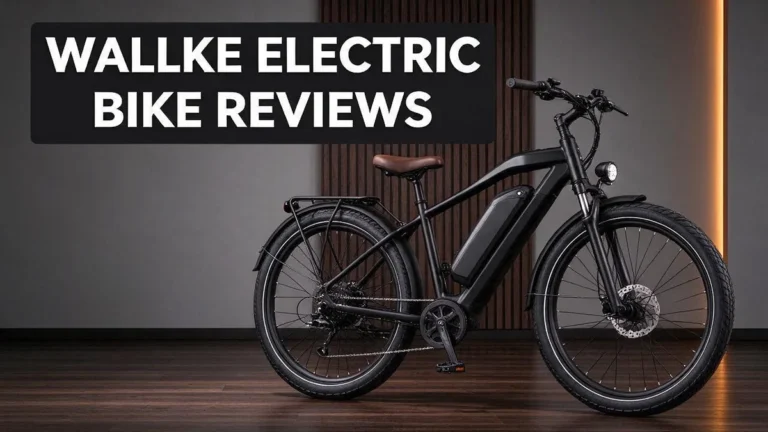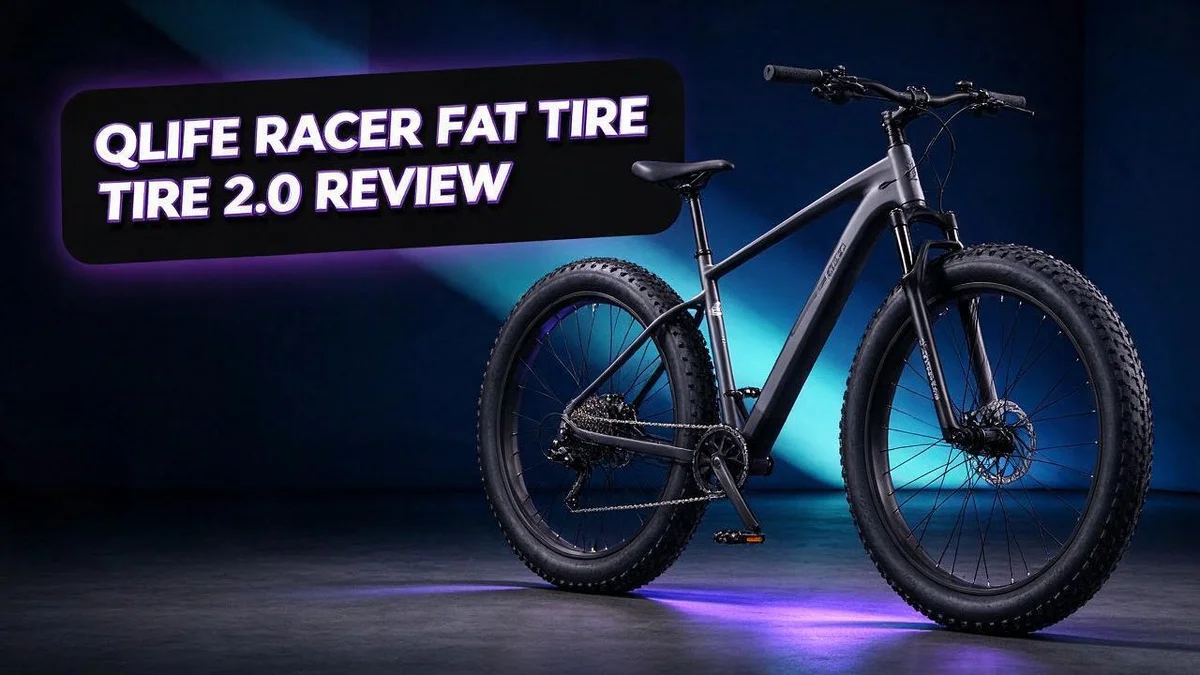
Qlife Racer Fat Tire 2.0 Review: Specs, Motor Power, Range and Verdict
Looking for an electric bike that can handle rough trails and city streets? The Qlife Racer Fat Tire 2.0 aims to do both. Many riders want to know if it lives up to the hype.
Its 20 inch by 4.0 inch fat tires handle loose dirt and gravel with ease. A removable 48V 15.6Ah battery makes charging simple at home or at work. Listings promise a top speed of 28 mph and up to 65 miles of range.
One reviewer said the tires “ripped through” rough terrain. Shoppers often compare this model with Heybike and YVY Electric Bike. Still, the motor specs differ between listings, so we dig into the details below.
Ready to see if this ride fits your style? Let’s look at the real strengths and the drawbacks you should know.
In a Nutshell
-
Speed and range: This electric bike tops out at 28 mph. The listing claims it can travel up to 65 miles on a single charge, which suits riders who want to cover real distance.
-
Removable power: The 48V 15.6Ah battery comes off the frame, so you can charge it indoors. This makes daily charging simple for riders who live in apartments or small spaces.
-
Mixed motor details: The listings disagree on motor power. One shows a 750W brushless motor, while another shows a peak of 1800W. Check the exact model with the seller before you buy.
-
Not for everyone: The listing says this bike is not a good match for casual riders or leisurely trips on flat ground. It fits people who want a more intense ride.
-
Delivery experience: The bike arrives well packaged and is ready to ride within an hour. The battery may show up at half charge, so charge it fully before your first trip.
-
Support response: One buyer reported a missing rack at delivery. The customer service team replied quickly, which shows they take post-sale issues seriously.
Motor and Power Performance

- 【750W Rated / 1800W Peak Motor & Thrilling Power】Ride with thrill and total confidence! The Racer Fat Tire...
- 【All-Terrain Dominance with Full Suspension & 20" x 4.0" Fat Tires】Conquer any landscape effortlessly...
Last update on 2026-11-27 / Affiliate links / Images from Amazon Product Advertising API
Power sits at the center of this electric bike. Riders want a motor that pulls hard on steep climbs and rough ground. The Qlife Racer Fat Tire 2.0 aims to deliver that kind of push.
Strong power and wide tires work as a team. The motor provides the pull, while the wide tires grip loose surfaces. Together, they help the bike keep moving when the trail gets tough.
Think about where you will ride most. Hills, sand, and gravel demand more torque than flat paved roads. A motor that feels strong on a flat street may struggle on a long incline.
Voltage plays a role too. A 48V system generally delivers more power to the motor than lower voltage systems. This helps the bike hold speed when the road tilts upward.
Watts tell only part of the story. Peak ratings show the most power a motor can produce for a short burst. Continuous ratings show what the motor can sustain over time, which matters more on long climbs.
Sustained climbs test a motor in a different way. A bike might feel quick for the first few minutes, then slow as the battery drains under load. Heavier riders and steep grades can speed up that drain.
Charge levels affect power too. Many electric bikes deliver less punch as the battery gets low. Start each ride with a full charge when you plan a long hill route.
Look for real world feedback before you decide. Reviewers often describe how the bike handles hills, mud, and sand. Those stories give a clearer picture than a single number on a listing.
Test ride the bike if possible. Try a steep hill near your home. Notice how the motor responds when you start from a stop. This quick check tells you more than any chart.
Think about your terrain, your riding style, and your power goals. Matching those needs to the motor leads to a better ride. Power should serve your adventures, not limit them.
Fat Tires and Terrain Handling
Fat tires change how a bike meets the ground. Wider rubber spreads your weight over more surface area. This helps the bike float over soft sand and snow instead of sinking in.
Tire pressure plays a big role in this performance. Lower pressure creates a bigger contact patch for extra grip. Higher pressure rolls faster on hard pavement, but it bounces more on rough ground.
Fat tires also soak up small bumps. Roots, rocks, and cracks feel softer under your hands and seat. This cushioning can ease fatigue on long rides over uneven paths.
Wide tires do add some rolling resistance. On smooth asphalt, the bike may need a bit more effort to keep up speed.
Weight matters too. Heavier fat tire bikes take more effort to lift or steer over obstacles.
Tread pattern decides how the tire behaves in mud. Deep knobs clear debris, while smoother patterns work better on packed dirt. Check the tread before a muddy ride, because a worn tire loses grip fast on wet slopes.
Puncture risk is another point to consider. Wider tires can resist thorns better, but sharp rocks still cause flats, so carry a repair kit.
Braking on loose surfaces needs extra care. Fat tires can slide when you brake hard on gravel, so brake gently and early.
Cornering works differently too. Lean the bike slowly on wet leaves or grass to keep the tires planted.
Think about the trail type before you ride. Steep, rocky climbs need steady pedaling, while open dirt roads allow a relaxed pace.
Carrying a small pump helps you adjust pressure on the go. Many trail riders air down before rough sections and air up before returning to pavement.
Good tire care keeps performance steady. Check pressure before every ride and inspect the sidewalls for cuts.
Rain or mud can change grip fast, so slow down early. A careful rider gets the most confidence from these tires.
Battery Life and Real-World Range
Battery life sets the real limit on every ride. Most riders want to know how far they can go on one charge. Let’s look at what the numbers really mean.
The listing claims up to 65 miles per charge. Think of that figure as a best case number. Manufacturers often test under ideal conditions. Real rides rarely match it on every trip.
The battery holds 48V and 15.6Ah. That works out to roughly 749 watt hours of stored energy. More stored energy usually means more distance, so this pack has plenty to offer.
Several factors shape your actual range. Rider weight plays a big part. A heavier rider asks the battery to work harder on every hill. Cargo adds load too. Your fitness level and riding style count as well.
Pedal assist level matters a lot. Higher settings pull more power from the battery. Riding at a lower level stretches each charge much further. Test a short loop first.
Terrain changes the math as well. Hills drain the pack fast. Headwinds and soft surfaces also demand extra energy. Smooth, flat paths usually give the longest distance.
Temperature affects battery performance too. Cold weather reduces usable capacity, so expect less range on chilly mornings. Keep the battery warm before a winter ride when you can.
Your arrival charge matters. The battery arrived at half charge. Give it a full charge before your first ride. A complete cycle helps you learn the true range of your setup.
Charging habits protect the battery over time. Store the pack at a moderate charge if you leave it unused for weeks. Avoid leaving it fully drained for long periods. Keep the pack out of extreme heat while charging.
Keep a simple log for the first month. Note the starting charge, the miles you ride, and the level left at the end. After three or four rides, you will know your own range.
Your personal range often tells a better story than any listing. Use your own notes to plan longer trips with confidence.
Top 3 Alternatives
If you want a fat tire ride with extra power, these three electric bikes are strong choices. Each one offers wide tires, a helpful motor, and a comfortable seat. Take a look at how they stack up.
Lectric XP 3.0

- 【Excellent Motor Performance】This electric bike is equipped with a high-performance 750W rated motor(1500W...
- 【Upgraded Removable Battery】 Powered by a 48V 15Ah removable battery, the ebike can be fully charged in...
Last update on 2026-11-27 / Affiliate links / Images from Amazon Product Advertising API
The Lectric XP 3.0 is a foldable electric bike that fits small spaces. It has a 750-watt motor for quick starts and steady climbs.
Its wide tires handle gravel, sand, and bumpy paths well. It works nicely for commuters who need to store the bike at home or in a car trunk.
Aventon Pace 500

- Power & Compatibility- 48V 14Ah (672Wh) high-capacity battery pack with 30A max constant discharge. Perfectly...
- Premium Cells & Long Life- Built with high-quality A-Grade 3500mAh lithium-ion cells. Engineered for...
Last update on 2026-11-27 / Affiliate links / Images from Amazon Product Advertising API
The Aventon Pace 500 brings a sporty look and a smooth ride. Its motor gives a gentle boost on hills, so you arrive feeling fresh.
The wide tires add grip on wet roads. This bike suits riders who want comfort on longer trips.
Rad Power RadRover

- CUSTOMIZED MODEL: In order to ensure that your purchase matches your bike, we will contact you after you place...
- HIGH QUALITY MATERIAL: Rad Power electric bike display is made of premium ABS+LCD, which is sturdy and wear...
Last update on 2026-11-27 / Affiliate links / Images from Amazon Product Advertising API
The Rad Power RadRover is a rugged cruiser built for adventure. It pairs a powerful motor with a large battery for long days out.
Its thick tires help you climb loose dirt and rough trails. Many riders choose it for camping, errands, or weekend exploring.
Pick the bike that fits your daily routine. Each option gives you a fun and confident fat tire experience.
Delivery, Setup and Customer Support
Delivery day sets the tone for your first experience with the Qlife Racer Fat Tire 2.0. Most buyers say the box arrives well packaged, and the bike protects itself nicely during transit.
Good packaging matters a lot. Heavy electric bikes can get scratched or bent if they are not secured. This bike arrives with padding around the key parts, so you can open the box with confidence.
Setup goes faster than many people expect. Several owners report that the bike was up and running within an hour. Keep your tools close and follow the included steps one at a time.
Start by checking every part against the packing list. Look at the handlebars, the seat post, the pedals, and the fenders. Make sure nothing is loose before you touch the controls.
Handlebar alignment matters more than you might think. A crooked bar pulls the steering to one side. Line the front wheel up with the frame before you tighten the stem.
Tighten the bolts carefully. Use the right tools for each fastener. Overtightened bolts can strip threads, while loose bolts can shake free on rough trails.
Next, check the rack. One buyer reported that the rack was missing at delivery. Before you start assembly, look inside the box and around the packaging so you know what arrived.
Take photos of the box, the parts, and any damage. Clear photos make it much easier to explain a problem. They also speed up the support process.
Customer support responded quickly in at least one case. A buyer who reported a missing rack received a prompt reply. That kind of fast answer gives you peace of mind during setup.
Reach out early. Do not wait until you are stuck halfway through assembly. Send a short message with your order details, a clear description, and your photos.
Ask for help if a step feels unclear. Support staff can often walk you through a tricky part over message. A short conversation can save a lot of time.
Before your first ride, do a quick safety check. Test the brakes, spin each wheel, and confirm the display powers on. Then take a short test loop in a quiet area.
Setup done well makes every later ride feel easier. A calm start helps you learn the controls and the feel of the bike. Take your time, and enjoy the new ride.
Pros and Cons
Pros
- Strong motor power gives a lot of push when you climb hills.
- The fat tires ripped through rough terrain, one reviewer says.
- The removable battery makes charging simple indoors.
- The bold tire look turns heads on the trail.
Cons
- The listing says it is not built for casual riders.
- Leisurely rides on flat ground are not its strong point.
- Motor power is listed differently across sources, so confirm the exact model before you buy.
Who Should Buy It
This bike suits riders who want power on rough ground. Thrill seekers often love a bike that handles dirt paths, gravel roads, and grassy trails.
Adventure lovers who explore unmarked routes will find plenty to enjoy. Each new trail brings a fresh challenge and a sense of discovery.
Commuters on bumpy streets may also benefit. Riders who cross potholed roads or uneven paths can enjoy the cushion that fat tires provide.
Some riders should look elsewhere. People who plan to lift the bike may find its size hard to handle. Riders who want a simple cruise on smooth pavement may feel the bike is too much.
Shoppers who compare options should also look at the YVY Electric Bike. It may suit riders with a different ride style in mind. Heybike also appears in the comparison list, but the research offers few details.
Experienced riders often feel right at home. Those who already know how to handle heavier bikes can adapt quickly. They can focus on reading terrain and choosing safe lines.
Beginners need extra preparation. New riders should practice in an open area before heading onto busy trails. Wearing a helmet and gloves adds protection on every ride.
Families may want a second opinion. Shared riding means more people must feel safe on the bike. Test rides help each person judge comfort and control before buying.
Think about where you will store the bike too. Its size may need extra floor space in a small garage.
Riders who stick to one local route may not need every feature. A simpler model could fit those needs well.
Ask yourself a few simple questions. Do you plan to ride off road often? Do you enjoy handling a heavy, powerful machine? Honest answers will guide your choice well.
Final check before you decide. Think about where you will ride most days. A bike that fits your terrain and skill level will bring more joy on every ride.
Final Verdict
The Qlife Racer Fat Tire 2.0 earns a place on the shortlist for riders who want a bold and capable electric bike. It serves one clear type of rider best. It is made for rough ground, not for slow cruises.
Overall, the ride feels strong and grounded. Reviews point to a bike that handles uneven surfaces with ease. That matters more than any spec sheet when you ride on real trails.
Range numbers deserve a closer look. The listing claims up to 65 miles. Real distance depends on rider weight, terrain, speed, and how much assist you use. Plan for less on hilly routes or when you ride hard.
Local rules matter too. Electric bike laws vary by city, state, and trail system. A top speed of 28 mph may fall outside some local limits or trail permissions. Check the rules where you plan to ride before you commit.
Think about where the bike will live. A wide frame needs room in a garage, a hallway, or a car trunk. Measure your space first. Keep the original box and packing materials nearby, too. They help if you ever need to move the bike or send it back.
Who should say yes? Thrill seekers who ride dirt paths, gravel trails, and broken pavement will likely enjoy it. Riders who want a relaxed commute on smooth roads may prefer a different style of bike. If you still feel unsure, compare it with the Heybike or the YVY Electric Bike. Write down your terrain, your daily distance, and your storage space. Then choose the model that fits those needs best.
Bottom line: The Qlife Racer Fat Tire 2.0 suits adventurous riders who want strong power on rough terrain. Confirm the exact motor model, check local rules, and plan your space before you order. With those steps done, you can ride with confidence.
Frequently Asked Questions
What top speed can the Qlife Racer Fat Tire 2.0 reach?
The listing gives a top speed of 28 mph. That number helps you decide if the bike matches the pace you want on trails and paved roads. Plan your rides with that limit in mind.
Should I charge the battery before my first ride?
Yes, charge it first. One buyer said the battery arrived at about half charge. Plug it in fully before you head out. This way, you start your first ride with a full battery and avoid running low early.
Will the bike be ready to ride soon after delivery?
Good news for eager riders. One buyer said the bike arrived well packed and was running within an hour. Still, finish the basic setup steps first. Doing this gives you a safer start.
How does Heybike compare to this model?
Heybike is another name to check. The research names it as a top competitor, but it gives no details. Look up its motor, battery, and tire size. Then place those specs next to the Qlife model. This side by side view shows you which bike fits your riding style best.

Philips is the founder and lead writer at GearheadGarageFinds.com, a passionate automobile enthusiast who has spent years testing, comparing, and reviewing auto products and accessories to help fellow gearheads make smarter buying decisions. When he’s not under the hood or behind the keyboard, you’ll find him exploring the latest automotive innovations and hunting for the best garage finds on the market.